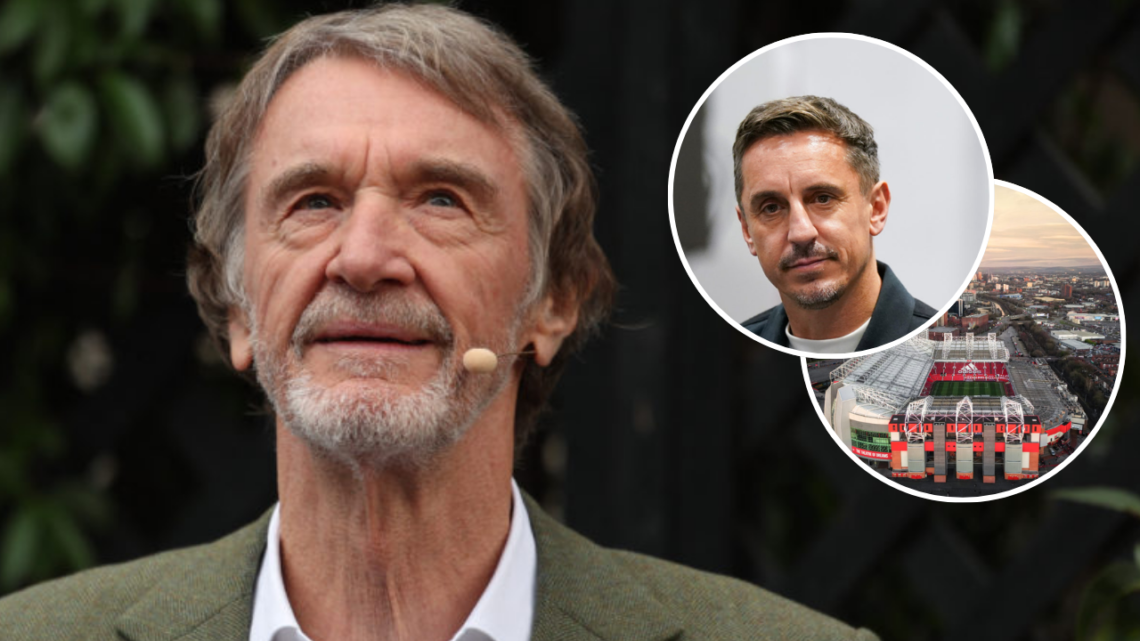


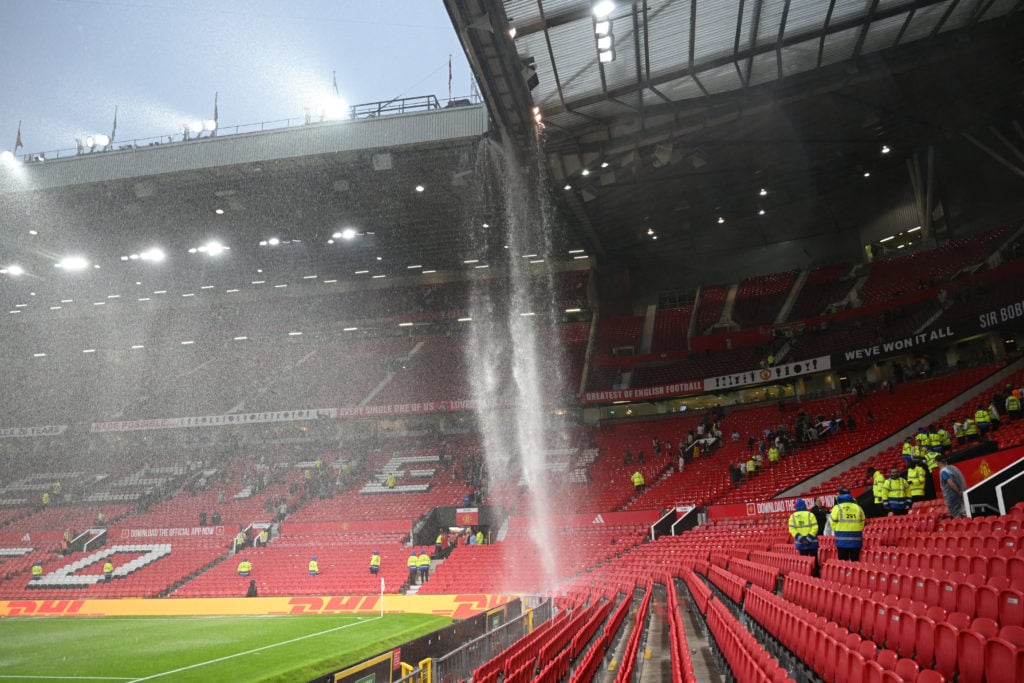
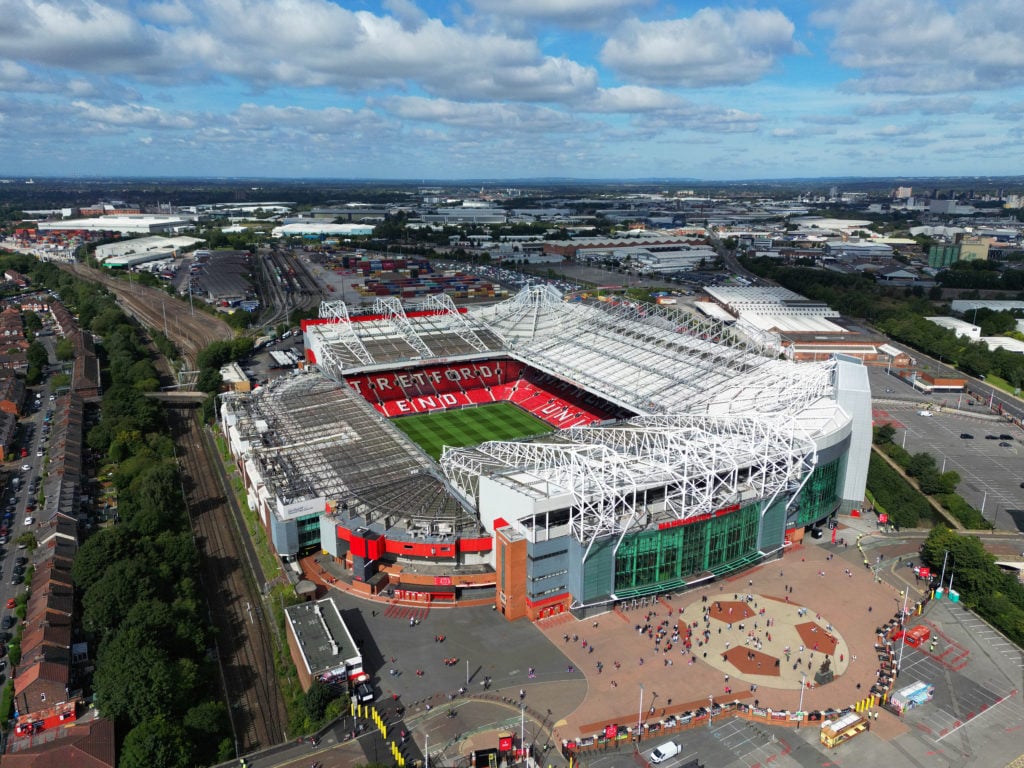
Old Trafford, once the Theatre of Dreams, has become a nightmare for Manchester United thanks to a leaking roof, insufficient capacity to meet demand, cramped legroom, and matchday congestion.
For supporters, the value of United’s spiritual home extends well beyond its economic utility. But as well as the bricks-and-mortar issues in M16, Old Trafford is now also something of a financial anchor.
Yes, Man United’s matchday income is still the highest in the Premier League. However, rival clubs like Tottenham with their world-class, commercially-orientated stadium are catching up expeditiously.
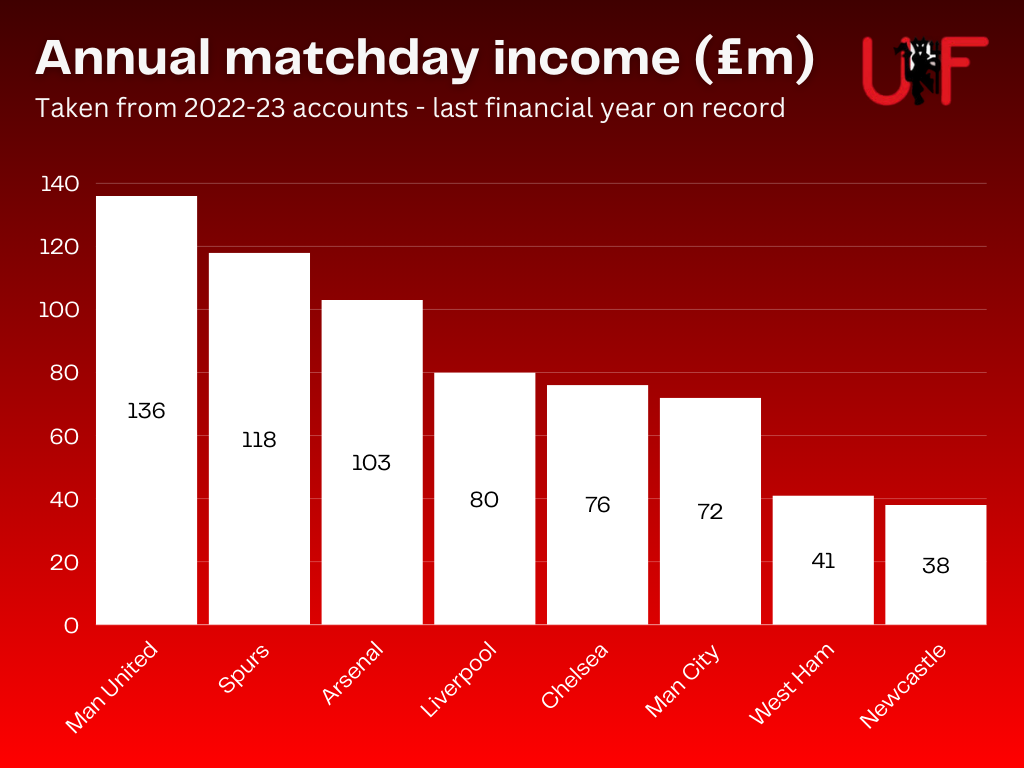
Arch rivals Liverpool’s staggered redevelopment of Anfield in recent years means they too will soon break the £100m barrier in terms of the cash they earn through the turnstiles.
Chelsea meanwhile are exploring either rebuilding Stamford Bridge or moving to a new stadium entirely, while Arsenal are at the early stages of plans to expand the Emirates.
Four miles away from Old Trafford, Manchester City are in the process of adding 6,000 seats in what is their second major redevelopment of the last decade.
For context, City’s matchday income has risen by 480 per cent since the takeover in 2008. United’s has remained largely static, increasing from £109m to £137m at the last count.
That is slower than the rate of inflation in the intervening years. That means United have actually gone backwards financially in real terms.
Granted, the Red Devils were coming from a higher base than their neighbours and there is a saying in the world of finance: elephants don’t gallop.
But after years of neglect under the Glazers, whose infrastructure spend over the last decade has been by far the lowest of the so-called Big Six, the near total lack of growth is an issue.
And Sir Jim Ratcliffe’s grand plans to rebuild Old Trafford or, as a recent study suggested is the preference among fans, construct a new stadium altogether are long overdue.
With Ruben Amorim set to take charge when United face Ipswich Town next Sunday, the Ineos regime has the chance to deliver the ‘world class facilities’ it has promised and mark a clean break with the Glazer-led era.
- Premier League
-
IpswichIpswich

 Man UtdManchester United
-
- Premier League
-
Man UtdManchester United
 EvertonEverton
-
- Premier League
-
ArsenalArsenal
 Man UtdManchester United
-
- Premier League
-
Man UtdManchester United
 Nottm ForestNottingham Forest
-
- Premier League
-
Man CityManchester City
 Man UtdManchester United
-
Before United can break ground, however, a number of questions must be answered in terms of the design, funding and identity of the new project.
There has been a drip-drip of new details in recent weeks and the latest comments from the top man at Populous, the firm United have enlisted to lead the redevelopment, are illuminating.
The design dilemma facing Gary Neville’s Old Trafford taskforce
When United legend Gary Neville and Greater Manchester mayor Andy Burnham were among those appointed to the Old Trafford Regeneration Taskforce, they outlined a clear mission statement.
Whether United choose the expansion route or build a new stadium entirely, the build needs to serve the local community and be a true football nerve centre as opposed to a US-style commercial project.
Speaking to the Financial Times, Populous’ managing director for the EMEA region Christopher Lee has warned against taking that route.
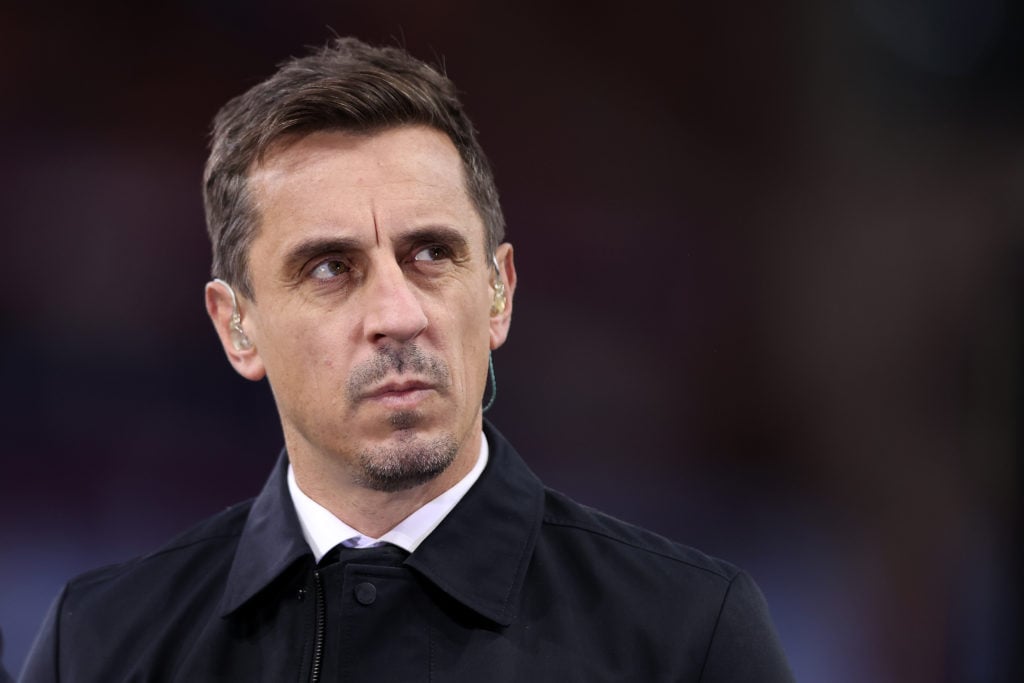
“As we’re looking at rebuilding and replacing infrastructure, it’s really important we — and the clubs we work for — don’t lose that authenticity of the football stadium,” Lee, who is considered a modern great in stadium design, said.
“It’s really easy to tip over into some kind of ‘pleasure palace’ of bars and restaurants, but we need to resonate with fans and local communities and keep it authentic.”
The challenge for United will be balancing the fundamentals Lee outlines with their need for the stadium to be a quantum leap in revenue terms.
Pressure on Man United to increase matchday income after TV money drop-off, says finance expert
Football clubs have three central income streams: broadcast, commercial, and matchday. And flatlining media revenue has been the catalyst for many clubs to rethink their stadiums, says Kieran Maguire.
“We are seeing a desire from club owners to monetise fans to their maximum”, the Liverpool University football finance lecturer and industry insider told United in Focus.
“For the majority of the 2010s, United froze ticket prices because there was a 70 per cent increase in the value of domestic TV rights in 2014 and 2017, so there was no urgency to target fans.
“But the Premier League’s domestic TV deal has effectively plateaued. They will be generating no more money in 2029 than it was in 2017 despite selling a bigger package of matches.
“With Premier League wages rising by 11 per cent over the last financial year, owners want to reduce their subsidies. That has been coupled with the excuse of compliance with PSR [Profit and Sustainability Rules].
“The fans are the fall guys in terms of clubs increasing their revenues. Clubs are now charging more on a ticket-by-ticket basis.
“Especially if those fans are coming from overseas, whereby they have already spent hundreds if not thousands of pounds, an extra £20 or so on a ticket isn’t much and they can get away with charging more.
“That has also meant there is pressure being put on season ticket holders either to pay more or get out.
“At West Ham and Spurs, for example, there is an attempt to effectively make senior fans non-concessionary rates or move to less desirable seats.”
Stadium naming rights: Is Man United’s identity up for sale?
If a new stadium is going to stay true to United’s identity and safeguard the interests of the ‘legacy fans’ that Maguire talks about, its name is important.
But front-of-shirt sponsor Snapdragon have been linked with a naming rights deal for United’s new stadium, and any branding partnership would be staggeringly lucrative.
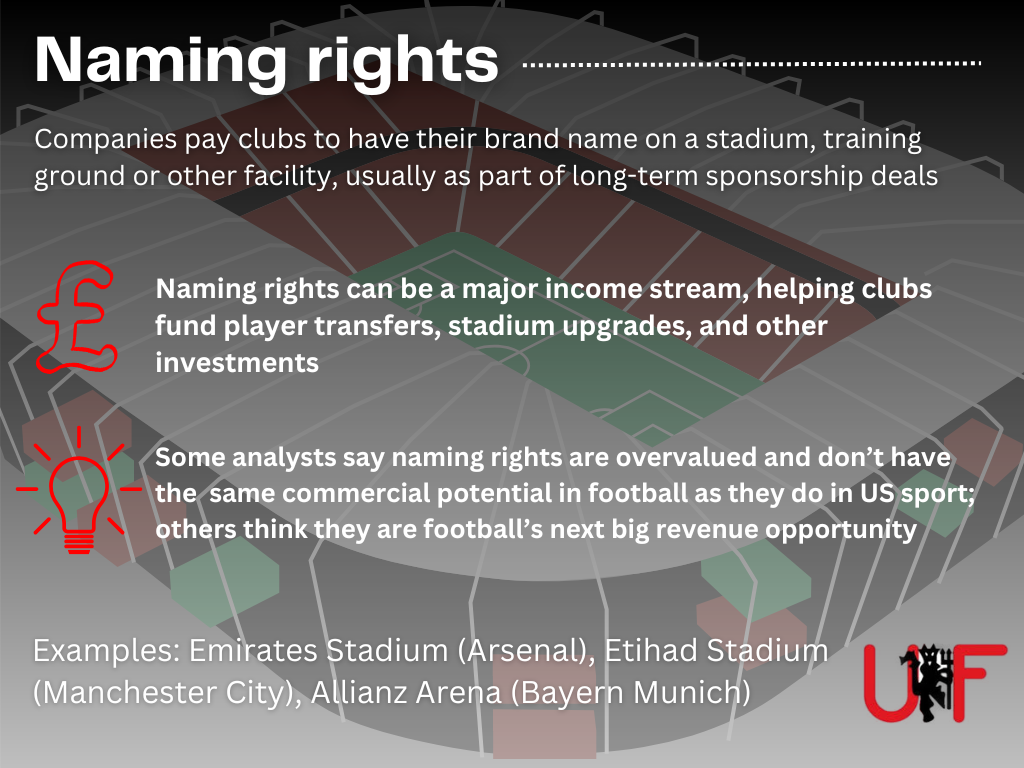
Recent analysis from industry experts Kroll found that Old Trafford’s naming rights as they are now are worth an estimated £12.85m per year.
A deal for a new stadium and accompanying football-commercial complex would be worth far, far more. A world-record sum, potentially.
They would easily surpass the £30m-a-year deal Atletico Madrid have just inked with Riyadh Air, for example – and probably by quite a margin.
The question is whether supporters would welcome the extra revenue and PSR breathing space at the expense of the club’s home essentially becoming a billboard for a corporation.
It is an issue that Ratcliffe, as well as Neville and his peers in the Old Trafford Regeneration Taskforce, need to address with supporters’ input.
How Ineos and Sir Jim Ratcliffe will finance a new £2bn stadium
A crude pro-rata calculation based on United’s current figures extrapolated over a capacity of 100,000 shows United’s matchday income will soar to at least £181m at a new stadium.
In reality, their earnings would be far higher given the inevitable focus on hospitality and other commercial facilities designed to empty match-going fans’ wallets.
But with any redevelopment likely to cost United the thick end of £2bn, how will Ratcliffe and Ineos afford it?
One thing is for sure, United will not receive public money for the stadium itself despite Ratcliffe previously saying there was a good case.
The Labour government don’t have the surplus to subsidise this kind of private project, so any taxpayer funds would be limited to infrastructure outside the stadium and complex.
The Glazer family’s track record over the last two decades shows that they will be reticent to contribute too.
And while Ratcliffe is worth an estimated £12.75bn, he doesn’t hold that amount in liquid capital. Even if he did, billionaires rarely use their own money.
With that in mind, it seems like either more debt or equity investment are the only options.
Equity investment – i.e., another investor providing capital by buying a stake in the club – could be tricky as the Glazers’ enterprise valuation of United, especially for a minority stake, is sky high.
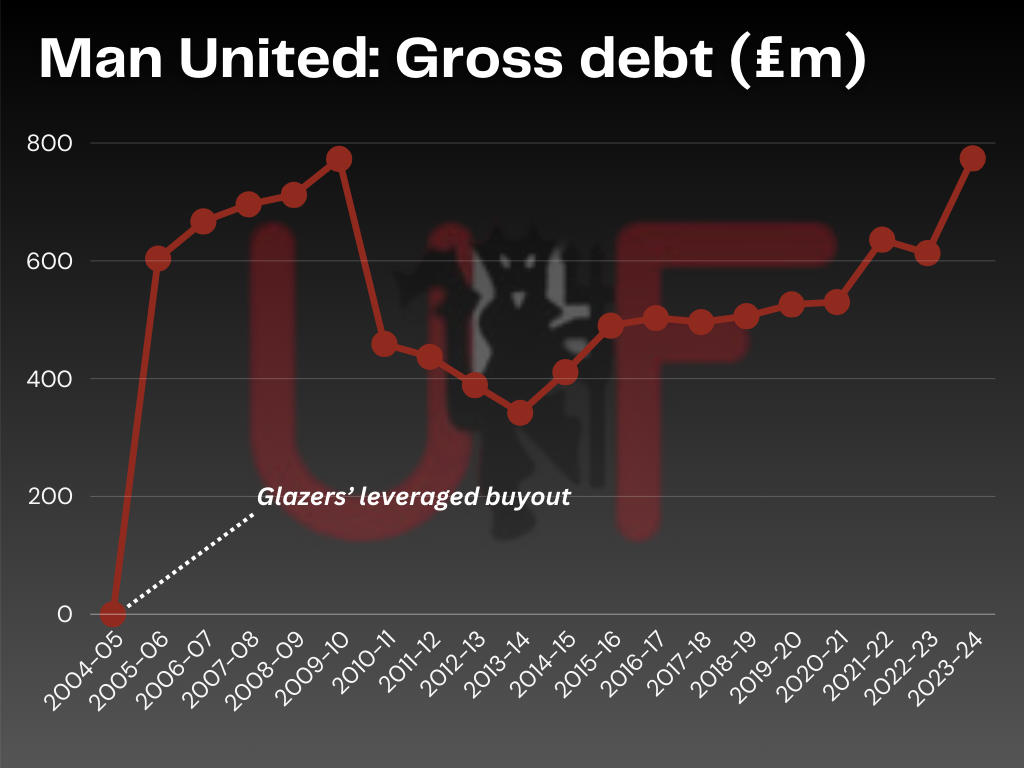
But United’s total debt sits at £774m and taking on an extra £2bn-plus would make servicing the total amount incredibly tough, especially at a time of stubbornly high interest rates.
Whether its debt, a new shareholder coming into the club, or the existing owners putting their hands in their pockets, the funding situation, as with every other element of the project, will be enormously complex.
Receive a digest of our best United content each week direct to your mailbox