

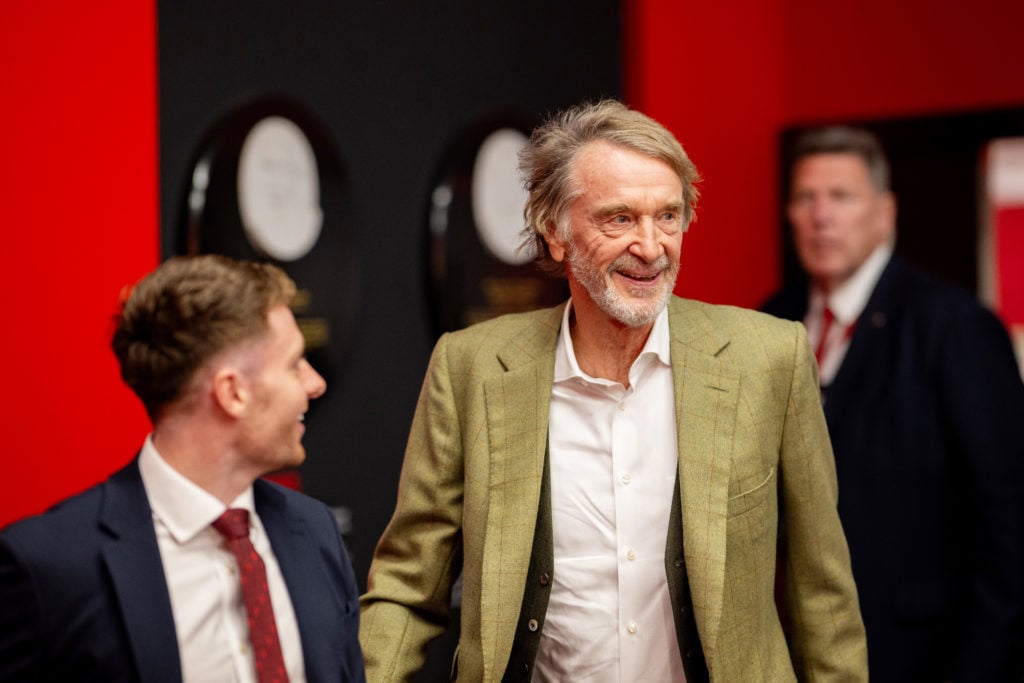
Since his arrival in M16, new Man United co-owner Sir Jim Ratcliffe has made a reputation for himself as a disruptor.
The INEOS billionaire bought a 27.7 per cent stake in the club in February for a reported £1.25bn, with the Glazers pivoting away from their initial plan to sell all their equity in United in favour of a minority sale.
Sir Jim Ratcliffe has a clear outsized influence at the club and has been the driving force behind a root-and-branch revamp behind the scenes.
While Erik ten Hag has remained in situ, almost every other senior position at Old Trafford has been the subject of a major reshuffle.
Omar Berrada has arrived as CEO from rivals Man City, while Dan Ashworth is in place as sporting director after protracted process, and former Juventus powerbroker Jean-Claude Blanc has joined the board.
But significant as they are, these changes are essentially ephemeral. In the grand scheme of United’s 146-year history, they are just a snapshot of a point in time.
Ratcliffe’s biggest project by far and the one that will represent one of the most significant events in the club’s history is the construction of a new stadium.
This is how it will transform the club.
Old Trafford’s future
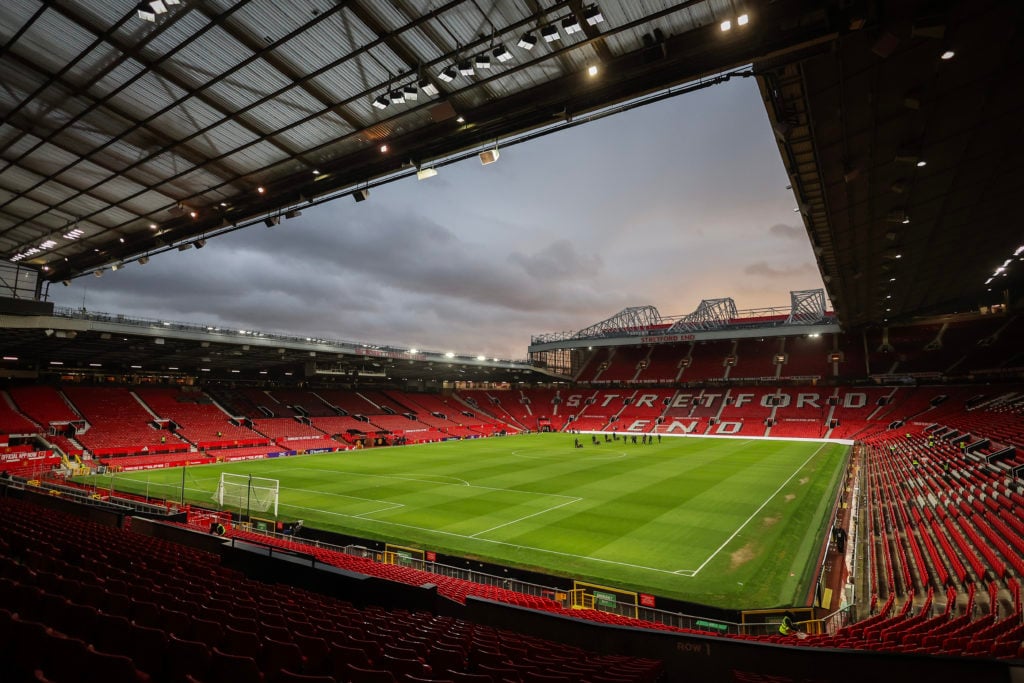
It appears that Ratcliffe and the powers that be at United favour building a new stadium entirely over the redevelopment of Old Trafford, their home since 1910.
However, in the latest developments, Matt Hughes has reported for City AM that United have given the clearest signal yet that they actually plan to keep Old Trafford alongside a new venue.
Noises from the club earlier this summer suggested that United were toying with the idea of reducing capacity at Old Trafford and retaining it for women’s and academy matches.
Given that United are now in talks with the Rugby Football League with a view to staging to the Super League Grand Final as part of a long-term deal, it appears that this is the route being pursued.
This would likely tick a commercial box as well as retaining an emotional link with the stadium for the fans, for whom Old Trafford’s value goes far beyond its economic utility.
Stadium structure
While we are yet to see blueprints for what the stadium might look like, it has been heavily suggested that Ratcliffe and his peers in the United boardroom want a capacity of 100,000-plus.
This would almost certainly come at a cost of £2bn – and perhaps far more.
Populous, the firm behind the Tottenham Hotspur Stadium, are believed to have been enlisted as the architects for what would be a marvel in arena design.
Significantly, the London-headquartered company have drawn up plans for Grand Stade Hassan II in Casablanca, Morocco, which is set to be the world’s biggest stadium and host the World Cup final in 2030.
Representations of what the arena will look like, replete with 12,000 corporate hospitality seats and two ends housing 30,000 spectators each, gives some indication of the scale of what might be in store for United fans.
Technology
United’s marketing department have always made the admittedly slightly dubious assertion that they have 1bn fans worldwide.
When they have pitched to potential new sponsors or even entered talks with minority partners, it is this that they have zeroed in on as their biggest selling point.
Why? Because those 1bn United followers represent untapped commercial value.
Most do not engage with the club financially, but if there was a way to change that, it could be utterly transformative.
Augmented or mixed reality technology has been tabled as a solution, taking inspiration from the SoFi Stadium in Los Angeles, home of Arsenal owner Stan Kroenke’s LA Rams NFL franchise.
The SoFi Stadium, also designed by Populous, has embraced augmented reality technology, offering fans a unique experience through an on-site screening venue.
This allows spectators to watch sporting events as if they were physically in the stadium. Recently, footage of LA-based United fans celebrating their 1-0 victory over Fulham at the venue went viral on social media.
The new stadium will better facilitate these experiences and other tech-driven initiatives, making it a game changer for domestic and international United fans.
Naming rights
Man United’s current front-of-shirt partner, Qualcomm’s Snapdragon brand, have shown an interest in the branding rights for the new stadium.
While a naming rights deal for Old Trafford might not fly with supporters, it would likely be far more palatable at a brand different venue, especially if United fans saw the cash sums on offer.
A recent report from brand industry experts Kroll found that United’s naming rights could be worth £15m per season even at a dilapidated Old Trafford, but that figure would skyrocket at a new arena.
The naming rights could quite easily be worth £30m per season, potentially even more if they were for an entire complex, such as Man City’s Etihad Campus.
With almost no costs associated, this would be the closest thing to free money in football. And in the era of Profit and Sustainability Rules (PSR), it would be seismic for United.
Debt
While revenue at a 100,000-seater stadium would be astronomical, so too would the debt burden on a club who already owe around £630m.
Ratcliffe does not have the liquid capital to finance the project, while the Glazers’ preposterously small infrastructure spend over the last two decades speaks for itself.
As part of the plans for Project Big Picture and the European Super League, the Glazers actually wanted a central pot for infrastructure projects to which every club contributed.
Essentially, they wanted other clubs to pay for the stadium…
Ratcliffe has made overtures to Kier Starmer’s new Labour government regarding the scope for public funds, but that seems overwhelmingly unlikely given their fiscal agenda.
External funding therefore is the only way to go. Servicing that debt for the next 20-30 years would be a huge burden, especially in an era of stubbornly high interest rates.
United could probably generated £230m per season in revenue from the stadium all told, but one must also factor in increased costs.
So while the upside of a sparkling new stadium is huge, so too are the long-term financial implications.
Receive a digest of our best United content each week direct to your mailbox