

Manchester United’s Europa League campaign could salvage their season, give Sir Jim Ratcliffe a trophy in his first full term as co-owner and supercharge Ruben Amorim’s budget ahead of a critical summer. The stakes, it is fair to say, are even higher than the decibel count at San Mames last Thursday.
Ultimately, a Casemiro header and Bruno Fernandes double dampened the noise in Bilbao and gave Man United a three-goal lead to defend in tomorrow night’s second leg against Athletic Club at Old Trafford.
As well as giving the Red Devils the ninth European trophy in their history and sticking a bow on a season in which Ruben Amorim’s side could finish 17th, winning the Europa League would also mean the club is playing football on Tuesdays, not Thursdays, next season.
| Competition | Titles | Years won |
| European Cup / UEFA Champions League | 3 | 1967–68, 1998–99, 2007–08 |
| European Cup Winners’ Cup | 1 | 1990–91 |
| UEFA Europa League | 1 | 2016–17 |
| UEFA Super Cup | 1 | 1991 |
| FIFA Club World Cup | 1 | 2008 |
| Intercontinental Cup | 1 | 1999 |
Qualifying for the Champions League could be salvation for the club financially at a time when Sir Jim Ratcliffe and the Glazers are assiduously cutting costs, maximising revenues and generally doom-mongering about the state of Man United’s finances.
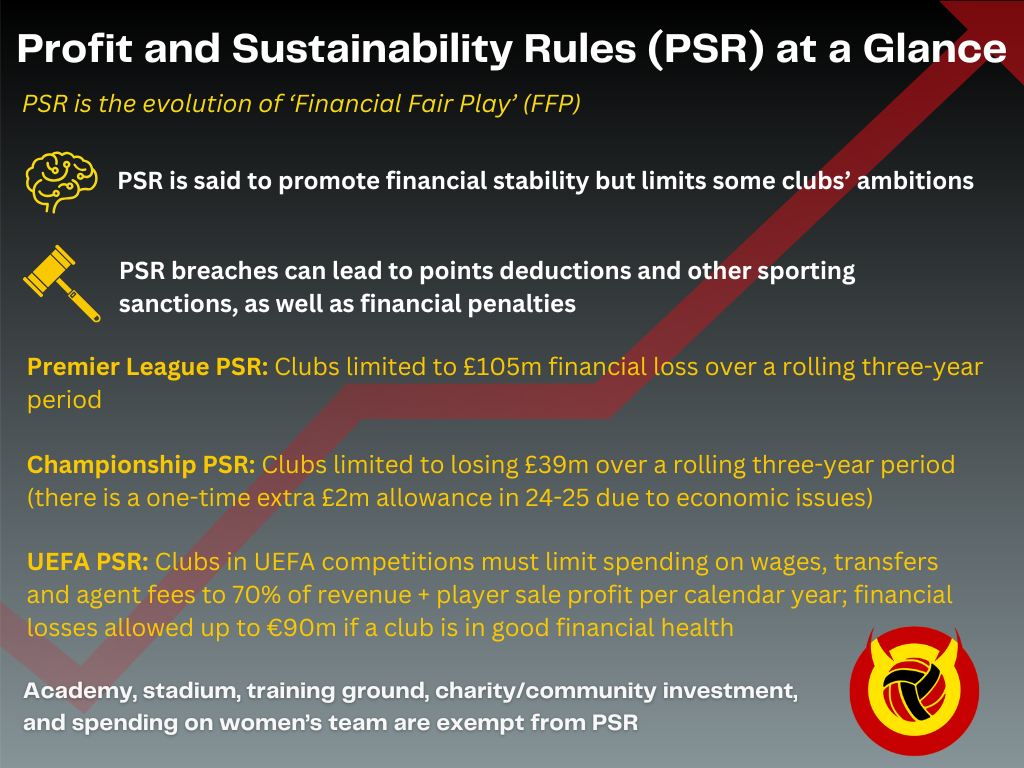
United will not breach UEFA or the Premier League’s Profit and Sustainability Rules (PSR) this season but skirted mightily close in the three-year monitoring period in 2023-24.
If they win the Europa League, the spending rules won’t restrict them too much next season. However, with no European football, Man United risk breaching PSR in 2025-26.
In terms of cash flow too, European football could be critical.
Ratcliffe is a paper billionaire but Ineos are cash-strapped at present and grappling with macroeconomic issues in the chemicals industry. Their £10bn debt pile makes United’s £700m-plus in outstanding loans look modest by comparison.
Ineos’ credit rating was recently characterised as ‘negative’ by several major agencies, including Fitch and Moody’s. It’s unlikely that they will borrow money to fund transfer market retail therapy.
So, it’s not quite Europa-League-or-bust, but lifting the trophy in exactly two weeks’ time would certainly soothe some financial anxiety at United HQ.
Man United poised for Europa League sponsorship bonuses
Prize money from the Europa League this season and the Champions League in 2025-26 would be the biggest individual revenue driver (more on that later), but there are myriad benefits.
“You’ll get another £10m from Adidas for the reversal of the £10m discount, plus other bonuses from sponsors,” says University of Liverpool football finance lecturer and industry insider Kieran Maguire, speaking exclusively to UIF.
United’s kit deal with Adidas was reported to be worth £90m per season, a figure that is made up of fixed and variable pay. Included within the contract is a drop-down clause that knocked £10m off the basic fee the club receives per season in the event that they fall out of the Champions League.

As Maguire highlights, that of course works in reverse too. What’s more, the club will also bank seven-figure bonuses for winning the Europa League itself, as well as securing additional leverage in negotiations with potential new sponsors in the coming months.
Old Trafford matchday income in the Champions League
While the Glazers aren’t passionate about much when it comes to their investment in Manchester, they lobbied fervently for the new UEFA competitions format.
UEFA have now confirmed that the 36-team format for the Champions League, Europa League and Conference League has been approved for next season after a successful – and lucrative – rollout.
As well as increasing the value of several of UEFA’s broadcast deals and therefore the prize money on offer to United and their peers, it also guarantees an extra home match for clubs competing in European competition.
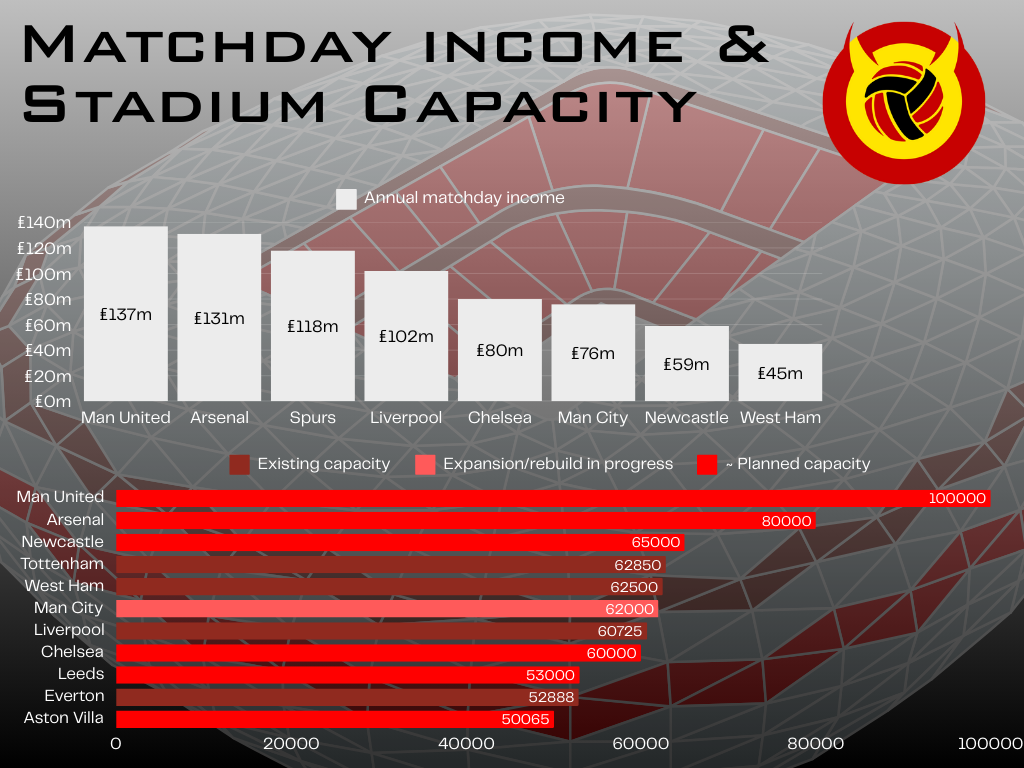
“You’ve got four group stage games at Old Trafford,” says Maguire, “which should be worth at least £6m per match in the Champions League.
“Let’s say they reach the knockouts, that’s £35-40m in matchday revenue.”
United are able to charge premium prices in the Champions League, even at an Old Trafford in dire need of a makeover. In the long-term, United’s plans for a new 100,000-seater stadium will send matchday income stratospheric on European nights.
Potential UEFA prize money for Man United
After the Europa League’s league phase, United were estimated to have banked around £19.5m from UEFA’s central pot. After reaching the semi-finals, that has risen close to £32.5m.
If they reach the final, they will be guaranteed an extra £5.9m, climbing to £10.95m if they win the competition outright.
But for context, Sir Jim Ratcliffe’s side could earn that amount before a ball is kicked if they qualify for the Champions League next season as a result.

“The entry fee is £30-40m,” Maguire tells UIF.
“You get £40m from UEFA, going up to maybe £60m if you get to the quarter finals,
“You’re talking £100-120m if they do okay in the competition itself and probably upwards of £70m in a worst-case scenario.”
Financial benefits diluted by bonuses to Ruben Amorim and his squad
In the modern game, player and staff bonuses are a cost of doing business.
It’s a smart business model and one which Ratcliffe is actively pursuing to reward success and insulate the club against the financial impact of a fallow year on the pitch. Generally speaking therefore, when United’s revenue rises, so too does its wage bill.

“The figures I have outlined are gross, of course, because on a net basis you will have bonuses to players,” says Maguire, explaining how the benefits of winning the Europa League would be somewhat diluted by player bonuses.
“We saw a very substantial decrease in United’s wage bill the last time they didn’t qualify for the Champions League, for example, but you can see how significant it might be.”
Receive a digest of our best United content each week direct to your mailbox