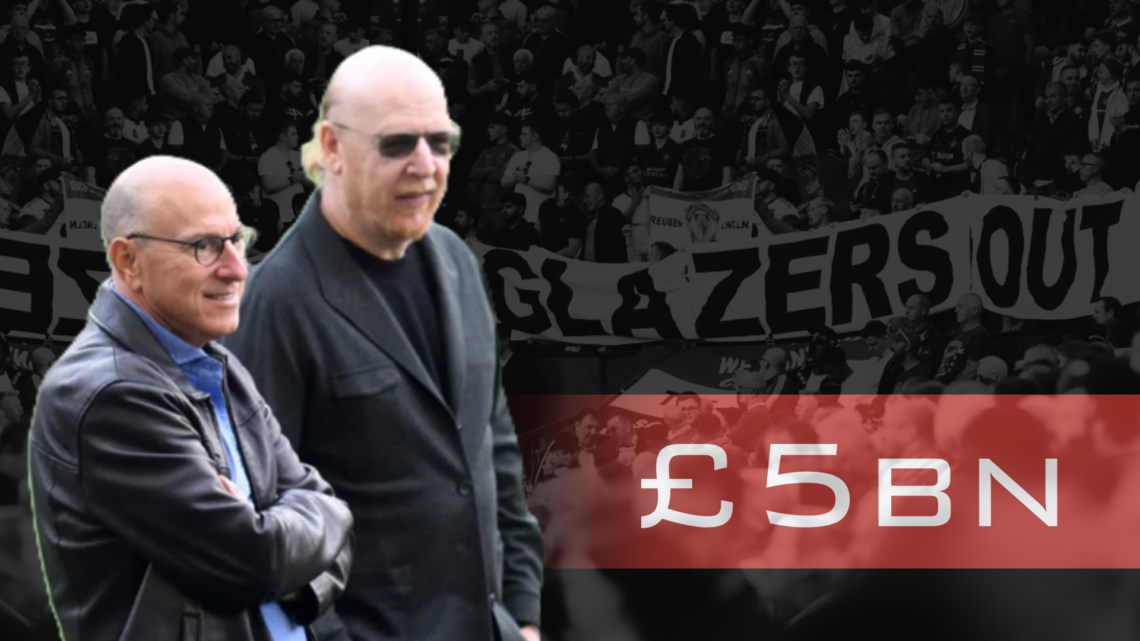


Since Malcolm Glazer took full control of Manchester United via a leveraged buyout in 2003, the late businessman’s family has seen their nest egg appreciate in value by around 500 per cent.
Ahead of yesterday’s 1-0 defeat to Tottenham which left Ruben Amorim’s side 15th in the table, there was a lot of chatter about Spurs being the most profitable team in Premier League history.
That’s true but, for all his faults as chairman and co-owner, Daniel Levy has never taken a penny out of his club. The most lucrative club for its owners? Man United take that crown – and it isn’t even remotely close.

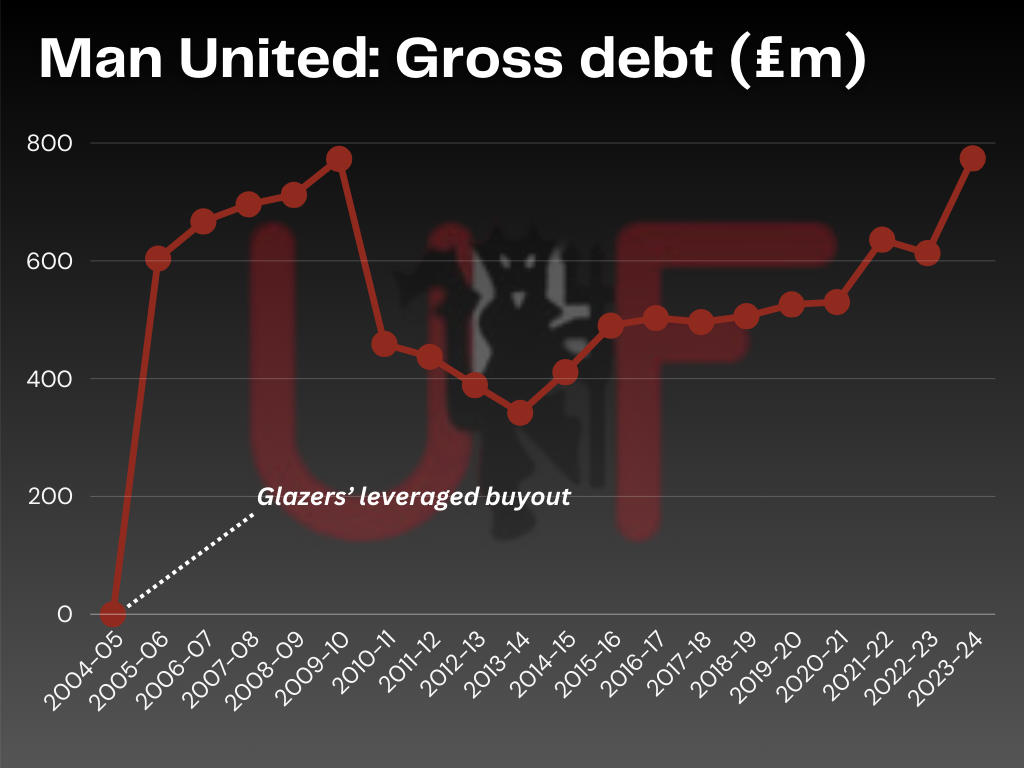
Famously, most of the £800m the Glazers paid for United was funded by debt, which was passed onto the club. The first rule of football finance: Why use your own cash when you could use someone else’s?
Since then, well over £1.5bn has been extracted from the club in the form of debt repayment, the sale of Class A shares, dividends and management fees, with over half of that lining the Glazers’ wallets.
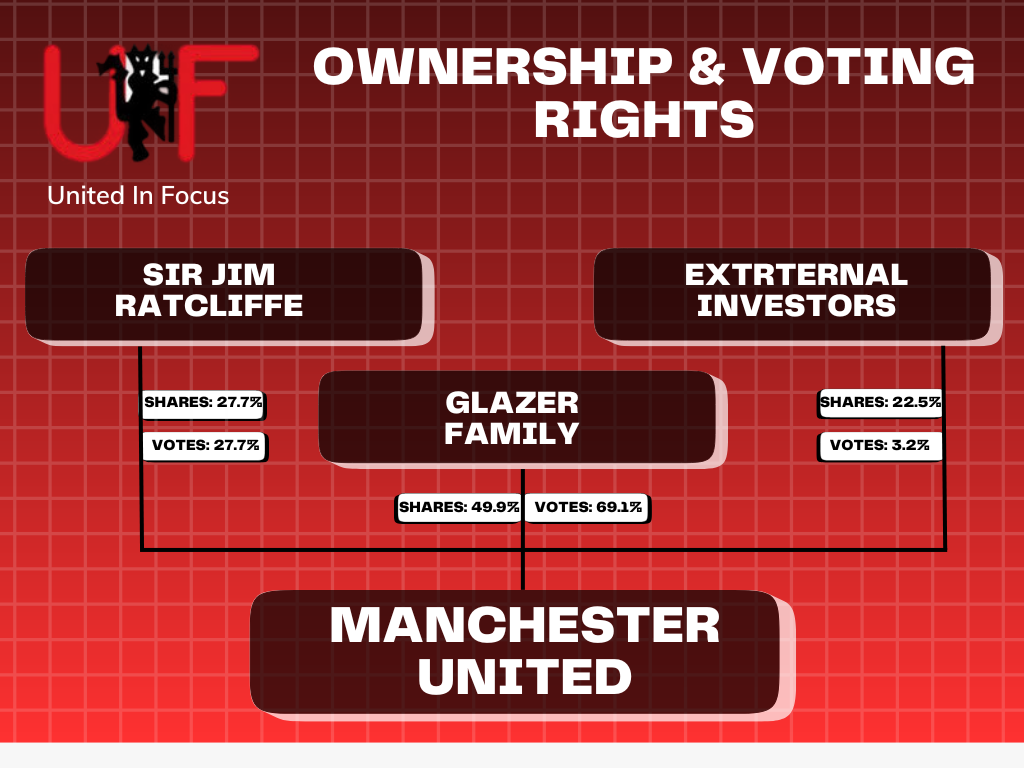
Add the £1.2bn they trousered last February when Sir Jim Ratcliffe bought 27.7 per cent of Man United and the Glazers are approaching the £2bn mark.
Even when you subtract the pitiful investment in infrastructure at Old Trafford and Carrington, it’s an astonishing markup. And they’re nowhere near done.
Divesting a minority stake to Ratcliffe and Ineos rather than a full sale to Sheikh Jassim or a private equity titan – Carlyle, Apollo etc – was a tacit admission that they have not yet reached ‘exit value’.
In layman’s terms, the market isn’t yet willing to pay what the six siblings from New York want.
In terms of returning United to former glories on the pitch, Joel, Avram, Kevin, Bryan, Darcie and Edward Glazer are essentially a fifth column in M16.
The club’s footballing success and the Glazers’ profit-orientated aims only ever align by accident. And in Ratcliffe, they have now found a patsy for their nakedly commercial ambitions.
The British billionaire’s brief was to clean up the omnishambles created by the Glazers. He has been put his money where his mouth is, injecting around £300m via share issues to date.
However, the 72-year-old has been almost cartoonishly ruthless with his cost cutting, price hiking, and dogmatic pursuit of ‘efficiencies’.
The burden loaded onto the club by the Glazers is being passed on to bedrock fans, who are paying increasingly premium prices for a lousy product – and United have zilch to show for it.
| Position | Team | Played MP | Won W | Drawn D | Lost L | For GF | Against GA | Diff GD | Points Pts |
| 12 |  TottenhamTottenham TottenhamTottenham | 25 | 9 | 3 | 13 | 49 | 37 | 12 | 30 |
| 13 |  Crystal PalaceCrystal Palace Crystal PalaceCrystal Palace | 25 | 7 | 9 | 9 | 29 | 32 | -3 | 30 |
| 14 |  EvertonEverton EvertonEverton | 25 | 7 | 9 | 9 | 27 | 31 | -4 | 30 |
| 15 |  Man UtdManchester United Man UtdManchester United | 25 | 8 | 5 | 12 | 28 | 35 | -7 | 29 |
| 16 |  West HamWest Ham West HamWest Ham | 25 | 7 | 6 | 12 | 29 | 47 | -18 | 27 |
| 17 |  WolvesWolves WolvesWolves | 25 | 5 | 4 | 16 | 35 | 54 | -19 | 19 |
| 18 |  IpswichIpswich IpswichIpswich | 25 | 3 | 8 | 14 | 23 | 50 | -27 | 17 |
They are averaging 1.16 points per game, which would see them finish on 44 points. Several teams have gone down with fewer in the 42-game era. West Ham were relegated with 42 points from 38 in 2002-03.
These days, 35 is usually enough to stay up. Ironically, United have the financial system that the Glazers helped engineer over the last 20 years to thank for the fact that relegation is only a remote possibility.
If the gulf between promoted clubs was more modest and Profit and Sustainability Rules (PSR) were less of a factor, there is every chance the unthinkable could happen.
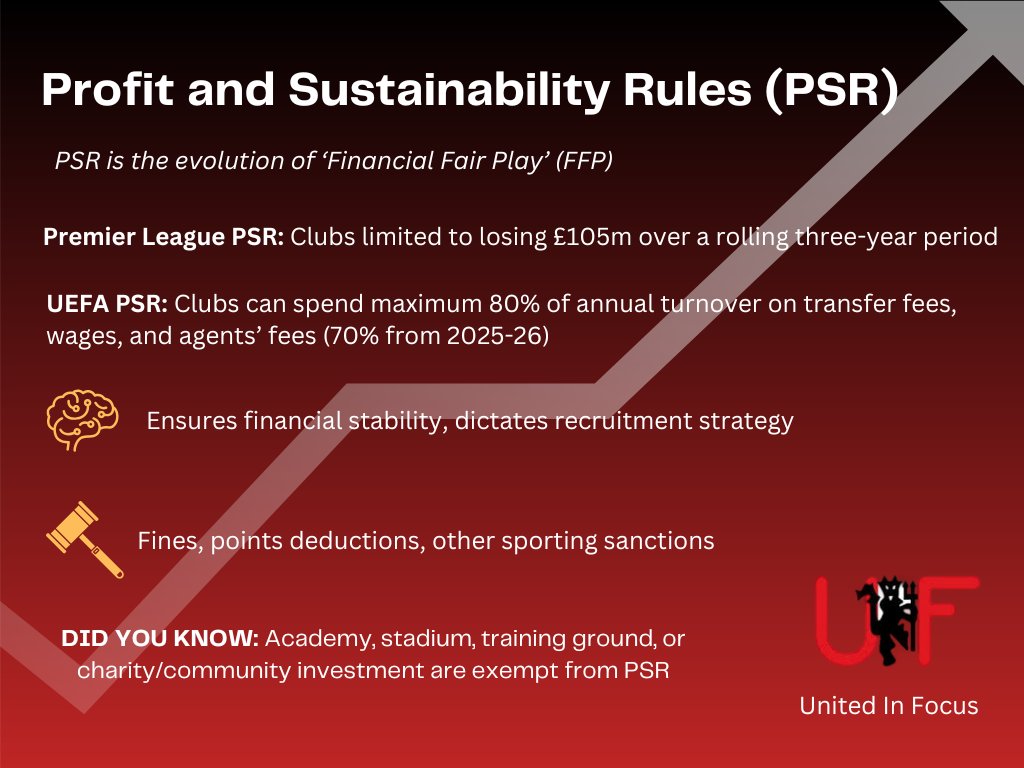
Now, United are straining against the shackles they them selves have forged on the anvil of PSR, with Ratcliffe warning fans to expect no fireworks in the transfer market and more weapons-grade austerity.
How did we get here? And, more importantly, when will the Glazer dog days finally be over?
Glazers waiting for tech breakthrough to sell Man United, says football finance expert
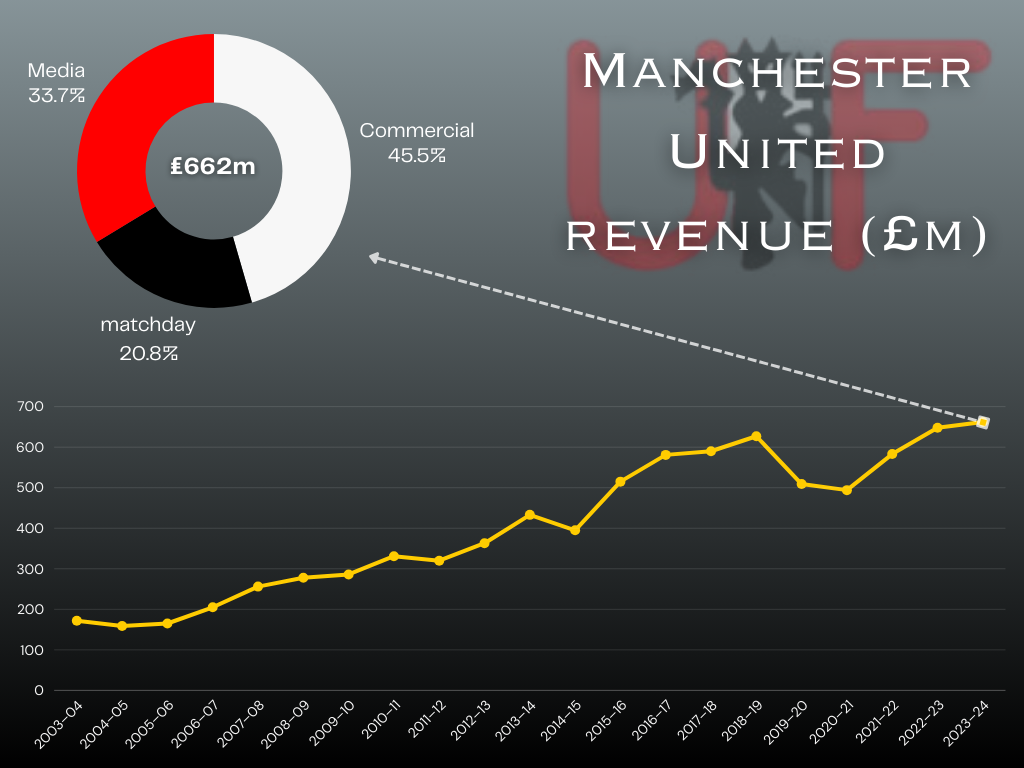
The Glazers reckon United, as a business, is worth more than £5bn.
| Rank | Club | League | Country | Value | 1-y value change (%) | Revenue | Operating income |
| 1 | Real Madrid | Spanish La Liga | Spain | £5.18bn | 9 | £685m | £60m |
| 2 | Manchester United | English Premier League | England | £5.14bn | 9 | £616m | £147m |
| 3 | Barcelona | Spanish La Liga | Spain | £4.39bn | 2 | £660m | £-114m |
| 4 | Liverpool | English Premier League | England | £4.21bn | 2 | £565m | £80m |
| 5 | Manchester City | English Premier League | England | £4.01bn | 2 | £683m | £111m |
| 6 | Bayern Munich | German Bundesliga | Germany | £3.93bn | 3 | £613m | £66m |
| 7 | Paris Saint-Germain | French Ligue 1 | France | £3.45bn | 4 | £592m | £-99m |
| 8 | Tottenham Hotspur | English Premier League | England | £2.51bn | 14 | £522m | £126m |
| 9 | Chelsea | English Premier League | England | £2.46bn | 1 | £487 M | £0m |
| 10 | Arsenal | English Premier League | England | £2.4bn | 15 | £440m | £110m |
Given that United can scarcely afford to take on more debt, it has been suggested that United could seek further equity investment to fund Ratcliffe’s plans for a 100,000-seater stadium.
But that would require the Glazers to cede some ground.
“They are monitoring the share price,” says Liverpool University football finance expert and industry insider Kieran Maguire, speaking exclusively to UIF.
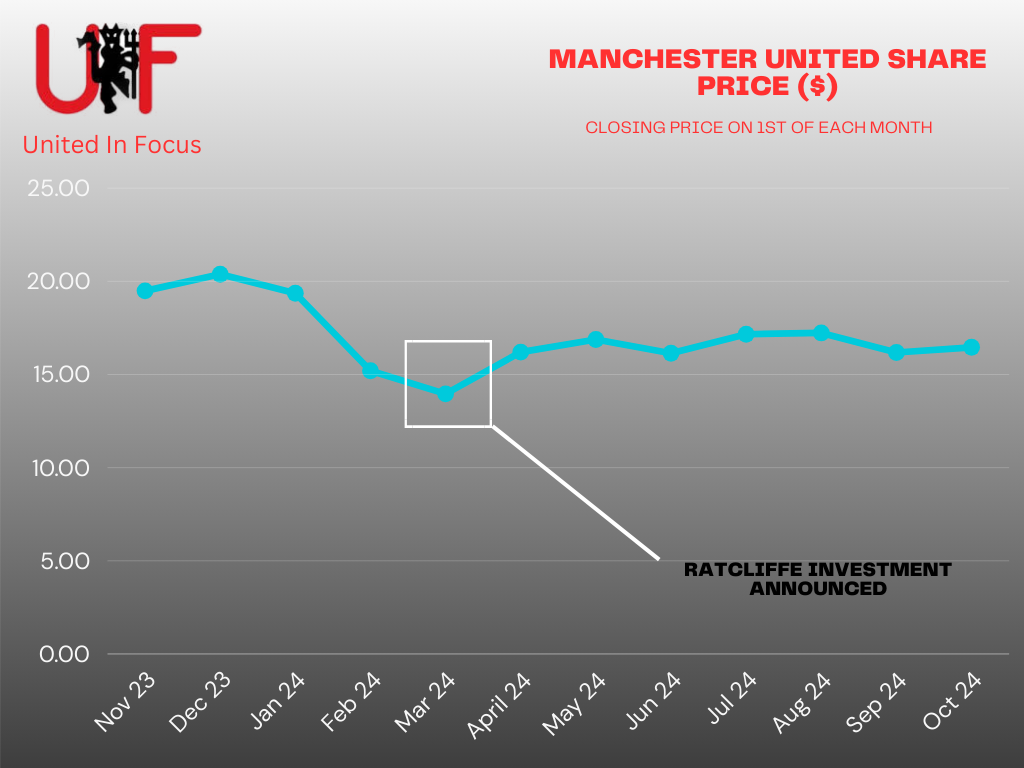
“They sold to Ratcliffe at around $30 per share and it is now back to $16 or $17, which indicates he overpaid.
“But it depends who is in their ear in terms of what their long-term plans are and when they think is the right time to cash in.”
When and how will that quantum leap in terms of enterprise value materialise?
Technology and the capacity to leverage United’s supposed 1.4 billion followers worldwide is key, according to Maguire.
“I go to these meetings with bankers and private equity and so on and they think we are very much at the start point of the exploitation of some sort of televisual product with live entertainment at United.
“You have got Taylor Swift live, for example, and you’re in the front row but sitting in your front room through an immersive reality platform.
“They think they can do something like that when it comes to live sport.
“Nobody watches 90 minutes of football after the event. You have to be there. There is a perception that you can get more fans to pay for feeling like they are in the stadium through an AR or VR-based product.”
Footage of a United’s win over Fulham being broadcast at an immersive reality centre in Los Angeles went viral back in August.
Cosm, the firm behind that technology, who, incidentally, have major investment from Arsenal owner Stan Kroenke, think this represents the next revenue plateau for clubs like United, and so does Maguire.
“If that is the case, you can have 15,000 people paying $150 to watch United all the way from New York. You can scale these things very, very easily,” said the Price of Football author.
“If you’re the owner of that franchise, it becomes very lucrative off the back of that.
“When you factor that into the potential future value of Man United, the club looks very cheap at present.”
Glazers U-turn on plan to buy second Manchester-based sports franchise
Another incident in recent weeks speaks volumes about just how tone-deaf the Glazers are and how rigidly they will stick with their valuation of United.
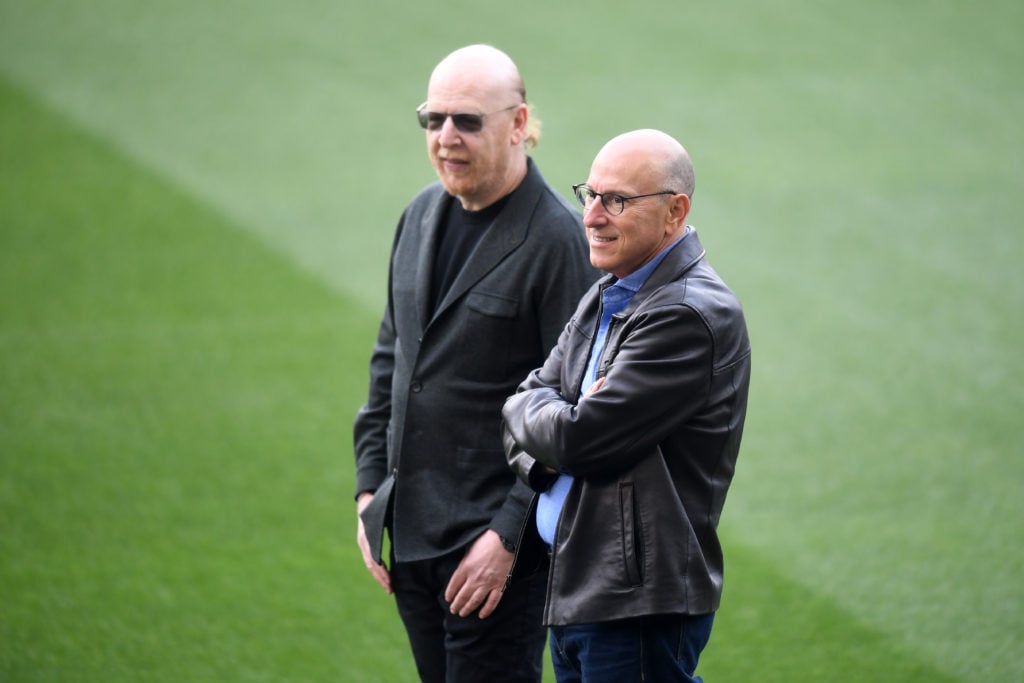
Joel and Avram Glazer were recently linked with investing in Manchester’s Hundred cricket franchise, Manchester Originals.
Given the antipathy towards the family in the city, it is staggering that the family would even considering establishing another outpost in Manchester.
“They are completely indifferent to how they are perceived,” said Maguire, giving his take on the aborted £116m deal.
“United have been fantastically beneficial for the Glazers in A) increasing their profile and B) raising their wealth. They would like to replicate that with another sports franchise.
“To have cricket and football at the two Old Traffords does have a certain cache to it and that was part of the reason for their initial interest.
“My understanding is that it has now been fed back to them that half of Manchester would, on principle, not go to see a Glazer-owned club.
“Manchester City cricket fans wouldn’t do as they wouldn’t want to give the owners money, and you could also see resentment from United fans as well, who would would perceive it as investment in cricket over football.
“There’s no evidence of Glazer investment in football, due to the leveraged buyout, due to the dividend payments, due to the executive flights for the Glazers for their occasional attendance of matches.”
Receive a digest of our best United content each week direct to your mailbox