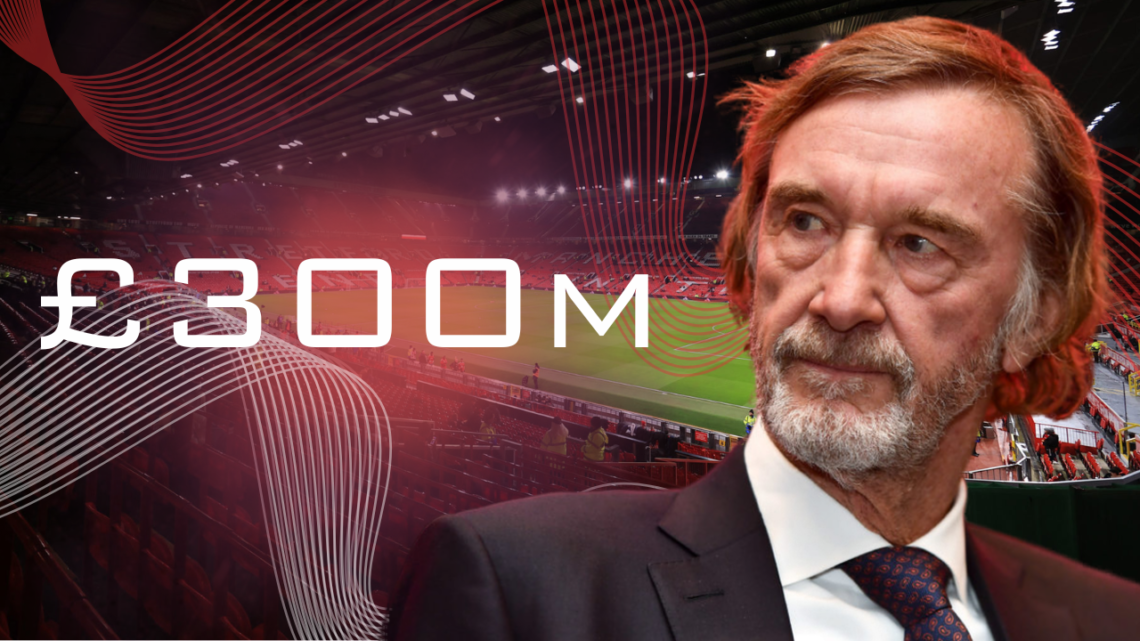


After nearly two decades of radio silence under the Glazers, Sir Jim Ratcliffe is delivering a crash course in cut-throat football ownership in full view of an increasingly alarmed Man United fanbase.
No one wants know how the sausage is made but United supporters have been invited into the factory under Ineos and most of them they don’t like what they see.
As for Profit and Sustainability Rules (PSR), that is a headache the club could do without.
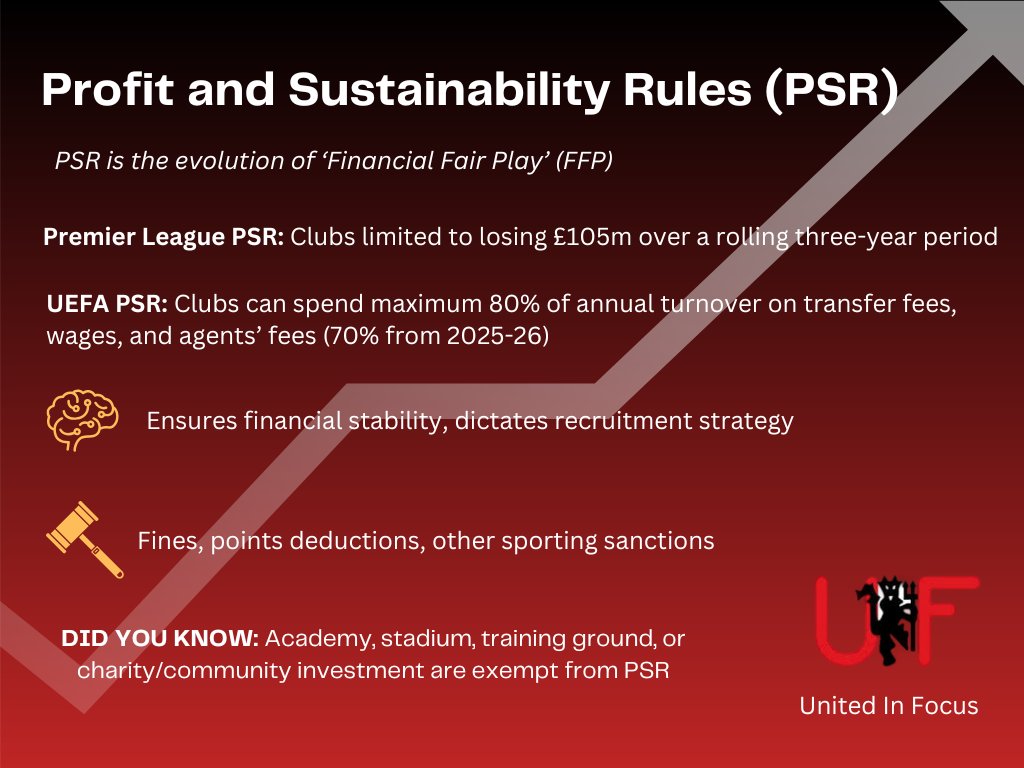
But with his open letter to fans suggesting that United are flirting with the upper limit of football’s spending controls, Sir Jim Ratcliffe has invited even more scrutiny.
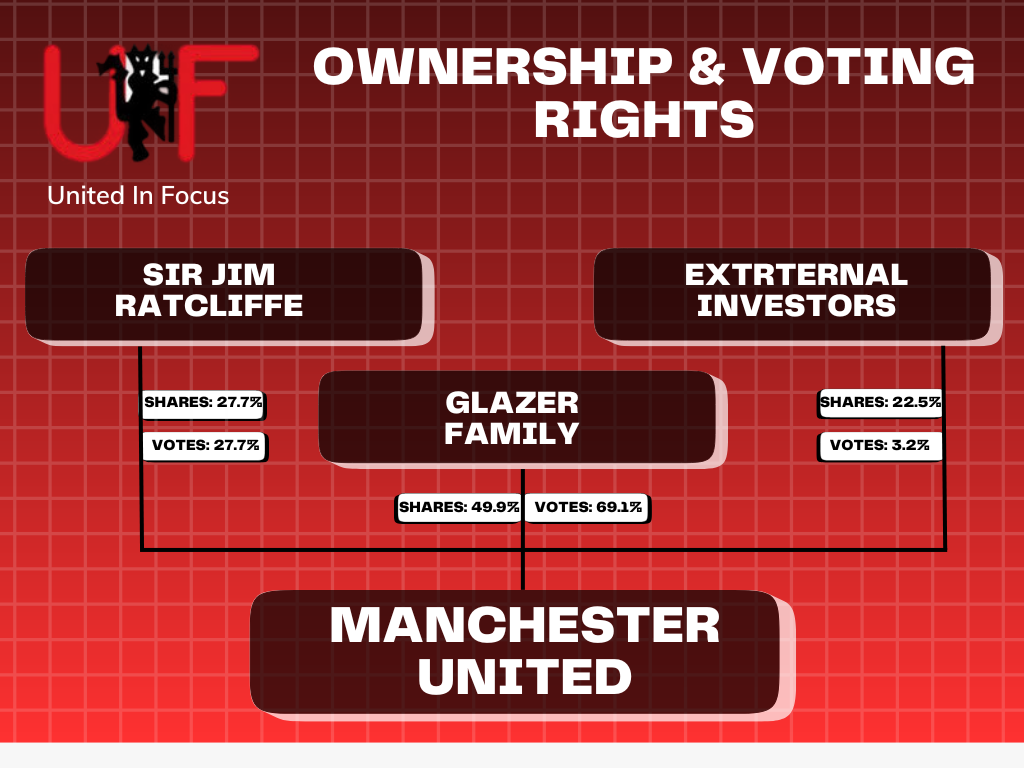
On 20 February, it will be one year since chemicals billionaire turned sundry sports investor formally became the club’s largest individual shareholder.
In that time, there have been mid-season ticket prices, the removal of discounts for kids and pensioners, mass lay-offs, cancelled Christmas parties, and the scrapping of just about any perks for club staff.
And that’s just the back-of-house stuff.
At the front, Erik ten Hag was handed a contract extension in a fit of optimism that followed a spirited but anomalous FA Cup final victory over Man City.
He was sacked three months later at a cost of over £10m, or £21.4m if you include the fee United paid Sporting for Ruben Amorim.
Even more concerningly, Ratcliffe and his enforcers invested £3m and even more in brain power and man hours on the complex process to prise Dan Ashworth from Newcastle.
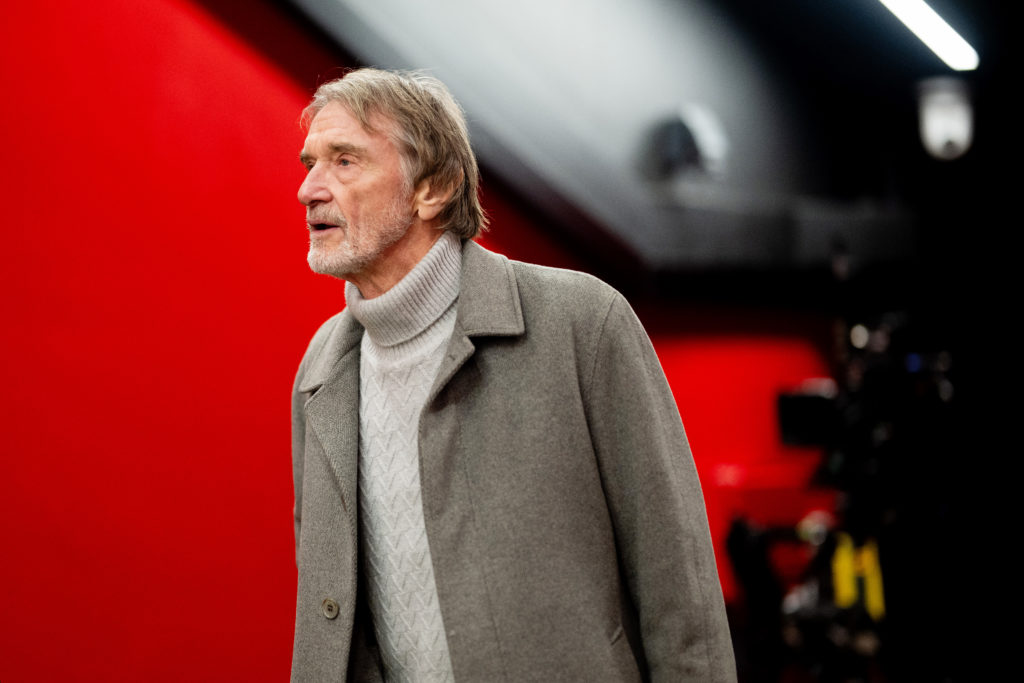
The sporting director was dumped after six months, reportedly because tensions between him, Ratcliffe’s lieutenant Sir David Brailsford and CEO Omar Berrada had created a snake pit atmosphere at Carrington.
The chaos could maybe be forgiven if there were signs of life on the pitch, but United have regressed and, despite being the world’s fourth-richest club, are 12th in the Premier League.
| Position | Team | Played MP | Won W | Drawn D | Lost L | For GF | Against GA | Diff GD | Points Pts |
| 1 |  LiverpoolLiverpool LiverpoolLiverpool | 22 | 16 | 5 | 1 | 54 | 21 | 33 | 53 |
| 2 |  ArsenalArsenal ArsenalArsenal | 23 | 13 | 8 | 2 | 44 | 21 | 23 | 47 |
| 3 |  Nottm ForestNottingham Forest Nottm ForestNottingham Forest | 23 | 13 | 5 | 5 | 33 | 27 | 6 | 44 |
| 4 |  Man CityManchester City Man CityManchester City | 23 | 12 | 5 | 6 | 47 | 30 | 17 | 41 |
| 5 |  NewcastleNewcastle NewcastleNewcastle | 23 | 12 | 5 | 6 | 41 | 27 | 14 | 41 |
| 6 |  ChelseaChelsea ChelseaChelsea | 23 | 11 | 7 | 5 | 45 | 30 | 15 | 40 |
| 7 |  B’mouthBournemouth B’mouthBournemouth | 23 | 11 | 7 | 5 | 41 | 26 | 15 | 40 |
| 8 |  Aston VillaAston Villa Aston VillaAston Villa | 23 | 10 | 7 | 6 | 34 | 35 | -1 | 37 |
| 9 |  BrightonBrighton BrightonBrighton | 23 | 8 | 10 | 5 | 35 | 31 | 4 | 34 |
| 10 |  FulhamFulham FulhamFulham | 23 | 8 | 9 | 6 | 34 | 31 | 3 | 33 |
| 11 |  BrentfordBrentford BrentfordBrentford | 23 | 9 | 4 | 10 | 42 | 40 | 2 | 31 |
| 12 |  Man UtdManchester United Man UtdManchester United | 23 | 8 | 5 | 10 | 28 | 32 | -4 | 29 |
| 13 |  Crystal PalaceCrystal Palace Crystal PalaceCrystal Palace | 23 | 6 | 9 | 8 | 26 | 30 | -4 | 27 |
| 14 |  West HamWest Ham West HamWest Ham | 23 | 7 | 6 | 10 | 28 | 44 | -16 | 27 |
| 15 |  TottenhamTottenham TottenhamTottenham | 23 | 7 | 3 | 13 | 46 | 37 | 9 | 24 |
| 16 |  EvertonEverton EvertonEverton | 22 | 5 | 8 | 9 | 19 | 28 | -9 | 23 |
| 17 |  LeicesterLeicester LeicesterLeicester | 23 | 4 | 5 | 14 | 25 | 49 | -24 | 17 |
| 18 |  WolvesWolves WolvesWolves | 23 | 4 | 4 | 15 | 32 | 52 | -20 | 16 |
| 19 |  IpswichIpswich IpswichIpswich | 23 | 3 | 7 | 13 | 21 | 47 | -26 | 16 |
| 20 |  SouthamptonSouthampton SouthamptonSouthampton | 23 | 1 | 3 | 19 | 16 | 53 | -37 | 6 |
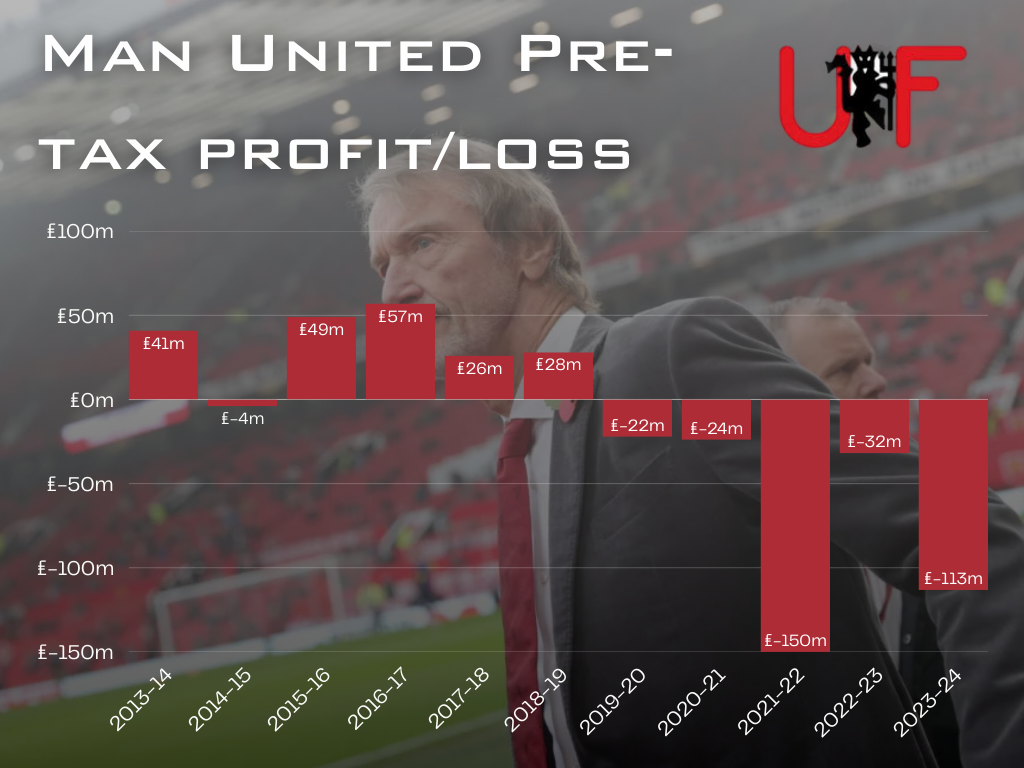
Meanwhile, red ink is flowing profusely in the accounting department and United are seemingly only at the foothills of Ratcliffe’s cycle of austerity.
However, Profit and Sustainability Rules (PSR) are a convenient scapegoat for increasing the financial burden on match-going United fans at a time when working people are already under huge strain.
There are umpteen levers Ratcliffe could pull to create breathing space in the January transfer window before making life harder for supporters in exchange for a less than one per cent revenue increase.
Can Man United afford to spend without breaching PSR? Football finance expert explains
Speaking exclusively to United In Focus, Liverpool University football finance lecturer and industry insider Kieran Maguire says that Ratcliffe’s cost-cutting isn’t rooted in PSR.
“It’s Ratcliffe’s M.O,” the Price of Football author explained, expanding on what he believes is expectation management by Ineos at Old Trafford.
“The cost cutting and price rises we’ve seen from Ineos doesn’t really have anything to do with PSR – that is a smokescreen.
“They take the view that people are commodities. In the chemicals business, reducing the price of commodities is a driving force towards profitability.
“If you treat people in exactly the same manner, there will be benefits. That’s what they think.
“This may work in a product-based industry but it’s questionable whether it is going to be as effective in the service industry, which is where United are ultimately based.

“Yes, there will be more cutbacks and morale will be low but that will be ignored by the executives because their focus is purely on the spreadsheets, not the people.
“As far as the spending is concerned, you only have to look at the accounts for the first quarter of 2024-25 to see the level of expenditure there.
“United spent £219m in 2022-23, £208m in 2023-24, and to date they have spent another £219m in 2024-25. Their problem in the transfer market is qualitative, not quantitative.
| Date | Position | Player | Team | Reported fee |
| 14 July 2024 | Forward | Joshua Zirkzee | Bologna | £36.5 million |
| 18 July 2024 | Defender | Leny Yoro | Lille | £52.2 million |
| 13 August 2024 | Defender | Matthijs de Ligt | Bayern Munich | £38.5 million |
| 13 August 2024 | Defender | Noussair Mazraoui | Bayern Munich | £12.8 million |
| 30 August 2024 | Midfielder | Sékou Koné | Guidars FC | £1 million plus add-ons |
| 30 August 2024 | Midfielder | Manuel Ugarte | Paris Saint-Germain | £42.1 million |
| [Pending] | Defender | Patrick Dorgu | Lecce | £29 million |
“But lots of people have short memories and, forgetting the duds, they see expensive signings as a guarantee of quality going forwards.
“United will be okay in terms of PSR. You wouldn’t have seen the £219m spent if they had real concerns about PSR.”
The PSR workarounds available to Sir Jim Ratcliffe and Ineos
It’s true that United survived a PSR breach in 2023-24 by the skin of their teeth and thanks in large part to exceptional costs attributed to the pandemic and Ratcliffe’s part-takeover.
But 2024-25 is a different story, with the £150m they lost in 2021-22 now no longer part of the PSR calculation.
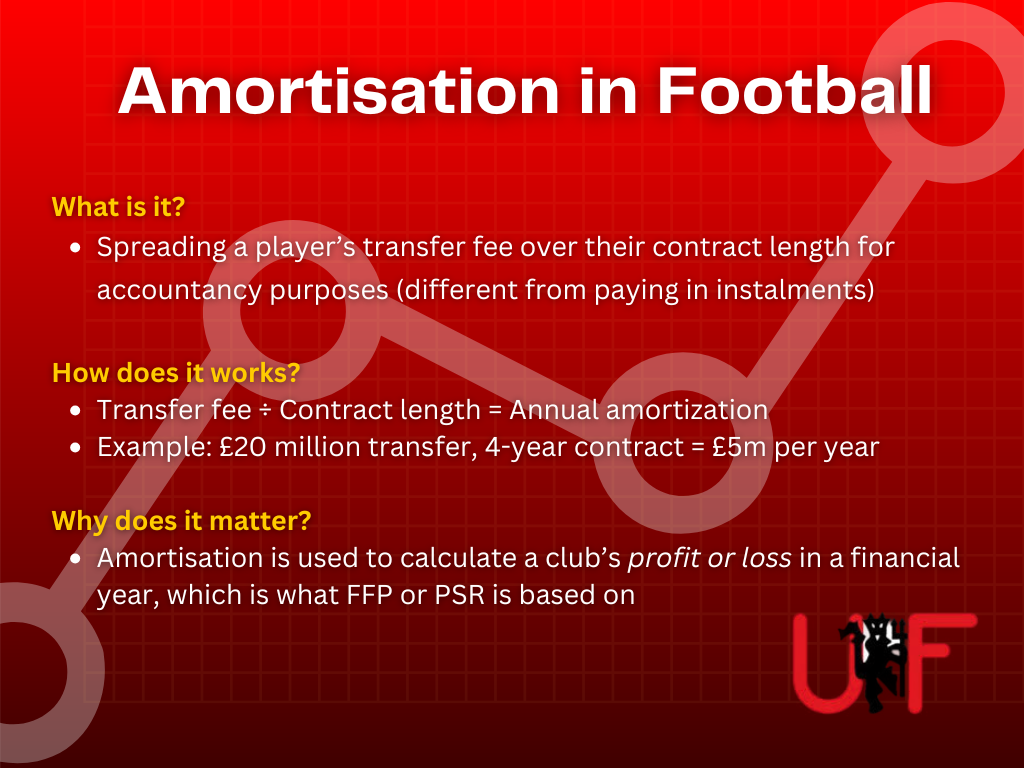
With PSR-exempt costs like infrastructure investment and the fact that new signings are amortised over a period of five years factored in, they are well within the limit and have scope to spend.
Plus, the pure profit generated by the sales of academy graduates Mason Greenwood and Scott McTominay means UEFA’s slightly more restrictive PSR system isn’t an immediate issue either.
Even if they were right at the limit, Chelsea have proved that there are myriad ways to avoid a breach while spending at exorbitant levels.
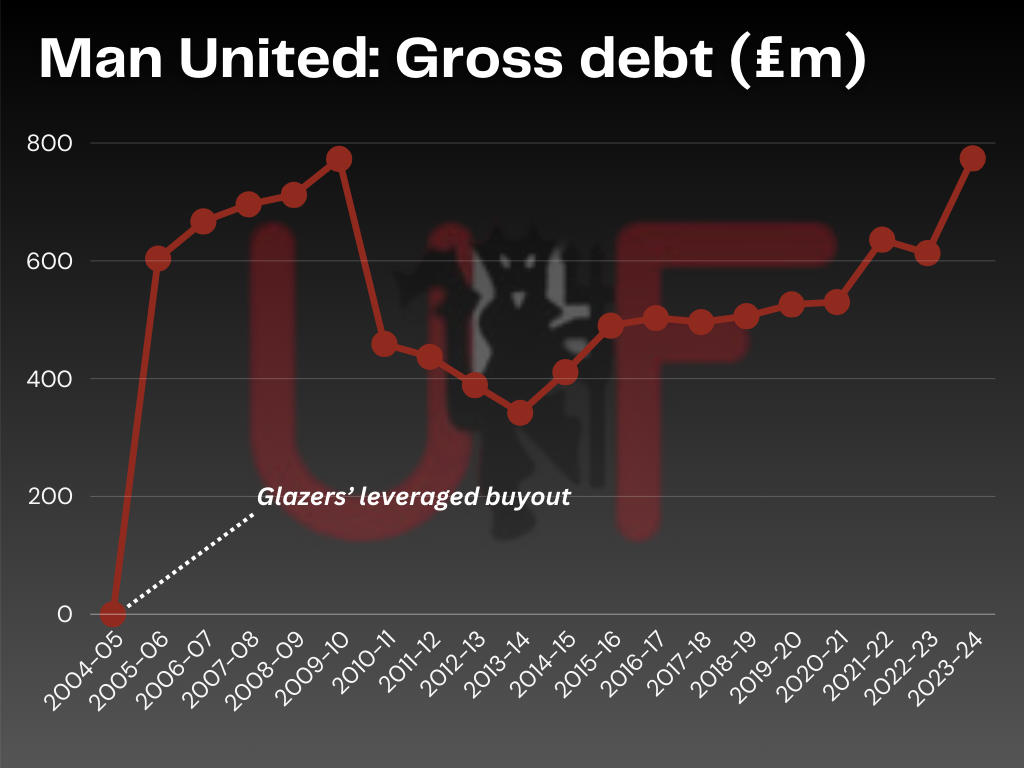
That is not to say that they have carte blanche to invest whatever funds they like from a cash flow and dent point of view, which is distinct from PSR and a real issue, especially with United’s plans to build a new stadium.
But, as Maguire points out, it is dishonest to attribute ticket price rises to the spending rules and a mea culpa is needed with supporters, whose intelligence is being insulted.
Receive a digest of our best United content each week direct to your mailbox