

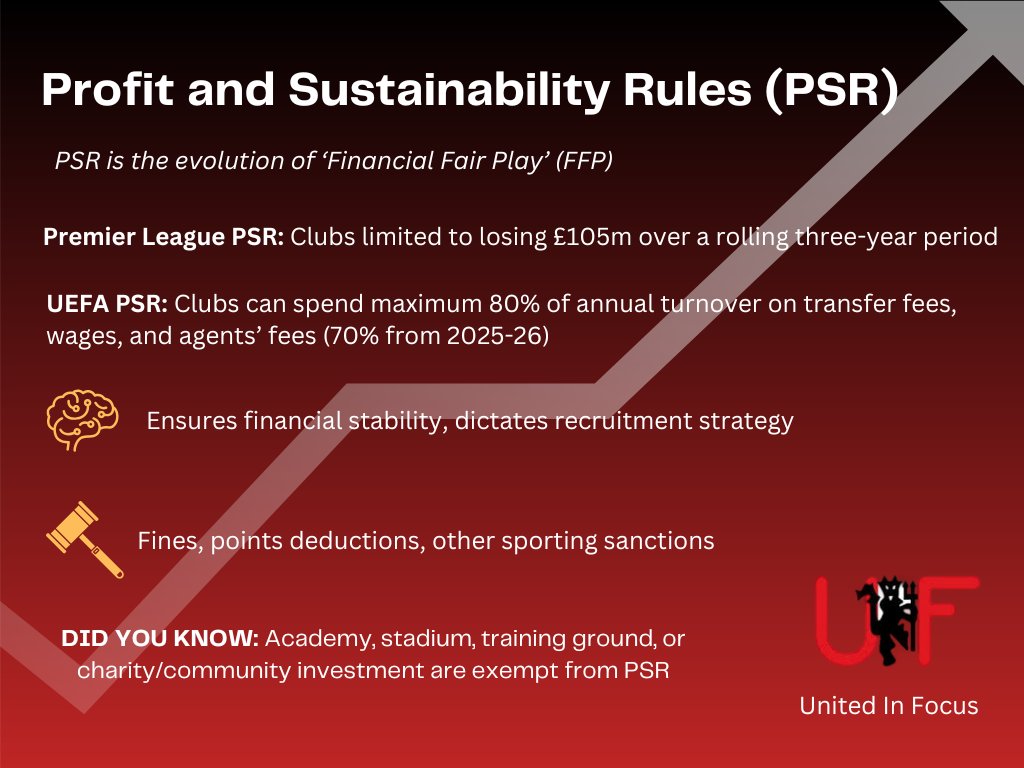
For the majority of its lifespan, FFP – which now goes by PSR, or Profit and Sustainability Rules – was seen as a toothless tiger that the likes of Man United could quite easily fend off.
In 2009, UEFA established FFP with the stated aim of ensuring competitive balance in its competitions and preventing clubs from living beyond their means. The Premier League followed suit with PSR in 2013.
Fans quickly question what the animating force behind the spend rules really was, with accusations rife that the system was invented to stop aspirational clubs shuffling out of their place in the breadline.
But for Man United, PSR and FFP were largely non-issues as the club’s gigantic revenue and ability to break even more seasons than not insulated them from the wrath of the governing bodies’ enforcers.
However, after years of underperformance on the pitch, the ground has shifted underneath their feet.
For one, the Premier League and UEFA are now actually enforcing their own rules. Everton and Nottingham Forest can attest to that. Chelsea could well be next.
In terms of competitive balance, it is hard to argue that PSR has not given United a huge advantage over their peers for years.
Under UEFA’s squad cost rule, United are permitted to spend approximately £529.6m on wages, transfers and agent fees this calendar year.
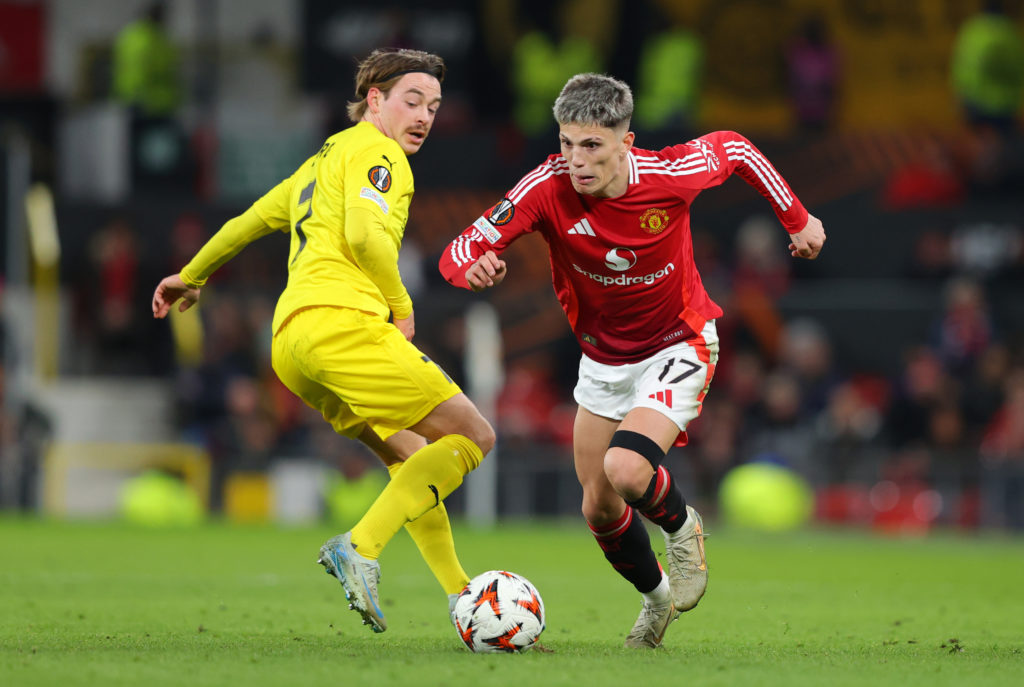
Meanwhile, the equivalent cap imposed on Bodo/Glimt, United’s opponents in the Europa League for Ruben Amorim’s first match at Old Trafford last night, is about £15.6m.
And yet, United only narrowly avoided a PSR breach for the three-year period up to 30th June 2023-24 – and in controversial circumstances at that.
The Premier League deemed that £35m worth of costs relating to Sir Jim Ratcliffe’s part-takeover were exempt from PSR, while they also attributed £40m of lost income to the legacy of the pandemic.
Those takeover costs were perfectly ordinary and to be expected given the complexities of the £1.25bn deal but, for context, no other Premier League claimed more than £1m in Covid-related lost income.

And with United’s first-quarter accounts for the 2024-25 financial year showing a £6.8m loss, it has been suggested that – even with the leeway they have been afforded – they are not out of the PSR woods yet.
With Amorim reportedly keen to strengthen his squad in January, do United really have the capacity to spend?
PSR and Ruben Amorim’s first Man United transfer budget
It is difficult to make sense of PSR even for those paid to do so, let alone supporters who are rightly more concerned by what their team is doing on the pitch.
On face value, it looks like Man United are miles over the Premier League’s £105m loss limit for the current three-year period based on their accounts.
However, allowable costs, fluid assessment windows, and a number of other factors make determining whether they are on track to comply far more difficult than it might initially seem.
What’s more, UEFA now assess FFP compliance on a calendar year basis, making it almost impossible to get an accurate read on United’s position.
To demystify the Red Devils’ financial status and forecast whether Amorim and Dan Ashworth will have the flex to spend in January, United in Focus spoke to football finance expert Kieran Maguire.
“The results were, to a certain extent, rescued by the sales of McTominay and Greenwood,” said the Liverpool University lecturer and Price of Football author, speaking about United’s Q1 accounts.
“But they do need to give much greater attention to their player trading model. It has proven to be very successful at other clubs.
“An analysis of the three years ended 30th June 2024 shows that United made a pre-tax of £313m, of which £150m came from season 2021-22.
“That £150m figure will drop out of the equation as far as 2024-25 is concerned.
“Taking that into consideration, with the first quarter broadly a break-even, this gives United more scope to spend in the transfer market, not less.
“In January 2025, they don’t have to worry about that £150m loss and the negative implication that had in the previous January trading window.
“The fact United made a pre-tax loss of £313m in the previous three-year period yet were within the PSR limits is a good sign.

“Remember, they weren’t one of the six clubs involved in an usual merry-go-round with the quasi-swap deals ahead of the 30th June deadline.
“That indicates they have more leeway than some of the other clubs in January when it comes to PSR.”
- READ MORE: Finance expert predicts third billionaire could buy Man United stake in trio with Ineos and Glazers
Old Trafford rebuild holds key to bypassing PSR for Sir Jim Ratcliffe
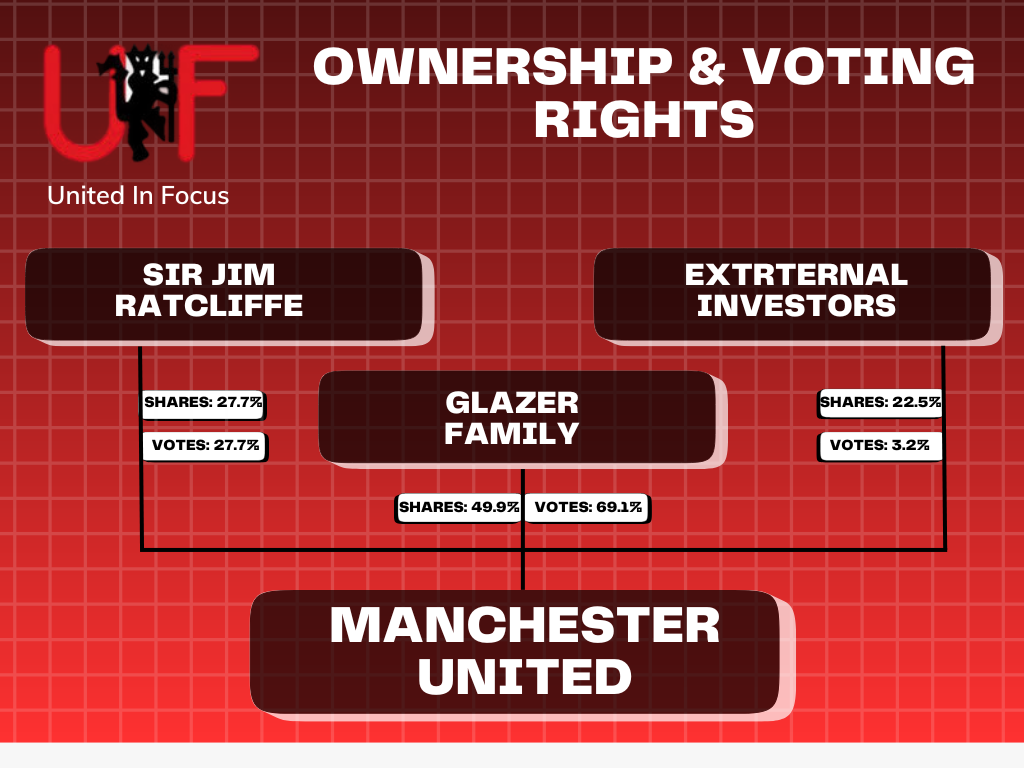
Since becoming the club’s largest individual shareholder, Sir Jim Ratcliffe has signalled that he has no issues with being unpopular.
He has dismissed hundreds of staff and made sweeping changes at executive level, with the Ineos billionaire seemingly having been handed complete strategic control by the Glazers.
The message is clear: success on the pitch at any cost.
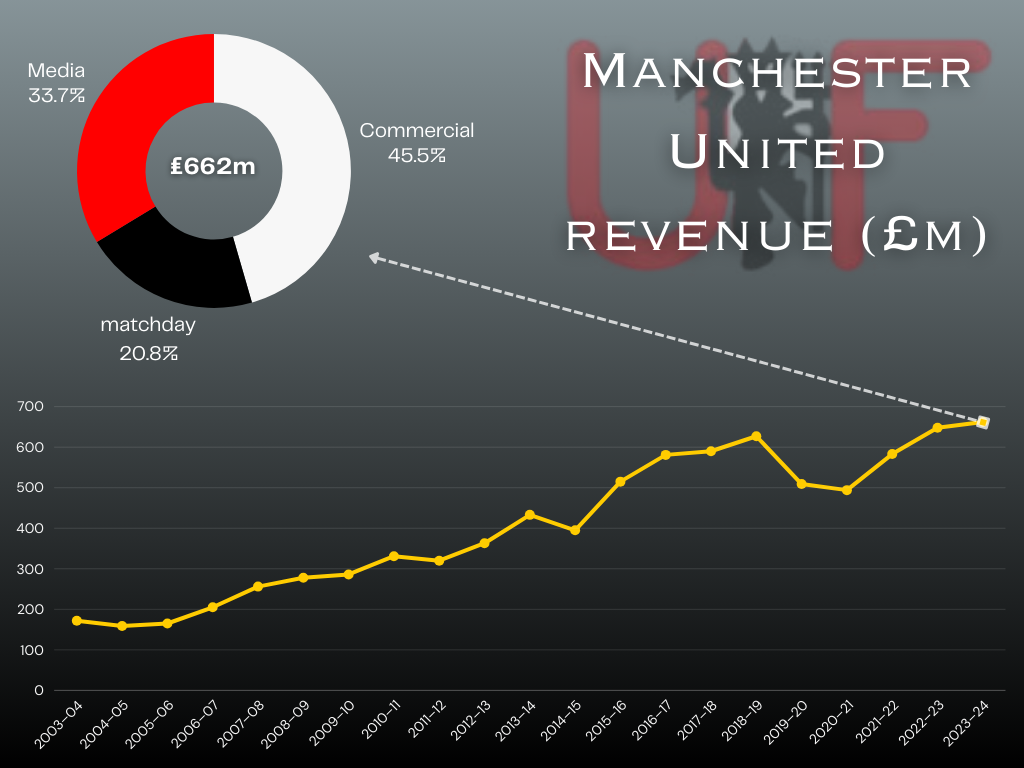
But it will be difficult for the scale of his ambitions to be realised unless United don’t dramatically increase their revenue, which remains among the biggest in the world but is slowing compared to their rivals.
Here, the long-term play is to either rebuild Old Trafford or construct a brand new stadium. Either way, it looks as though the aim is for a capacity of 90,000-100,000.
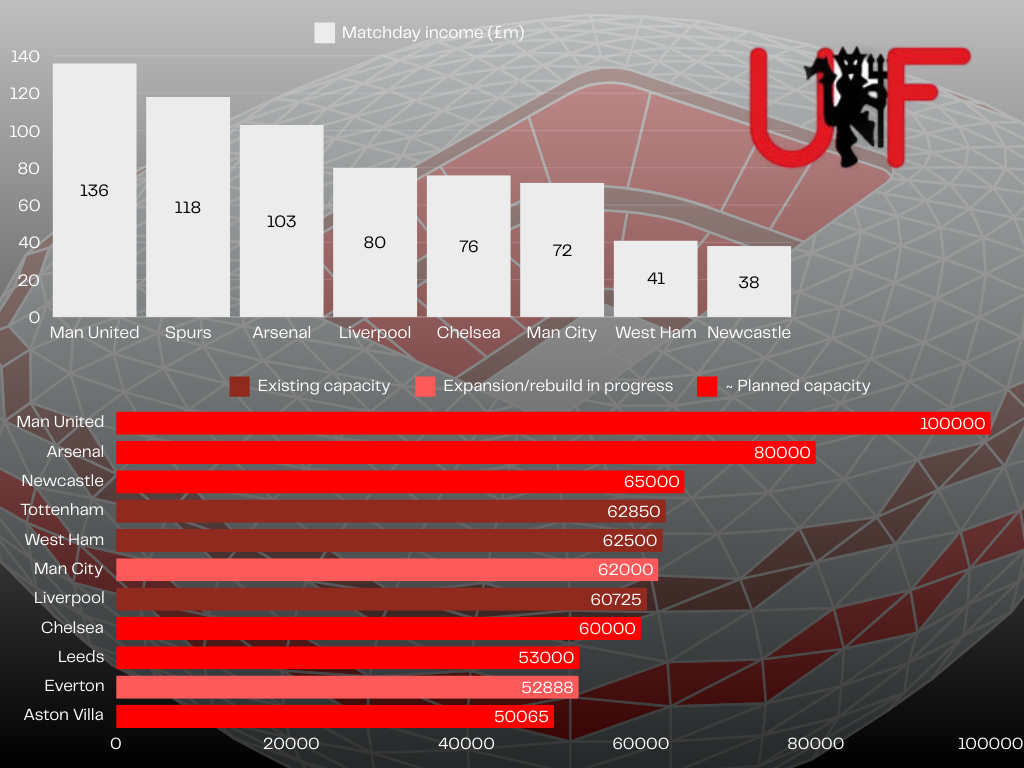
As well as boosting matchday income past the £200m mark on a pro-rate basis, this will also create a new revenue panacea on the commercial front.
This would give United what could theoretically be an unassailable PSR advantage over most of their rivals, at least in the medium term.
Receive a digest of our best United content each week direct to your mailbox