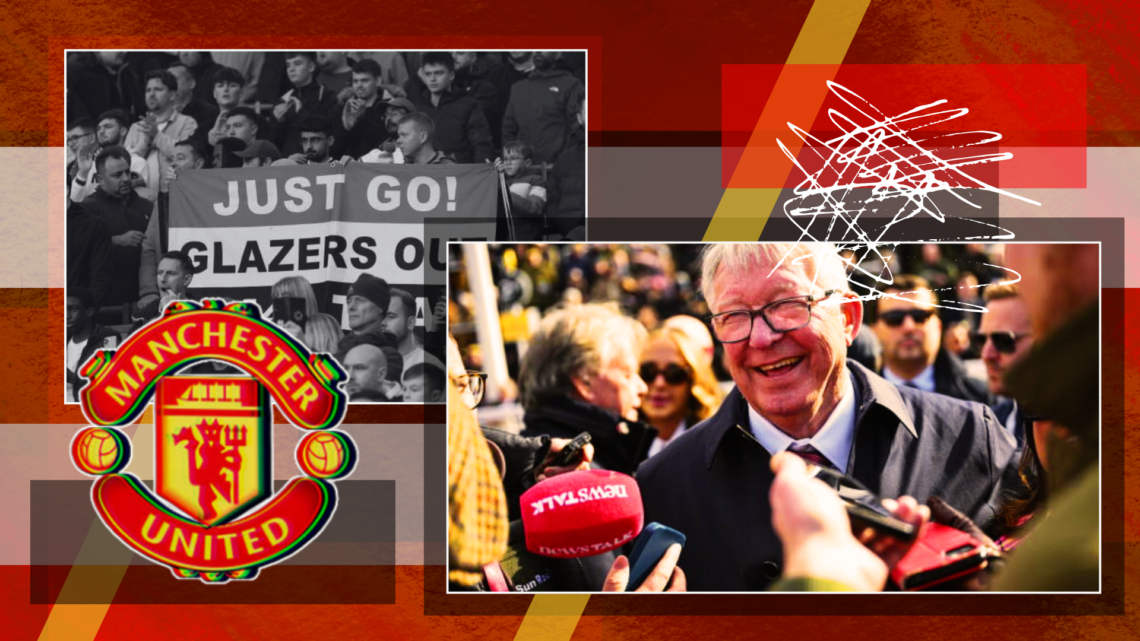


There are umpteen villains in Manchester United’s downfall over the last decade – Malcolm Glazer, the six Glazer children, Ed Woodward, and several myopic managers to name a few – but the trigger for the leveraged buyout in 2005? A racehorse named Rock of Gibraltar.
In 2003, Malcom Glazer bought a tiny slice of Man United, who were a publicly listed company at the time. Over the next two years, he increased his stake, eventually triggering a full takeover in 2005.
That deal, which saw the club delisted from the London Stock Exchange, loaded United with nearly £800m worth of debt. The Glazers borrowed the money using the club’s own assets as collateral.
In the previous 24 months, Sir Alex Ferguson had become embroiled in a feud with the Glazers’ fellow United shareholders John Magnier and J.P McManus, who he had initially advised to invest in the club.
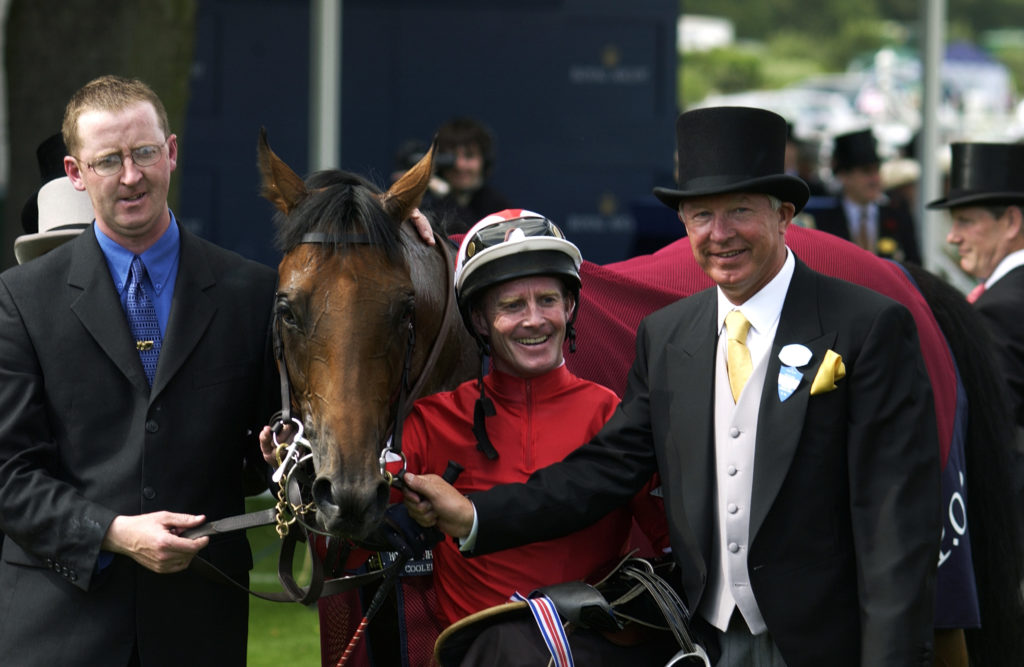
Ferguson was and still is a huge horse racing enthusiast and had gotten to know Magnier and McManus – both of whom are giants in the racing industry – through the sport.
At some stage, Magnier gave Ferguson 50 per cent ownership of Rock of Gibraltar, a horse that had become an unexpected and extraordinarily lucrative phenomenon in the racing world.
But a disagreement between the two men over ownership rights saw Ferguson threaten to take Magnier to court. Eventually, they settled out of court and Ferguson was awarded £2.5m.
Essentially, it was a gentleman’s agreement gone wrong – and United’s demise under the Glazers can be traced all the way back to it.
Could McManus and Magnier have bought Man United ahead of the Glazers?
At the time of the Rock of Gibraltar incident, the Glazers were tied on just less then 30 per cent ownership of United with McManus and Magnier.
Under UK law, surpassing 30 per cent ownership of a publicly listed company requires that the shareholder make an offer to buy out the other shareholders at the same price.
Speaking on the It Was What It Was podcast, David Walsh, the journalist who initially broke and covered the story extensively, says that McManus and Magnier could very well have gone past 30 per cent and taken over United in full had it not been for the breakdown in the relationship with Ferguson.
“It’s hard to imagine that they would have wanted the high-profile involvement in Manchester United that outright ownership would have meant,” he said in part one of the two-part series.
“But on the other hand, if some financial guru had sat them down and said ‘this is one of the greatest buys you will ever make’, J.P. McManus and John Magnier are not people who would have had to borrow a huge amount to take over Man United.
“They could have bought Man United without loading the club with debt. You wouldn’t have needed the greatest financial advisors in the world for them to be able to say: ‘This is a terrific investment’.
“The Glazers’ advisors at the same time were saying: ‘This is such a good investment, if you have to borrow every cent to buy it, you borrow every cent and to hell with it, you will make tonnes of money.
- READ MORE: Athletic Bilbao suffer injury blow ahead of Manchester United clash in Europa League semi-final
Presidential role for Sir Alex Ferguson: What United would have looked like under different ownership
Magnier and McManus would have been wildly different owners to the Glazers, says Walsh, with Alex Ferguson potentially give a very different role.
“I’ve often wondered since then if they wondered whether that could have been the single greatest investment we ever made,” he said.
“The scenario is very plausible. What John Magnier is above all else is incredibly loyal. If he had a friendship with Sir Alex Ferguson and, in his eyes, he was the reason he got involved in Manchester United initially, Alex Ferguson would have had a huge presidential-type role with United forever. That would never have changed.
“That is how Magnier would have wanted it managed. He would have wanted to stay in the background, for the club to be commercially successful. They have been incredibly good managers. If you consider where John Magner started from, his people had a relatively successful but small stud farm in County Cork. He singlehandedly shifted the epicentre of the global bloodstock industry from Kentucky to County Tipperary.
“Could he have made Manchester United successful by delegating and having the right people in place? Definitely. Would it have been done in a more fan-friendly way? Absolutely. When you think about it as a sliding doors moment, I think it’s very plausible.”
- READ MORE: Rio Ferdinand claimed Man Utd signed wonderkid every club in Europe wanted, he now needs superstar
The aftermath: Glazers couldn’t have done a worse job at Man United if they’d tried
Speaking in part two of the It Was What it Was mini-series, journalist Jonathan Wilson articulated how significant the Rock of Gibraltar has been in United’s history.
The legacy of the leveraged buyout has strained United’s ability to operate under Profit and Sustainability Rules (PSR) and their wider health as a business.
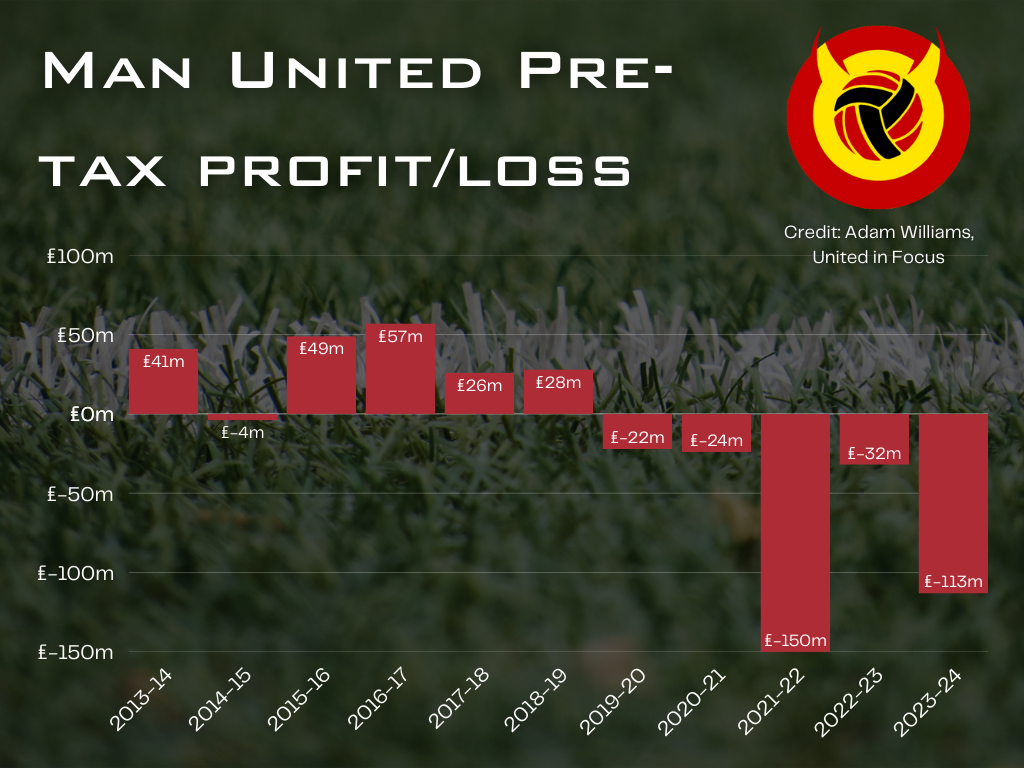
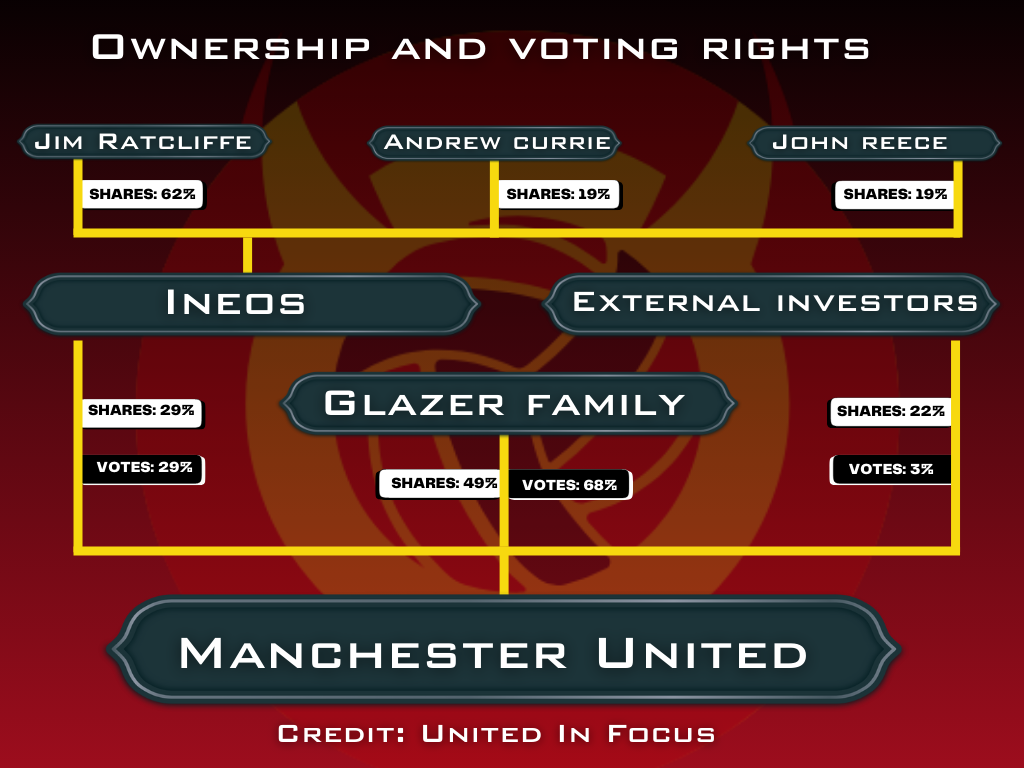
This is the situation that Sir Jim Ratcliffe, who owns about as much equity as McManus and Magnier did before they sold to the Glazers, has inherited.
“This might sound like hyperbole but I don’t think it is,” said Wilson.
“If you had been trying to run Manchester United into the ground, you could not have done it better than the Glazers have.
“It’s incremental… It’s the boiling frog analogy, isn’t it. If they had sold at Old Trafford and moved them onto a park pitch or something, people would have risen up and it wouldn’t have happened.
“This slow chipping away at everything that has made the club great until the point we are now where successive managers are flapping around with a totally incoherent squad, no money, an academy that doesn’t really work anymore, a stadium that’s falling apart.
“It’s been a masterpiece of making something worse.”
- READ MORE: Julio Baptista raises concern about Man Utd target Victor Osimhen, ‘I would have doubts…’
Man United’s debt situation without the Glazers
So what would United’s finances have looked like in a world without the Glazers?
“There would have been far less debt,” says University of Liverpool football finance lecturer Kieran Maguire, speaking exclusively to UIF.
“There would have been less pressure to de-list and then re-list the club on the New York Stock Exchange.
“The debt issue is frustrating but the interest on the debt isn’t something I’m massively concerned about – it’s more symbolic of the mismanagement of the Glazers.

“I still think the turning point was the failure to have proper succession planning. Losing David Gill and Sir Alex Ferguson at the same time made United extremely vulnerable.
“If that had been addressed properly, half of the problems that have arisen today wouldn’t be there. It would have changed the club forever.
“People forget, United have won the Champions League and the Premier League under the Glazers while Sir Alex was still there. It was his retirement and the lack of a player recruitment strategy that have caused the issues.
“If you contrast that to what we’ve seen at Manchester City and Liverpool, who are the poster boys of using data… It is a cultural issue at United.”
Receive a digest of our best United content each week direct to your mailbox