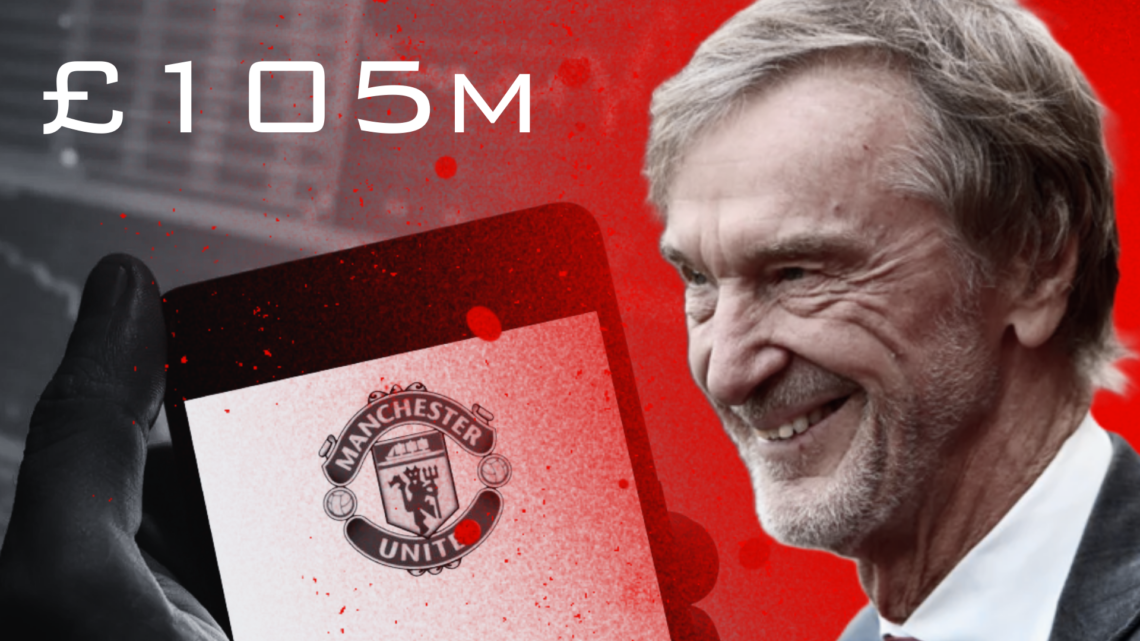


Fortnightly staff purges, Profit and Sustainability panic, and perhaps the club’s worst team since before Sir Jim Ratcliffe was old enough to buy a pint – welcome to Ineos’ Manchester United.
Since handing £1.25bn to the Glazer family and becoming United’s largest individual shareholder, Ratcliffe has axed 250 jobs and will soon cut 200 more.
The business did look bloated before the chemicals billionaire arrived in Manchester, with 1,150 employees in total, the largest number ever in the Premier League.

But Ratcliffe isn’t just getting rid of the odd empty suit. It is hard to believe that 450 people – almost 40 per cent of a global business’s workforce – are merely useless lumber.
It will be morbidly fascinating to see what effect the sweeping redundancies at Old Trafford have on United’s finances, although it could take years before the impact fully crystalises in the accounts.
It’s true that things needed to change after nearly two decades of neglect under the Glazers.

The family have pilfered hundreds of millions of pounds and left a club that should be a gimme in terms of profitability drowning in red ink at the deep end of the debt pool.
However, Ratcliffe and Ineos have overcorrected with their brutal approach. There is only so much of the patient you can amputate until they are unable to make it out of the operating theatre.
In recent weeks, The 1958, a Man United supporter group, have repeatedly used an appropriate phrase in their communications to describe the new regime: penny-wise, pound-foolish.
In the name of revenue maximisation, United are pricing out bedrock fans, those who create the atmosphere and culture that the club’s commercial department trade on.
Sacrificing core support in favour of a demographic less resistant to higher prices might yield a bump in matchday income for a few seasons, but zoom out on the graph and it will decimate the United brand.
That in turn will gradually erode United’s leverage with sponsors and their ability to sell merchandise. Essentially, their intellectual property is only commercially valuable because of real fans.
Commercial revenue, United’s biggest income stream, was worth £310m last season and is the reason that the Red Devils are still the world’s fourth richest club by turnover.
In any case, it’s costs, not turnover, that is the real problem at Old Trafford – a gratuitously large and misappropriated player wage bill, outstanding transfer payments, and huge debt servicing costs.
Yes, Glazernomics is the root cause, cutting costs is necessary, and one can make an argument for the redundancies on the back of this, although there are far, far bigger issues elsewhere on the balance sheet.
| Rank | Club | Revenue (2023-24) |
| 1 | Real Madrid | £899.1m |
| 2 | Manchester City | £720.5m |
| 3 | Paris Saint-Germain | £693.1m |
| 4 | Manchester United | £662.7m |
| 5 | Bayern Munich | £658.2m |
| 6 | FC Barcelona | £653.9m |
| 7 | Arsenal | £616.2m |
| 8 | Liverpool | £614.6m |
| 9 | Tottenham Hotspur | £529m |
| 10 | Chelsea | £469.1m |
| 11 | Borussia Dortmund | £441.8m |
| 12 | Atlético de Madrid | £352.2m |
| 13 | AC Milan | £341.9m |
| 14 | FC Internazionale Milano | £336.3m |
| 15 | Newcastle United | £319.7m |
| 16 | Juventus | £305.9m |
| 17 | West Ham United | £277.1m |
| 18 | Aston Villa | £266.8m |
| 19 | Olympique de Marseille | £246.8m |
| 20 | Olympique Lyonnais | £227.1m |
There appears to be close to zero checks or balances on Ratcliffe’s power, despite him personally owning less than 20 per cent of the club’s equity.
Some have suggested that an activist investor could emerge from the New York Stock Exchange, but how likely is that in reality?
Minority Man United shareholders have no leverage with Ineos
Speaking exclusively to UIF, Liverpool University football finance expert and industry insider Kieran explained the dynamic between the different branches of United’s ownership structure.

“I think the competing voices to a certain extent have been silenced by Ineos following the deal,” said the Price of Football author and podcast host.
“All of the focus is in terms of the quantum of share ownership. The stock market investors are a large faction but have barely any control.”
United have approximately 150 institutional shareholders, with Ariel Investments and Lindsell Train among the biggest.
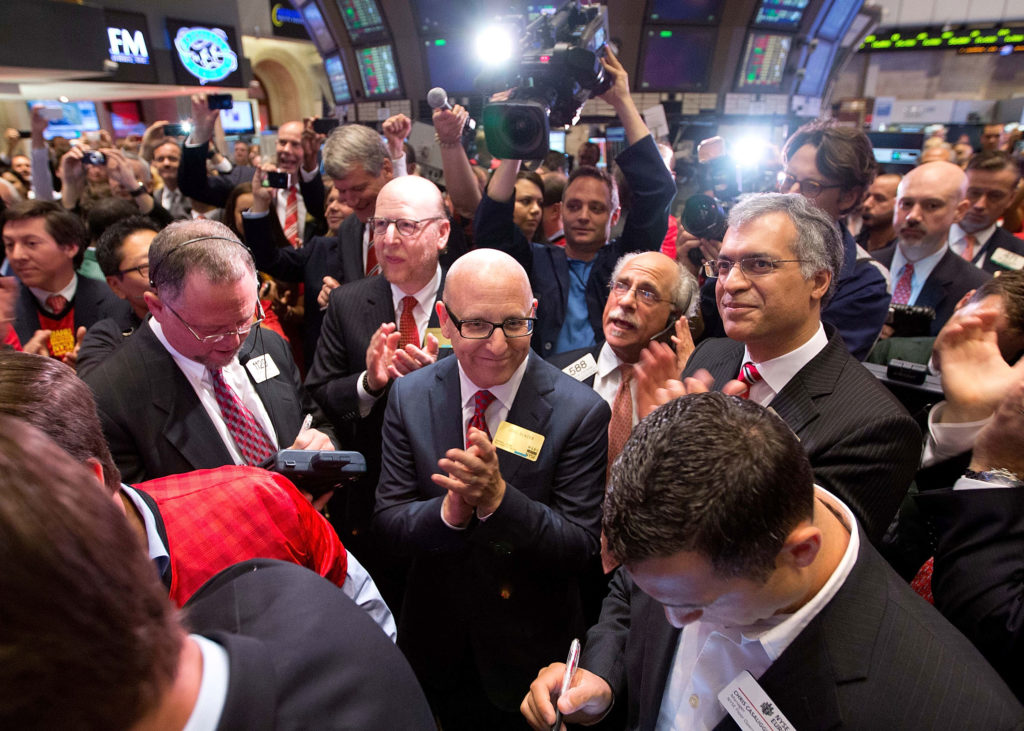
“Sitting alongside the share ownership is a control document which has delegated day-to-day responsibilities to Ineos,” said Maguire.
“If you take a look at City Football Group, for example, they have Silverlake who have around 18 per cent. They are basically passive. It’s the same sort of arrangement.”
When will major NYSE investors sell Man United shares?
In 2024, Lindsell Train – who also own stakes in Celtic and Juventus – held around £180m worth of stock in United. Fast forward to the present day, they have £75m.
That £105m sell-off could be just the start if Ratcliffe can successfully exploit opportunities to boost United’s enterprise value, explains Maguire.
| Rank | Club | League | Country | Value | 1-y value change (%) | Revenue | Operating income |
| 1 | Real Madrid | Spanish La Liga | Spain | £5.18bn | 9 | £685m | £60m |
| 2 | Manchester United | English Premier League | England | £5.14bn | 9 | £616m | £147m |
| 3 | Barcelona | Spanish La Liga | Spain | £4.39bn | 2 | £660m | £-114m |
| 4 | Liverpool | English Premier League | England | £4.21bn | 2 | £565m | £80m |
| 5 | Manchester City | English Premier League | England | £4.01bn | 2 | £683m | £111m |
| 6 | Bayern Munich | German Bundesliga | Germany | £3.93bn | 3 | £613m | £66m |
| 7 | Paris Saint-Germain | French Ligue 1 | France | £3.45bn | 4 | £592m | £-99m |
| 8 | Tottenham Hotspur | English Premier League | England | £2.51bn | 14 | £522m | £126m |
| 9 | Chelsea | English Premier League | England | £2.46bn | 1 | £487 M | £0m |
| 10 | Arsenal | English Premier League | England | £2.4bn | 15 | £440m | £110m |
“Quite a lot of these people are happy to be sleeping partners and feel there is scope for increased value of the brand and they will make their money at the exit point.
“If they are happy for Ineos to be the main determinants of day-to-day decision and also held to account when the decisions look bad, that works for them.
“You don’t hear anything about Lindsell Train, who own a large chunk of the A shares, for example.”
- READ MORE: ‘Best in the league’ Man Utd sold for £15m is now thriving in a system like Ruben Amorim’s
Sir Jim Ratcliffe ‘enabling’ the Glazers amid more staff cuts
Maguire also had strong words to describe the Ratcliffe-led ‘transformation plan’ United announced this week: “They [Ineos] are essentially enabling the Glazers,”

“If the Glazers had announced, 450 redundancies, the pushback from the United fanbase would have been huge.
“Whereas, Ratcliffe came in an had instant goodwill because the PR machine span the story of putting the ‘man’ back in ‘Manchester’. At the moment, he’s putting the ‘fail’ back into ‘Failsford’.
“A lot of people have given him the benefit of the doubt and are just repeating the mantra ‘difficult decisions have to be made.'”
PSR: Will redundancies allow Man United to spend?
With goodwill towards Ratcliffe rapidly dwindling, an uptick in spending on recruitment and retention would be the simplest way to get fans back onside.
However, the Premier League and UEFA’s Profit and Sustainability Rules (PSR), as well as United’s cash issues, will put pay to any real fireworks in the transfer market in the summer.
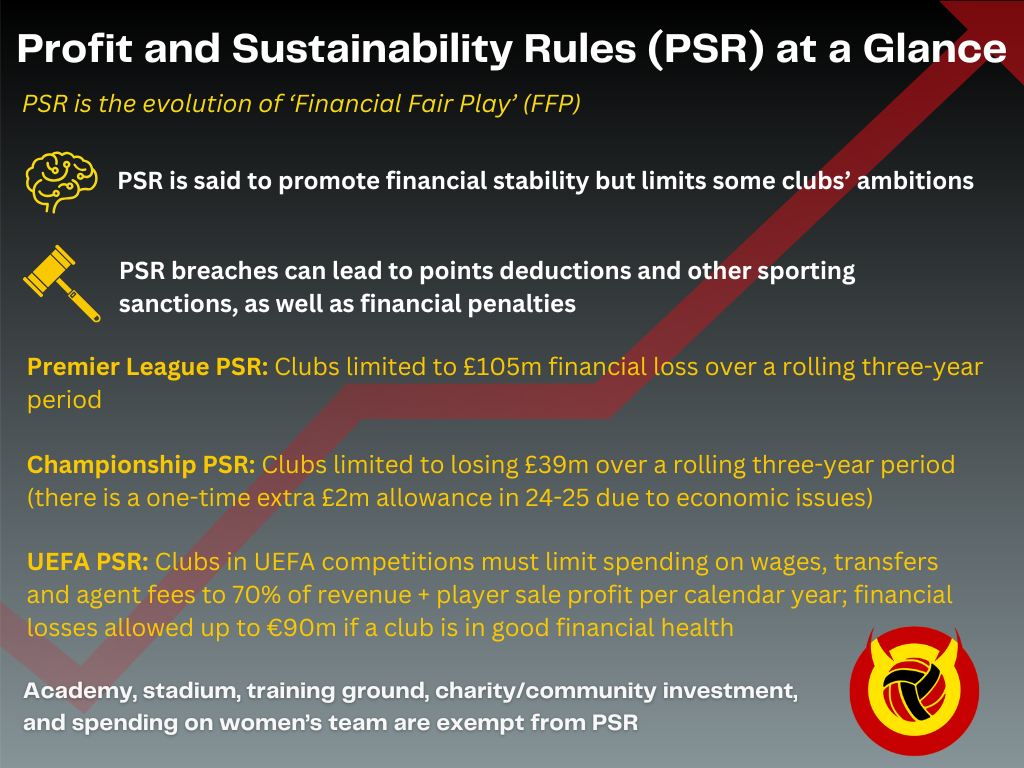
United dodged a PSR breach for the three-year period up to the end of the 2023-24 Premier League season by the skin of their teeth.
In the end, they have probably come in at around £1-5m under the £105m allowable loss threshold.

UEFA’s rules, which are based on squad-cost-to-revenue ratio, are tighter.
While they should comply with both the European and domestic rules in 2024-25, the Premier League’s vote to postpone a new UEFA-style PSR system means things will get even harder next year.
Under the new system, the club’s huge interest repayments would not have counted towards United’s PSR calculation.
Receive a digest of our best United content each week direct to your mailbox