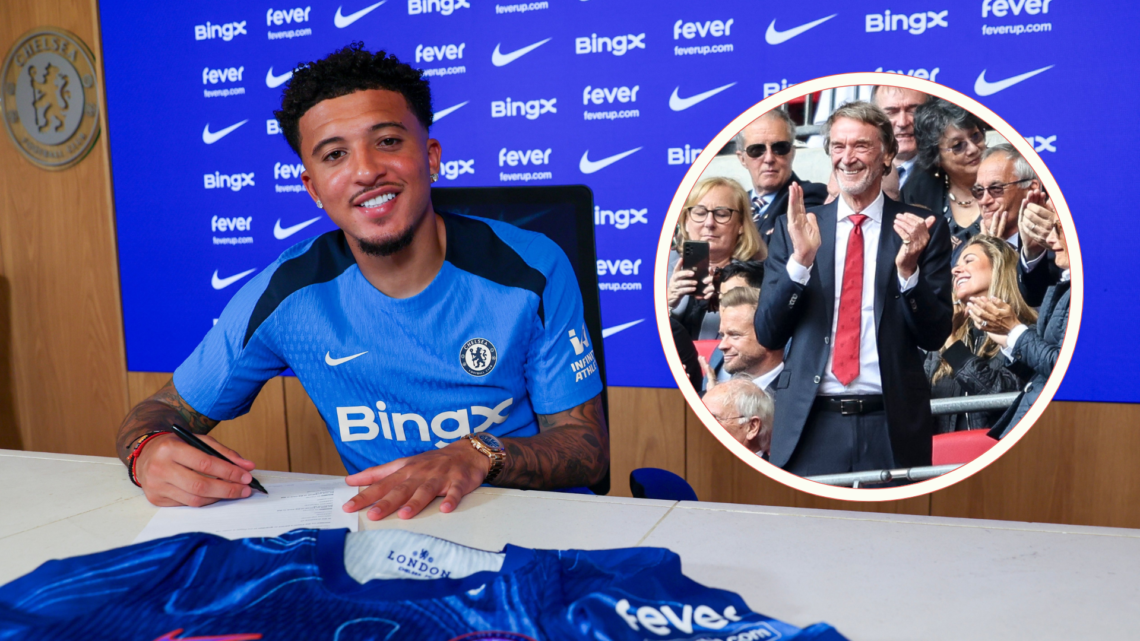


Jadon Sancho’s exit from Man United has roundly been seen as a success and will give them a considerable cushion if they need to spend in January.
Jadon Sancho’s United career never caught fire and went into a tailspin from which it was unable to recover following his fall-out with Erik ten Hag last autumn.
On deadline day, Sancho switched to Chelsea in a loan deal with an obligation for the West London side to make the move permanent next summer.

Chelsea are beset by issues with both the Premier League and UEFA’s Profit and Sustainability Rules (PSR, formerly FFP), hence the deferred permanent deal.
The arrangement will reportedly see United recoup around £25m of the £73m they paid Borussia Dortmund for Sancho in the summer of 21.
However, the PSR calculation assesses profit on player sales with reference to their amortised book value, while the removal of Sancho’s wages from the books will also skew the final PSR value of the deal.
United came dangerously close to breaching PSR for the three-year period up to the end of 2023-24 and Sir Jim Ratcliffe‘s regime wants to steer the ship away from the rocks going forward.
And analysis shows that Sancho deal will consolidate their position under football’s spending rules.
Sancho to Chelsea: The PSR benefit for Man United
While United’s 3-0 thumping at home to Liverpool quickly brought them crashing down to earth, Sancho’s exit had brought some optimism to Old Trafford.
The 24-year-old was one of 13 player to leave the Red Devils over the summer, with several of those among the club’s very biggest earners.
Some commentators had even tentatively suggested that, with five astute additions in recent weeks and months, United have ‘won’ the transfer window.
Sancho’s annualised wages mean United – of which Chelsea are believed to be covering the bulk – were £15.6m before bonus-related payments and national insurance contributions.
That figure contributes to United’s profit-and-loss account, which in turn is used by the Premier League and UEFA to determine compliance with PSR.
The £20-25m obligatory fee Chelsea have committed to will then be factored into United’s profit-loss for the 2025-26 PSR monitoring period.
Sancho’s book value will be lower by that juncture as he will have just one year left on his deal, meaning the club will register a higher profit in PSR terms than if they had sold him for the same amount this term.
Analysis from football finance professional Sub-Prime Goals on X projects that, after Sancho’s exit, United now have £111.3m in PSR capacity for the season.
Significantly, that will give them ample headroom to spend in January should Dan Ashworth and Erik ten Hag feel it is needed – that is if the United manager is still in charge by then.
Man United’s PSR position
United are believed to have only met the PSR threshold for the three years up until 30th June 2024 because of around £40m of pandemic-related add-backs.
But as United’s huge £150m financial loss in 2021-22 is no longer in the equation, they have far more grace this season.
PSR is not the be all and and end all when it comes to the club’s capacity to spend, however.
The owners have to be prepared to bankroll any new signings if the club does not have sufficient cash flow to finance deals.
The cash that Sancho’s exit guarantees will give United greater flexibility in this regard.
The Premier League currently permits clubs to lose a maximum of £105m over a rolling three-year period but is trialling a new system on a non-binding basis this season.
From 2025-26, it is expected that the Premier League will introduce a UEFA-style system that will prevent clubs from spending more than 85 per cent of turnover on wages, transfers and agent fees.
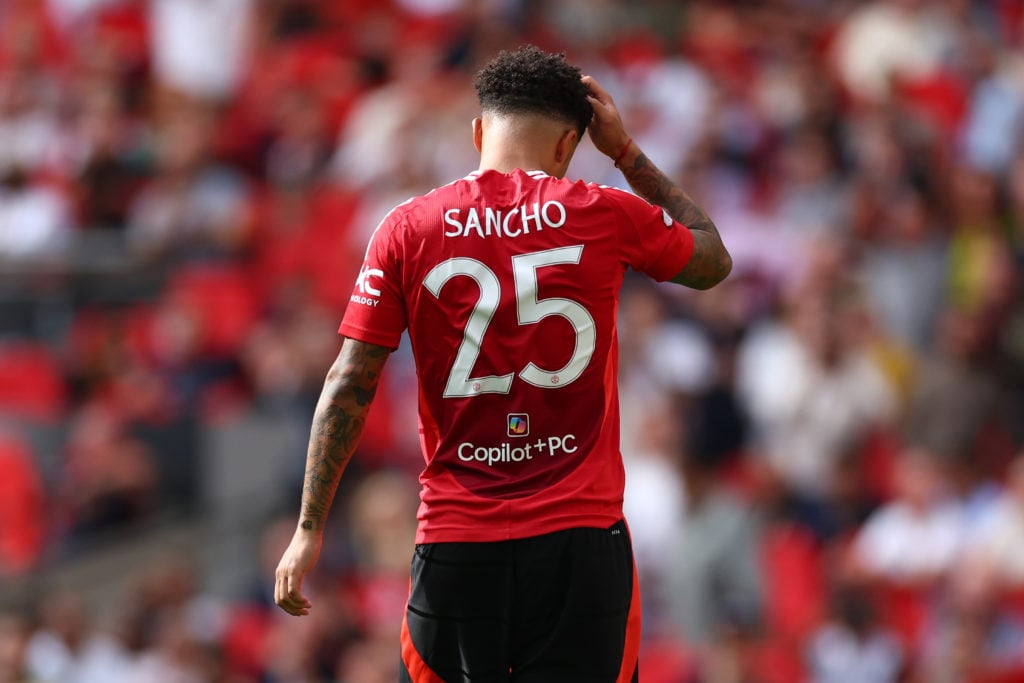
UEFA are currently phasing in a tighter version of this squad cost system, which will eventually set the cap at 70 per cent.
Based on United’s most recent accounts, they would have a £550m playing budget under the squad cost model.
Receive a digest of our best United content each week direct to your mailbox