There was a time when Marcus Rashford symbolised a new era at post-Sir Alex Ferguson Man United. Now, his expected exit could be the start of another chapter at Old Trafford.
Things must change in M16 at both the front and back of the house and, although it will be an emotional goodbye, Rashford’s departure could be the answer on a number of fronts, both sporting and financial.
Sir Jim Ratcliffe and Ineos have acted decisively and, in many cases, brutally to cut costs and make their mark behind the scenes since they bought a 27.7 per cent stake for £1.25bn almost one year ago.

But their radical approach has barely extended to the football department, where the situation recently has got as bad as they have ever been, two months on from Ruben Amorim’s appointment.
On the biggest decisions so far, United’s owners have hesitated, erred and equivocated when they should have been resolute.
Eventually, they pulled the trigger and sacked Ten Hag but that decision came too late, by several months at the most generous estimate if not far more.
The legacy of the Ten Hag era, which saw the owners back a manager with eyewatering funds to make some of the club’s worst ever signings, will cast a long shadow.
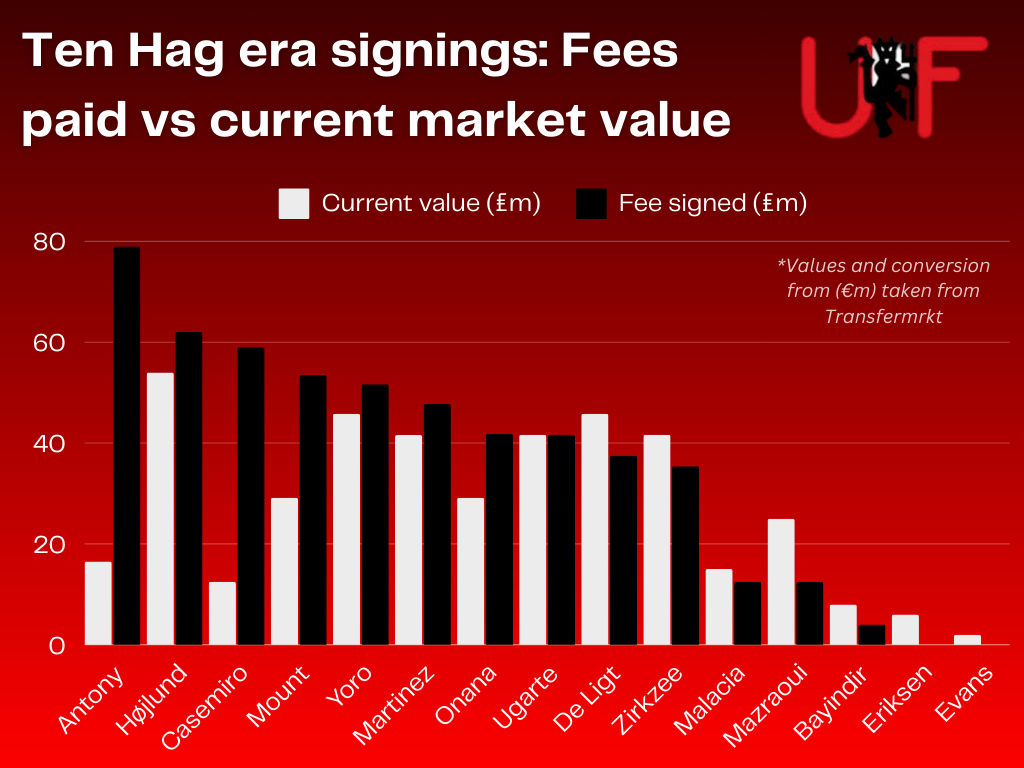
For one thing, United are tapdancing around an FFP breach. As Nottingham Forest and Everton can attest, that would likely come with a points deduction, a fine, and a healthy dollop of embarrassment.
Amorim’s side are 14th in the Premier League, seven points off the bottom three and almost twice as many away from the top four. A points deduction is not something they can afford.
| Position | Team | Played MP | Won W | Drawn D | Lost L | For GF | Against GA | Diff GD | Points Pts |
| 9 |  Aston VillaAston Villa Aston VillaAston Villa | 19 | 8 | 5 | 6 | 28 | 31 | -3 | 29 |
| 10 |  BrightonBrighton BrightonBrighton | 19 | 6 | 9 | 4 | 29 | 28 | 1 | 27 |
| 11 |  TottenhamTottenham TottenhamTottenham | 19 | 7 | 3 | 9 | 41 | 28 | 13 | 24 |
| 12 |  BrentfordBrentford BrentfordBrentford | 19 | 7 | 3 | 9 | 33 | 35 | -2 | 24 |
| 13 |  West HamWest Ham West HamWest Ham | 19 | 6 | 5 | 8 | 23 | 35 | -12 | 23 |
| 14 |  Man UtdManchester United Man UtdManchester United | 19 | 6 | 4 | 9 | 21 | 26 | -5 | 22 |
| 15 |  Crystal PalaceCrystal Palace Crystal PalaceCrystal Palace | 19 | 4 | 8 | 7 | 20 | 27 | -7 | 20 |
| 16 |  EvertonEverton EvertonEverton | 18 | 3 | 8 | 7 | 15 | 24 | -9 | 17 |
| 17 |  WolvesWolves WolvesWolves | 19 | 4 | 4 | 11 | 31 | 42 | -11 | 16 |
| 18 |  IpswichIpswich IpswichIpswich | 19 | 3 | 6 | 10 | 18 | 33 | -15 | 15 |
Key:
Position 1 – 4 : Champions LeaguePosition 5 : UEFA Europa League
Position 18 – 20 : Relegation
Premier League FFP (Profit and Sustainability Rules or PSR, to give them their proper title) limits clubs to losing £105m over a rolling three-year period.
A cursory look at United’s two most recent set of accounts show that the Red Devils are well over that threshold even without their figures for what will be a loss-making 2024-25 factored in.
United would have breached PSR last season had it not been for £40m worth of pandemic-attributable costs in the relevant three-year period, plus other exemptions such as youth and infrastructure spending.
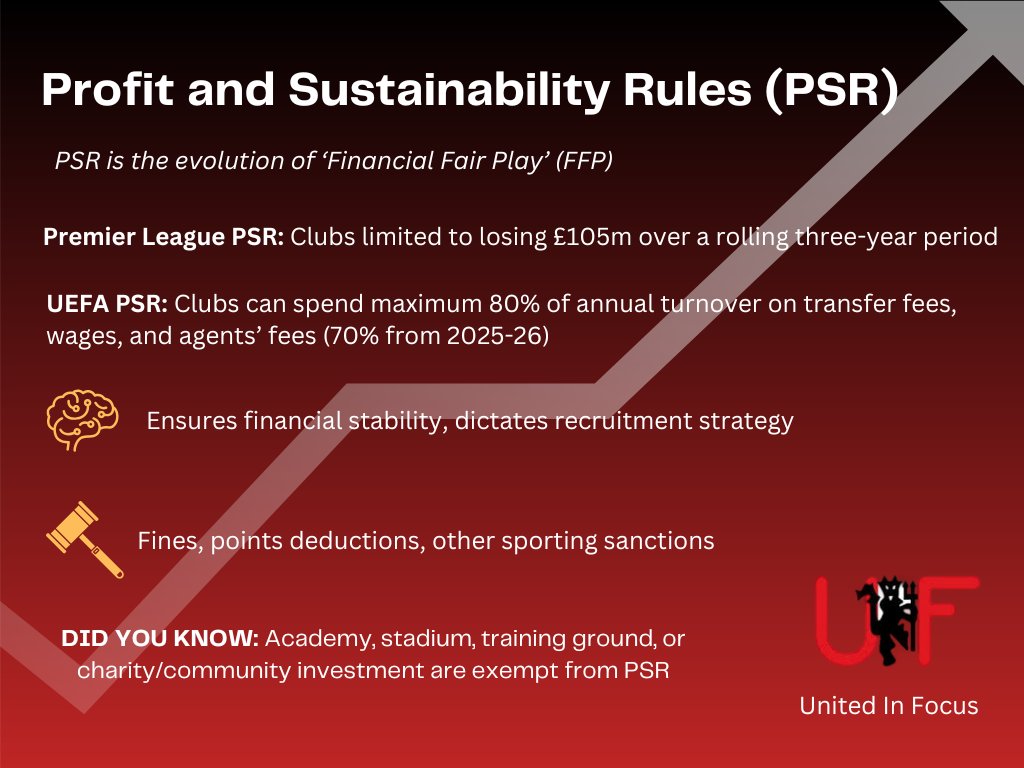
After £200m-plus worth of signings in the summer, Amorim has said his hands are tied because of PSR with regards to United’s January budget.
But it is very much wet cement at present, and United do have options to give themselves more flexibility in a winter window where they desperately need to get their house in order.
- READ MORE: Casemiro attracts fresh transfer interest as Manchester United plot three sales in January
Marcus Rashford sale could ease Man United’s PSR anxieties
For all the handwringing relating to United’s position under the Premier League’s financial rules, selling Rashford could – in theory – give them huge headroom to spend in January.
As an academy graduate, the 27-year-old has a book value of zero as far as the accounts are concerned. That is significant as it means any fee United land for the attacker would be ‘pure profit’.
This is why so many clubs put homegrown players up for sale to get out of their PSR holes last summer.
United’s asking price for Rashford is reportedly around £40m, with all of that money going directly to the club’s profit-and-loss account.
By contrast, any players the club sign will have their fees amortised, probably over a period of five years, which is the maximum allowed under Premier League and UEFA rules.
With half of the season already gone, United could reinvest the £40m they recoup for Rashford 10 times over and it would have a net neutral impact on their PSR calculation this season.
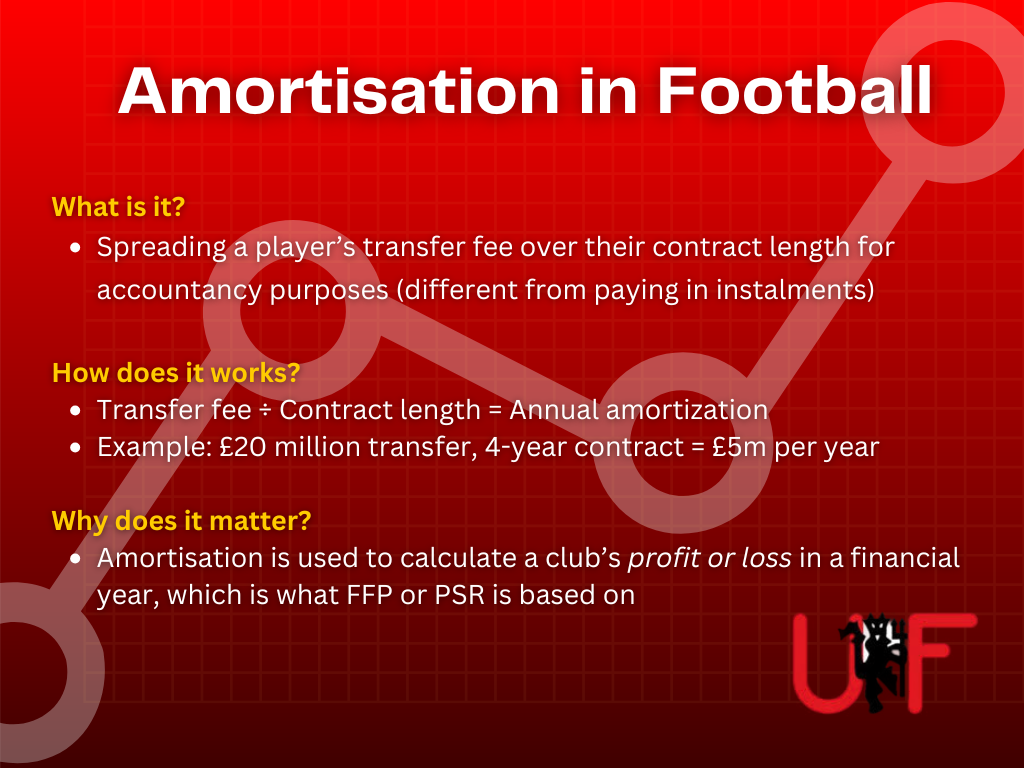
This season is the operative phrase here. If United did go and spend £400m this January, they would still have to bear £80m in amortisation every year for the next five.
That calculation also doesn’t take into account wages, which would increase and affect PSR too.
But Rashford’s sale can and will give United more room to manoeuvre if they are desperate to strengthen this winter. And that could be his parting gift for the club he loves.
What fans can expect from Ineos’s first January transfer budget
PSR is not the only concern for United this January. Just as important is the owners’ capacity and willingness to spend.
Just because United can create the PSR headroom to make new signings, it doesn’t mean Ratcliffe and Ineos will bankroll the financial losses that additions to the squad would create.
Ratcliffe has made hundreds of staff redundant at Old Trafford, which has actually cost the club around £10m in the short term. He has also cut charity contributions and employee perks.
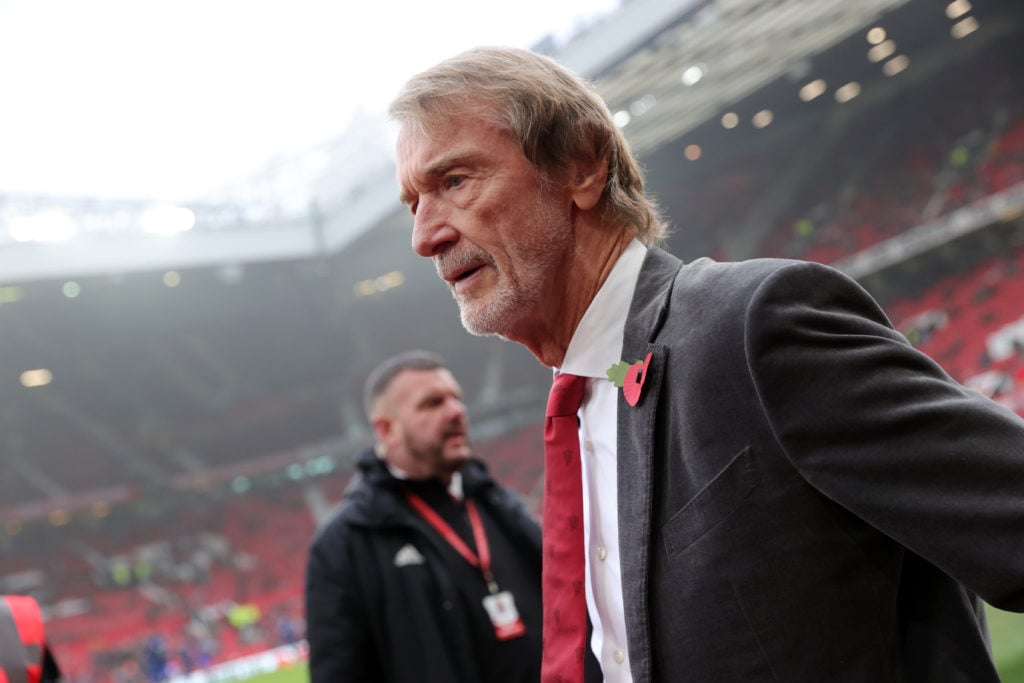
He has justifiably been accused of socialising the losses in doing so, which is at odds with his misty-eyed rhetoric about being United born and bred.
But Ratcliffe’s ruthless programme of finding ‘efficiencies’ is also a symptom of a club whose cash flow does not meet their expenses.
In layman’s terms, the club has to find money to pay wages and other running costs from external sources like owners funds, debt, or credit facilities.
The impact this January? Essentially, the owners will need to either take on more debt or put their hand in their pocket to fund signings, even if they have the PSR breathing space to make them happen.
Ratcliffe has committed to funding running costs, as proven by his recent injection of around £79m worth of equity into United.
But even Britain’s richest man does not have endless liquidity to spend on transfers for a club who will not generate a return for the chemicals billionaire for many, many years.
So while Rashford will create PSR wriggle room, the sale of academy players is not the answer long-term.
- READ MORE: Man United wonderkid nicknamed ‘Kid Messi’ to be handed debut well above his age range this season
What is the latest with Marcus Rashford
United’s PSR situation is not unique in the Premier League. Many clubs are feeling the strain.
That limits the number of potential domestic suitors for the Manchester-born forward, with Arsenal the only club to reportedly be a serious contender.
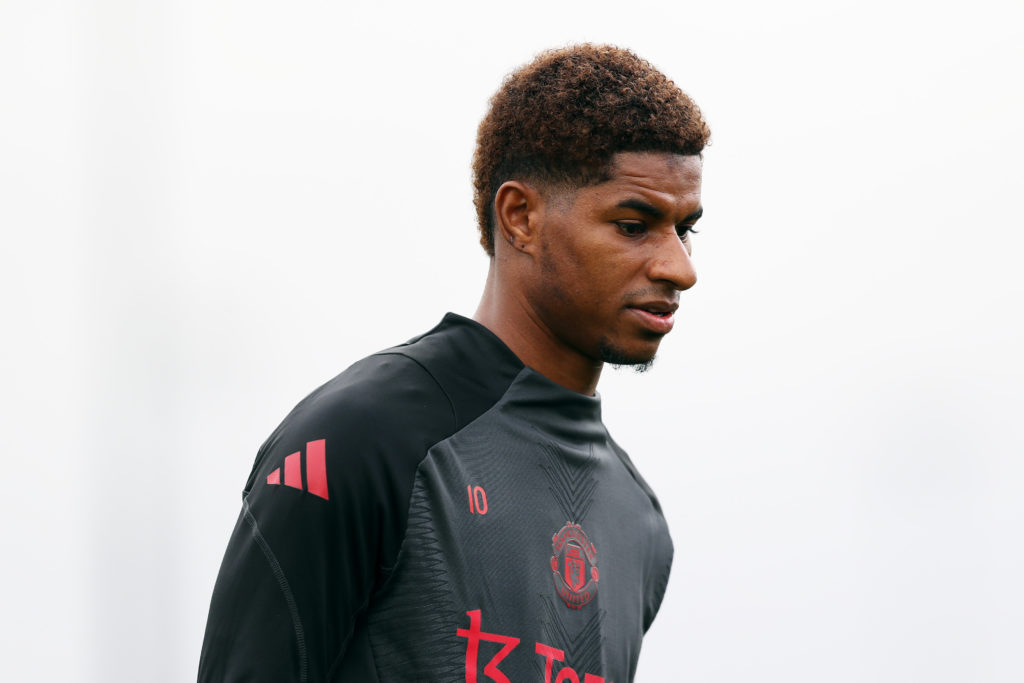
Overseas, Paris Saint-Germain have routinely been cited as a potential destination for Rashford.
However, United are said to have a poor relationship with the French champions due to the Glazers’ decision not to sell the club to Sheikh Jassim bin Hamad Al Thani, an ally of PSG’s owners, last year.
Rashford has rubbished reports he has enlisted a new agency, Stellar, meanwhile in an attempt to force through a deal post-haste.

There is also Saudi Pro League interest in Rashford, although the player himself is believed not to favour a move to the Gulf state.
It appears both the club and Rashford are keen to make a deal happen, which would also free up his £300,000-a-week wages.
Incidentally, that would unlock another £7.8m or thereabouts in the PSR calculation.
Receive a digest of our best United content each week direct to your mailbox