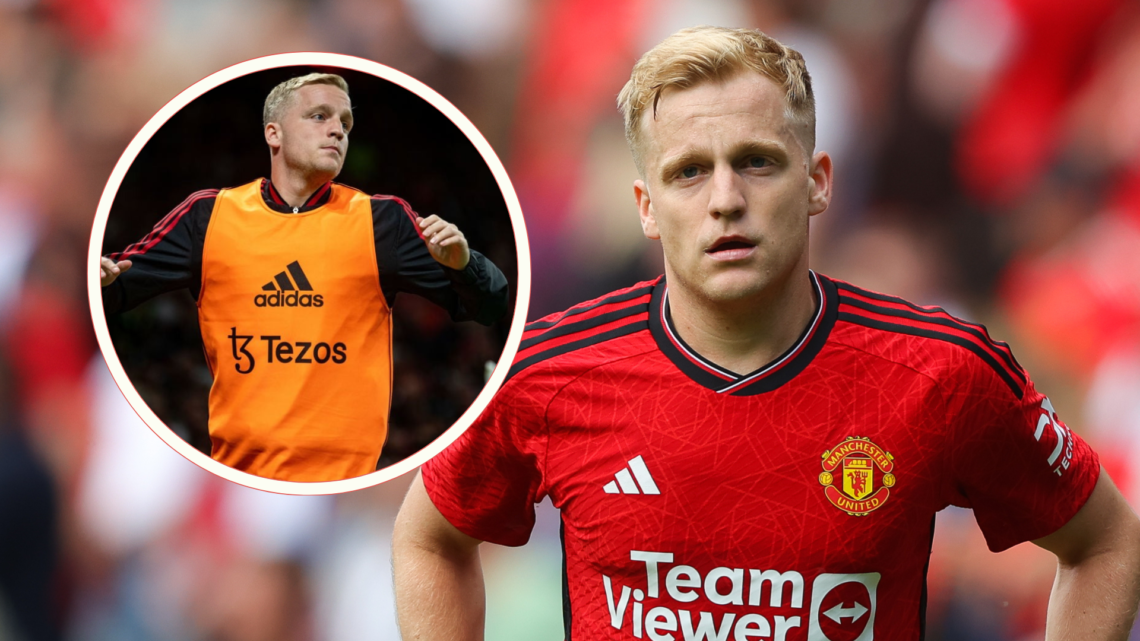


Manchester United have struck a deal to sell midfielder Donny van de Beek to Spanish side Girona.
The move to sign Donny van de Beek looked like a very sensible one at the time in 2020, despite the circumstances.
United had pursued Jadon Sancho during the summer, failed to land him, and then made the Dutchman their priority, switching positions. United paid £35 million for his signature.
Van de Beek had enjoyed big success at Ajax, and had left his mark on Ole Gunnar Solskjaer, scoring against the Norwegian when he was Molde manager.
But upon arrival at Manchester United, despite a goal on his debut in defeat to Crystal Palace, Van de Beek failed to win Solskjaer over, and his spell at the club turned into a disaster.
- READ MORE: Manchester United confirmed signings, transfers in, out, loan exits, releases for 2024/25
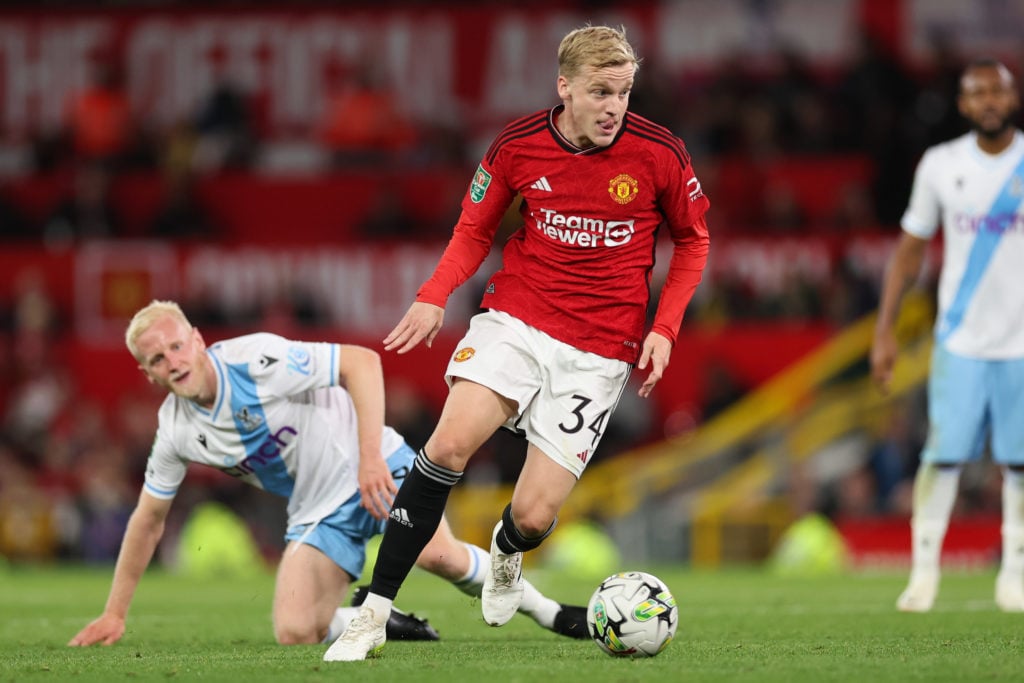
Donny van de Beek heading towards exit
Manchester United have agreed a deal with Girona to sell Donny van de Beek. It is a deal reflective of how far he has fallen, in financial terms.
When Van de Beek was loaned to Eintracht Frankfurt, there was a £9.5 million option to buy clause written into the deal. A nightmare loan spell mean the German side had no intention to pay this.
Manchester United have now settled on a sale where Girona will pay an initial £500,000 for his signature, a staggering initial loss.
However, according to BBC Sport, multiple add-on incentives could take the deal up to £16.9 million – although it is expected to be ‘unlikely’ all are met.
United In Focus spoke to football finance expert Adam Williams about the deal, who explained how from a Profit and Sustainability Rules perspective, the deal barely benefits United.
The one positive is shifting his wages, with Donny van de Beek’s annual salary £4.6 million.
Williams explains: “Van de Beek initially signed for £35m and is in the fifth and final year of his contract, meaning his PSR value has decreased by four increments of £7m, or £28m in total.
“That means United still have £7m in amortisation left to record, minus the £500,000 the club will receive up front from his sale.
“Think about it like credit card debt. If I want to cancel the card, it doesn’t release me from having to pay what I owe.”
That is £6.5 million Manchester United still owe via PSR as the club count the cost of Van de Beek’s purchase.
“Van de Beek’s departure might be the best thing for all parties on a sporting level and they will, of course, get back his wages for the year, which will save a few million. But the positive impact in terms of PSR is negligible.
“And without being privy to the details of the arrangement, it’s impossible to know how achievable to incentive-based elements of the deal might realistically be worth.
“In any case, those will be spread out over a few years, so won’t have a huge material impact on United’s PSR calculation.”
He added that United will look to cut smarter deals in the future under the guidance of new investors Ineos, who are running football operations at the club.
“I also think there’s something symbolic about the fact that the deal is with Girona, who are a subsidiary of Man City’s City Football Group. I can’t think of many City signings that have been as abject a failure as this in recent years.
“Just as Girona are sharing the financial risk with United in terms of the incentive structure, Sir Jim Ratcliffe wants players to shoulder more of the burden at his club in future by implementing a performance-based wage structure.
“Had that already been the case when Van de Beek signed in 2020, the financial impact of his failure might not have been so severe.”
Van de Beek ill-suited to English football, says pundit
Donny van de Beek was one of the top 30 players in the Ballon d’Or voting in 2019/20 after a strong campaign with Ajax, and had also been targeted by Real Madrid.
But at United he looked lost, and a lack of chances drained his confidence. Injuries and poor loan spells also played their part, and not even reuniting with former Ajax boss Erik ten Hag changed his fortunes.
Speaking to Talksport (7/7), former footballer Tony Cascarino commented: “I watched him a lot because I used to work on Eredivisie football. And he was a fine player in the Dutch league, which is nowhere near the level of the Premier League.
Technically good, pace-wise not the quickest, always seemed to chip in with a goal, but not much more than that.
“Do you remember when Everton bought Davy Klaassen, who was at Everton? I remember watching him and thinking not sure that’s a great signing. I think they paid about £30 million or something like that, and he sort of reminded me of that signing, which is a decent Dutch-level player but way short of what’s required at a club like Manchester United and Everton.”
Van de Beek ended with 62 appearances for Manchester United, however, played the full 90 minutes just eight times.
Receive a digest of our best United content each week direct to your mailbox