Manchester United will play in the Champions League next season, but their earnings before a ball is kicked at the start of the league phase will be more modest than several of their direct rivals.
The Champions League is often hailed as a miracle cure for clubs in financial distress. But while the club can expect an enormous revenue uplift in 2026-27, the impact of elite European football on A) United’s bottom line and B) their financial power relative to their peer group is much more nuanced.
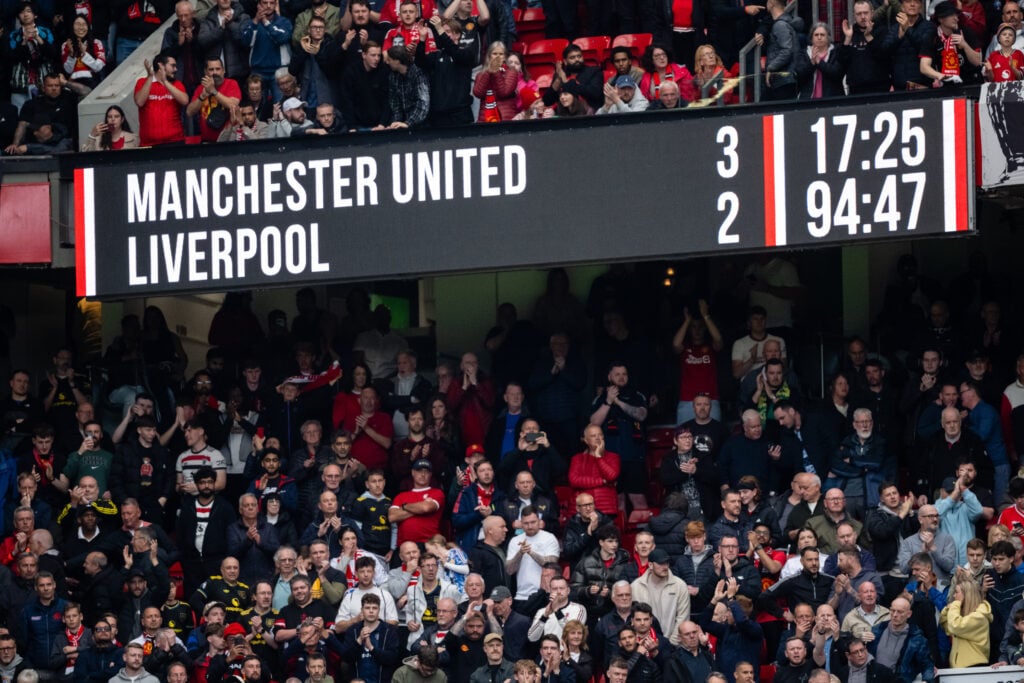
At the weekend, Michael Carrick’s side secured qualification with a 3-2 victory over Liverpool, who like Aston Villa will have to wait until at least another weekend until a finish in one of the Premier League’s five automatic Champions League spots is mathematically secured.
In all likelihood, however, they will both join United, Manchester City and Arsenal in next season’s 36-team league phase. And should Villa win the Europa League, the Premier League’s 6th-place finisher will also qualify.
It will be United’s first time playing in the new format. And with UEFA set to distribute a record £4.3bn in prize money among teams competing in its continental competitions, there has never been a better moment for the Red Devils to claw their way back into the big time.
Whoever wins this season’s Champions League is likely to pick up close to £150m in prize money, plus a place at another potentially extraordinarily lucrative Club World Cup. On top of that, all of the four teams that made it to the semi-finals have benefited from at least seven home matches, where they have charged premium prices and enjoyed other commercial benefits of a deep run in the competition.
United will have a shot at all of the above revenue opportunities – but at least one component of their 2026-27 Champions League windfall has been pre-ordained.
After doing the DOUBLE over Liverpool for the first time in a decade, how confident are you United will do it again NEXT SEASON?
Man United’s UEFA club coefficient will impact their Champions League windfall
Three-time winners, Manchester United have not appeared in the Champions League since 2023-24. And it has been seven seasons since they made it past the competition’s first knockout round.
That has hurt United’s UEFA club coefficients, which is how European football’s governing body distributes a sizable chunk of its so-called ‘value pillar’. This season, the value pillar was worth around £735m. Next term, it will be even more.
As well as the value of UEFA TV rights in a competing club’s home country, the value pillar considers teams’ performance in Europe over the last five and 10 years.
That means teams with recent success in Europe earn more money than a new entrant before a ball is kicked.
For context, Manchester City, champions in 2023-24, are estimated to have earned around £45m from the value pillar this season, while Newcastle United, whose coefficient is much weaker, banked about £16m.
In the 10-year coefficient ranking, Man United are in a respectable 12th place, though that is lower than direct Premier League rivals in the form of City, Liverpool, Arsenal and Chelsea.
But the financial distribution system is weighted more heavily towards the five-year rankings, under which United are in lowly 21st place, below those four clubs as well as Aston Villa and Tottenham.
As a result, United will start the European campaign next term at a financial disadvantage to at least two – but potentially as many as five – of their peer group in England.
Speaking exclusively to United in Focus about the economic quirks of Champions League qualification at Old Trafford, football finance academic Kieran Maguire said: “There is a mutual benefit for UEFA and Man United after the club secured Champions League qualification.
“It benefits UEFA to have the biggest clubs competing in the Champions League, which helps them drive TV rights and so on.
“I do, however, think that United qualifying is considered a triumph is indicative of how far they have fallen. Would you have ever seen Roy Keane celebrating finishing 3rd? They weren’t in Europe this year and they were knocked out early in both cup competitions. They also spent £200m on forwards.
“Anything less than Champions League qualification would have been an unmitigated disaster. There’s a case for saying that even finishing 3rd is a disappointment given the amount of money that they have invested in the squad.
“Equally, they are getting back on the wave at a perfect time.
“You have got to give UEFA and the brokers a lot of respect for reinvigorating the appeal of the Champions League to sponsors, partly on the back of the new competition format, which has increased the amount of jeopardy in some of the earlier matches, which has increased viewership.”
Receive a digest of our best United content each week direct to your mailbox