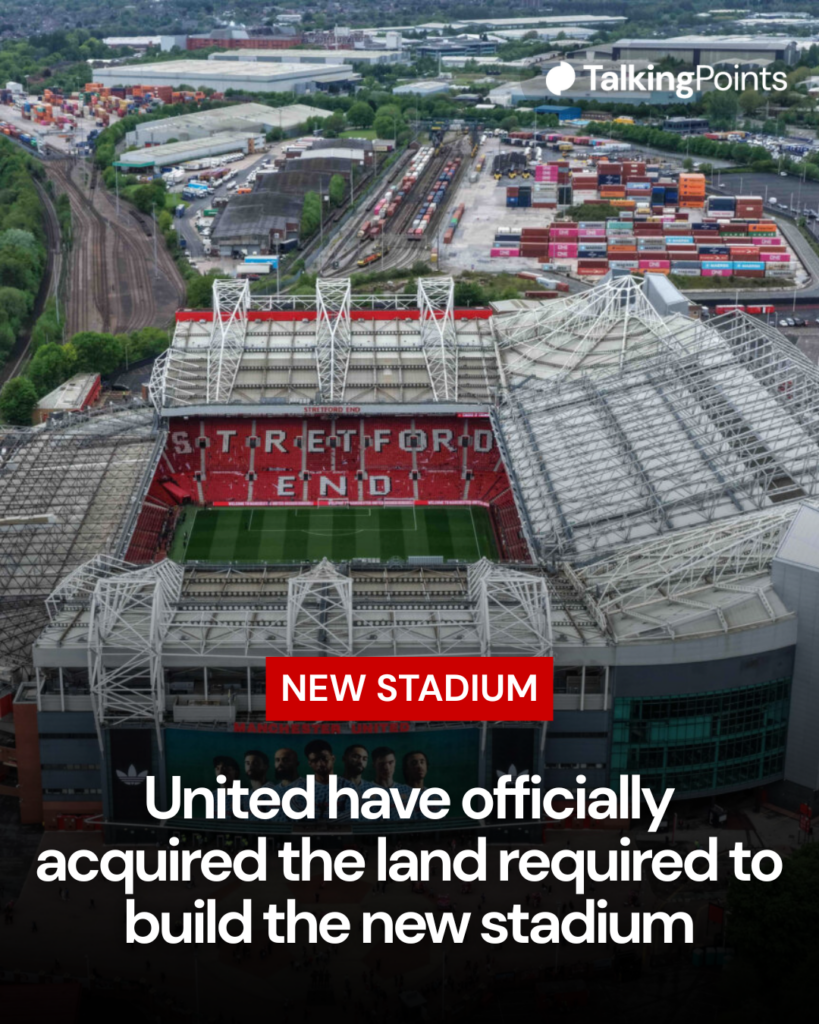
Manchester United took a step closer towards the new stadium project after land was acquired to build it on.
After Sir Jim Ratcliffe unveiled proposals for Manchester United’s planned 100,000 seater stadium in early 2025, the project has been held up.
United did not own the land required to actually build the stadium, until a deal was finally agreed on June 22, 2026.
The plans have shifted. United did not buy the adjacent Freightliner site, instead purchasing a separate site located approximately 350 metres from Old Trafford.
United have 25 acres to build on, and further land acquisition deals are expected to further increase this space.
This is a positive step forward for the stadium project, but it is clear from the reaction of supporters that there are questions over this divisive move.
Man Utd have FINALLY acquired the land to build the new stadium – What is your reaction?
What will the new stadium look like and when will building start?
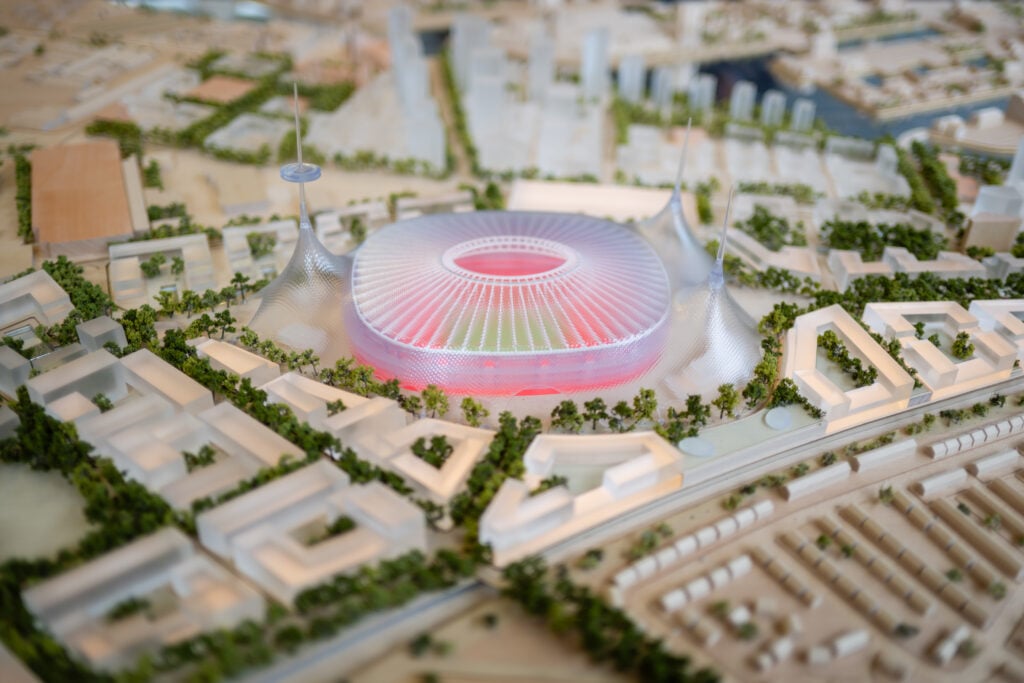
When Manchester United released plans for the stadium, early artist’s impressions were drawn up of how it might look. It included a trident-like spire, and large overhanging canopy. Neither of these are guaranteed to be included in the final design.
United have appointed architects Foster + Partners, who designed Wembley Stadium.
But while negotiations were ongoing for land, the final design could not be proposed. Now the altered location of the stadium site has provided some clarity. It is also a shift from the original plan.
The architects will have to draw up and fine-tune the final proposals to submit formally with a planning application. A public consultation period will be required. Finer details including transport links must also be factored in, before Trafford Council make a ruling.
The application will likely get approved, but in the UK this rarely happens swiftly. It could be 2027 at the earliest that construction begins.
Manchester United have an objective to have the new stadium in operation ‘by 2035‘. This shifted from the original mission statement to open for 2030/31 season. It could of course be completed earlier.
How will Manchester United’s new stadium be funded?
Manchester United’s new stadium project is estimated to cost £2 billion. This included local infrastructure upgrades.
United are holding discussions with private investors about funding the project. These talks can move forward now that land has been acquired to actually build it on.
Loans from private equity firms or US banks are very possible, although United fans are right to be concerned about piling more debt onto the club.
All parties involved will take the view that the stadium will deliver huge revenue, through ticket sales and events. Finance expert Adam Williams tells United In Focus that a baseline of £250 million could be raised every season through matchday revenue alone.
United also have the option to sell naming rights to the stadium, which could be a huge money-spinner.
The club could also use the stadium for concerts and events, and there is even talk that it could be included in a 2040 bid for the Olympics.
United now plan for the new stadium to be ready for 2035 – What do you think about this?

Will the club’s ability to compete on the pitch be impacted?
Arsenal and Tottenham are two clubs that have moved to new stadiums over the past 20 years. Both clubs saw their progress on the pitch held back financially during this period.
Manchester United likely do not need to worry in the same way. United are in a strong position as one of the clubs with the highest attendances in England at present, also now bringing in Champions League revenue again from next season.
The stadium will further strengthen United’s financial position long-term. Using Arsenal and Tottenham as examples again, both clubs are resilient and able to pay big fees in the transfer market; in the case of Spurs this is despite awful results on the pitch.
As United appoint the right football men behind the scenes, buy well in the market, and appoint the right manager, the club will remain on a steady footing.
Why do Manchester United need to leave Old Trafford?
Leaving Old Trafford is a major point of contention for many supporters. Season ticket holders in-particular are more closely bonded to Old Trafford and the stadium’s history.
United’s concern has been that Old Trafford has been left behind by more modern stadia. See Tottenham’s new stadium, and some of the incredible US stadiums on show at the World Cup.
Old Trafford is still OK, despite the leaking roofs, but how further behind will United fall over the next 20 years? What about the next 50 years? Beyond that even?
If United chose to stay at Old Trafford, the stadium will require substantial upgrades. Further large-scale expansion and improvement has always been difficult due to the railway line.
In addition to costing towards £1 billion, United might have to close the stadium for a period while improvements are made.
And even with improvements, there is a fear United will be throwing good money at an impractical project. The new stadium is viewed as a golden chance to build a once-in-a-generation new project from scratch that can live on for 100 years plus on it’s own.
Losing the history of Old Trafford is an emotional topic, but nostalgia should not necessarily undermine a need to grow.
Should Manchester United sell the naming rights to their new stadium?
Manchester United could earn as much as £17.5m per year if they sell the naming rights of their 100,000-seater stadium…

What will happen to Old Trafford?
One of the unknowns is what might happen to the current Old Trafford when the new stadium is built.
Manchester United fans would hate to see it torn down. It has been mooted that it could be used as a base for the women’s team or even for academy matches.
The size of the stadium could even be scaled back, to make it more practical for it’s new use.
If United commit to still maintaining it, the stadium could still be a money spinner for the club, with some creative thinking.
Receive a digest of our best United content each week direct to your mailbox