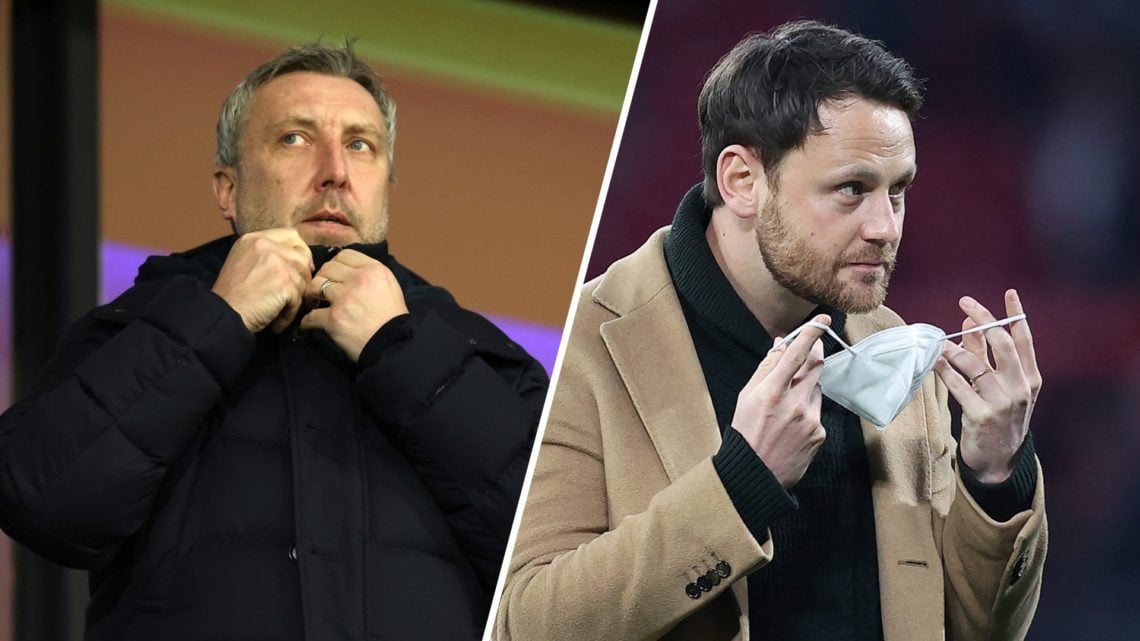


Manchester United have redesigned their transfer framework behind the scenes and the three main decision-makers are Michael Carrick, Jason Wilcox and Christopher Vivell.
There has been a drastic improvement in Manchester United’s transfer recruitment since the Ineos takeover and a restructuring of the club hierarchy.
Jason Wilcox was hired as sporting director, Christopher Vivell is the director of recruitment, and more recently, Michael Carrick was appointed as the permanent head coach after his successful interim spell.
But what exactly do those roles mean? United in Focus explains the precise responsibilities of all three senior figures and how they contribute to new signings at Old Trafford.

What is your honest opinion of Jason Wilcox and his role as director of football?

Breakdown of Man United’s recruitment structure
Unlike Sir Alex Ferguson, who owned the title of manager and had full sporting control, Carrick is a head coach, and that title comes with different responsibilities.
According to The Athletic, Carrick is involved in recruitment meetings and is invited to give his opinion on targets. No signing is made without his approval.
But, the identification of players and transfer targets is the responsibility of Vivell. As the director of recruitment, Vivell heads United’s scouting team, and is responsible for supplying a list of targets to consider.
It is Wilcox who holds the “ultimate” responsibility of deciding the incomings and outgoings as director of football. When it comes to balancing the budget and having the final say, it is Wilcox who shoulders the responsibility.
If all three figures are aligned on a target, it is up to head of football negotiations Matt Hargreaves to lead talks around a transfer package.
How would YOU spend Man United’s rumoured £250m transfer budget?💰
Would you go big on the midfield, or should United spread out the budget?
Pros and cons of Man United’s transfer framework
It was always a priority under Ineos and Sir Jim Ratcliffe to modernise United’s transfer pipeline.
The idea of a manager dictating transfers is now seen as an old-school method of doing transfer business, and truthfully, it has caused problems at Old Trafford over the last decade because of different managers wanting to change direction in recruitment.
The main positive behind the new structure is that regardless of who is the head coach, United have an overarching direction they are building the squad towards.
That may also be seen as a negative by the current head coach, though. For example. Ruben Amorim wanted players who fit his 3-4-2-1 formation, but it was not always the priority for Wilcox and Vivell.
READ MORE: Manchester United are tracking USA World Cup star liked by Jason Wilcox
Carrick may have to forfeit some of his transfer targets if he is overruled by Wilcox and Vivell.
Another negative is that it may make United slower in the transfer market. Unity is needed behind the scenes before the Red Devils move for targets. If they take too much time, some targets may have already joined rivals.
Receive a digest of our best United content each week direct to your mailbox