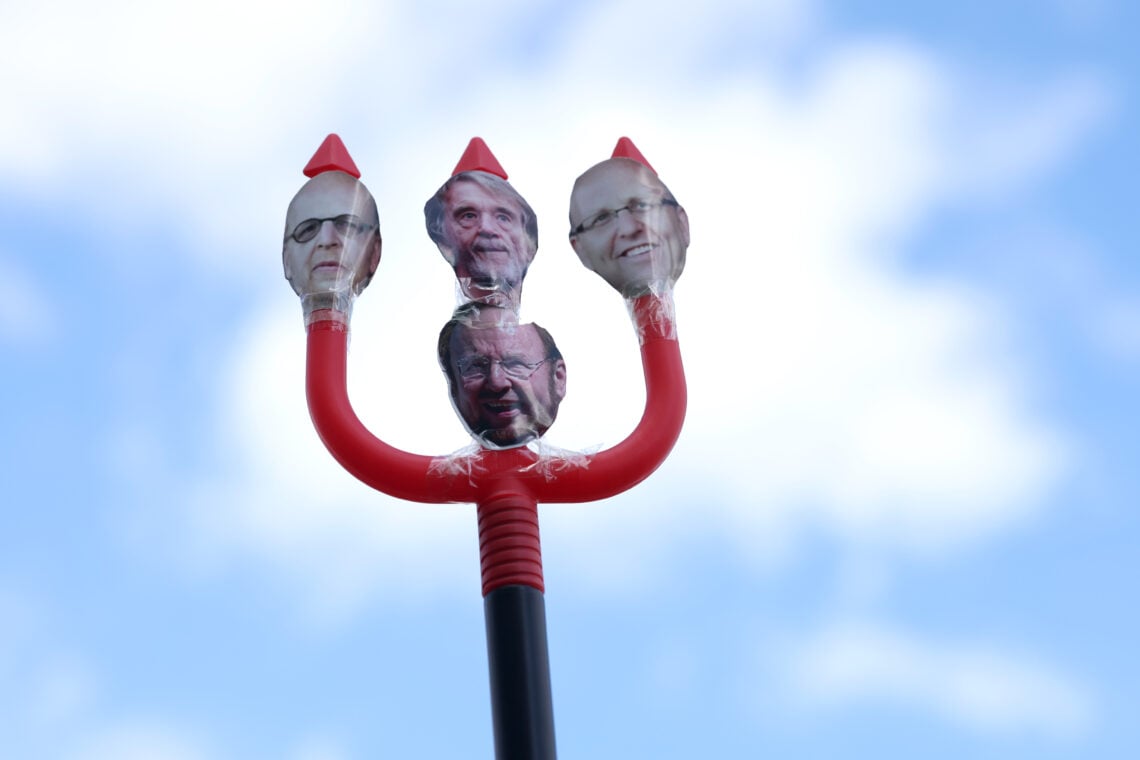


Manchester United are worth somewhere between £3bn and £6bn, depending on who you ask. But that valuation looks exceedingly hard to justify.
Yes, they are among football’s biggest brands with commercial and matchday income streams which are the envy of world sport.
Yes, they play in the Premier League, the most global sports league on the planet with a near £7bn TV deal.
And yes, hundreds of thousands of their shares trade on the New York Stock Exchange, the altar of capitalism, on a daily basis.
Bloomberg reports members of the Glazer family are considering selling up: What are your thoughts?
Do you have any faith this could be a full sale, or are we looking at a gradual share sell-off?
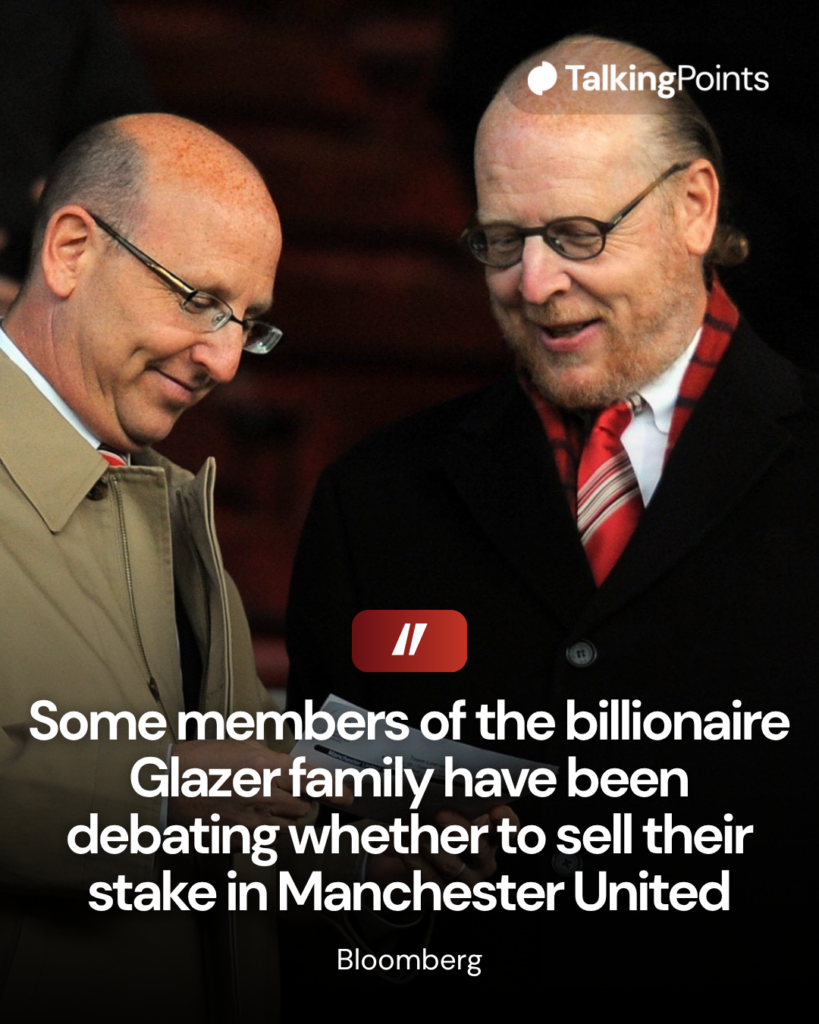
But as the Glazer family has discovered, the pool of investors who have A) the means and B) the inclination to acquire the club is vanishingly small. And with some of the six Glazers siblings exploring the possibility of divesting, the process could stress test A) the true valuation of the club and B) whether football clubs as a so-called ‘asset class’ are actually a bubble waiting to burst.
When Sir Jim Ratcliffe acquired a 27.7 per cent stake in United in February 2024, it implied a valuation of about £4.5bn. That was well, well short of the £6bn the Glazers wanted. Even Sheikh Jassim bin Hamad Al Thani, the elusive banker with access to the Gulf nation’s near endless sovereign wealth, couldn’t be convinced to go beyond £5bn.
£5bn, as it happens, would double the current world-record football club takeover, which was the purchase of Chelsea by a consortium of private equity investors in May 2022. Clearlake Capital, Todd Boehly and co have discovered, to their cost, that the sport cannot be conquered by brute spending force. To even make their money back, they would need to sell Chelsea for around £5bn.
Valuations, including United’s, have trended up and to the proverbial right for a generation, with the likes of Deloitte, Forbes, Sportico and countless others endorsing football’s uniquely global appeal, its ability to sell itself to the world.
But while revenues are huge and growing exponentially, none of the biggest clubs make consistent profits. Why? Because for every pound earned from sponsorship, TV rights and tickets, clubs are spending more on wages, agents, transfers and operating costs.
20 years ago, Lord Alan Sugar, formerly owner of Tottenham Hotspur, likened the money in football to prune juice: in one end, out of the other. In 2026, his colourful simile is as vividly accurate as ever. Man United spent £202m more than they earned in the last published financial year, with the difference underwritten by Ratcliffe’s personal wealth and, yes, debt.
Transfers and wages are the main culprits here. Football is stuck in an inflationary spiral from which there is no obvious off-ramp. There are owners who are not interested in making a return on their investment and so are spending excessively on players, meaning others need to raise spending to compete. Repeat ad infinitum.
Even the Premier League and UEFA’s Squad Cost Ratio rules, which limit spending on football costs to 85 and 70 per cent of revenue respectively, aren’t the answer, nor was PSR or its predecessor, FFP. They don’t account for other expenses (£170m at United last year), interest repayments (£56m in 2025-26, so far), or non-football wages.
Only real, material reform to football’s financial economics would allow investors to make reliable profits in the way that they do in, say, the NFL or NBA. But because of issues with jurisdiction, the rapacious demands of fans, player-agent power and labour laws, that will be incredibly difficult to achieve.
So, why would someone spend £4bn, £5bn or £6bn on Man United?
Some billionaires like owning football clubs for the status, cultural cachet and fame it brings. Sovereign wealth funds are in it for the same reason, amplified on a geopolitical scale. But the valuation of a club like United is now so high that there are only 500 or so people in the world who could afford it.
When you look at the number of people who could have a £5bn investment in United in a diversified portfolio of, say, £25bn, there are fewer than 100.
Are you happy with Ineos and Sir Jim Ratcliffe?
That’s why private equity firms, who pool wealth on behalf of hundreds of individuals, are one of the only buyers in town. But they are beholden to their limited partners, who want a huge financial return on their investment. At the moment, the only way one can get that is to flip the club further down the line for a profit.
That’s the only way anyone in football has really made any money so far. But that cannot go on forever – otherwise, it would be what those in business call the Greater Fool Theory. At some point, someone, somewhere has to make some real money.
When a price of an asset surpasses its inherent value, that’s a bubble. And bubbles burst when the market realises.
If and when the Glazers sell, they will likely find a buyer willing to pay the billions that have become de rigueur in football finance. But while this specific scenario might not cause the bubble to burst, it’s hard to escape the notion that, one day, it will. After that, football, which has for so long been high on its own supply, will have a problem.
Maybe some of the Glazers don’t want to be around when the bubble bursts.
Receive a digest of our best United content each week direct to your mailbox