

Manchester United’s recruitment process to find a new permanent manager should be a long and thorough process undertaken with 10 key questions in mind.
Gary Neville revealed Manchester United’s manager hunt has started over the past few weeks, with several options still considered to be in the running.
Ineos need to get a move on, considering Carlo Ancelotti and Thomas Tuchel are already off the market.
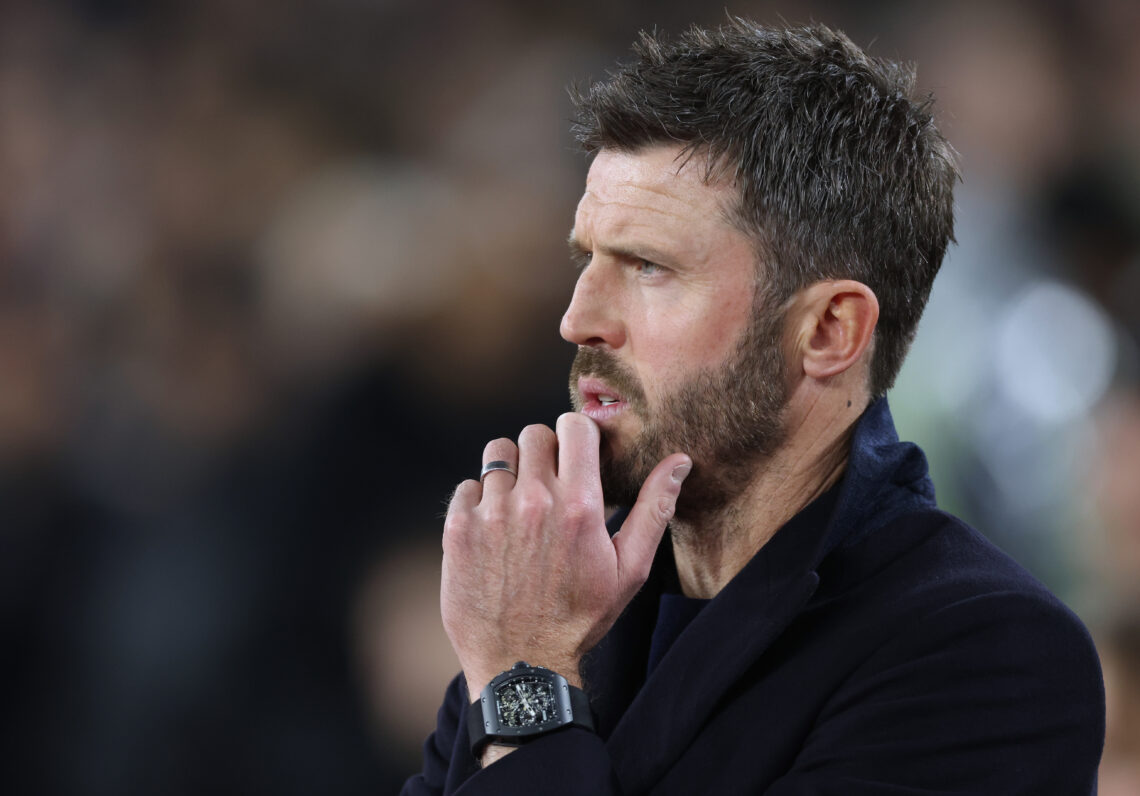
Michael Carrick is the favourite right now after impressing as United’s interim manager over the past month.
But in the process of deciding who is the next manager, 10 non-negotiable questions need to be asked.
Prove me wrong: Michael Carrick has already shown enough to become permanent Man United manager.
13 points from 15 would be title winning form over a full season…

1. Tactical flexibility
- “How set on your primary system are you? Do you have plans and the adaptability to cope when said system is neutralised?”
This question should be vital for United to ask, because ultimately, Amorim’s failure was due to his stubborn commitment to his 3-4-3 shape despite 14 months of evidence that it was not working.
The next manager needs to be capable of pivoting to a plan B, C, or D when his ideal way of playing is proving fruitless, while still retaining the core footballing philosophy.
2. Working with the sporting structure
- “What is your understanding of the difference between head coach and manager? Are you comfortable with the recruitment model and working with Jason Wilcox?”

The reason Amorim was actually sacked, despite the results warranting that decision, was his fallout with the club’s sporting structure.
Amorim disagreed with his head coach role, believing Wilcox had too much power, as the Portuguese head coach wanted to be a manager instead. The next appointment can be under no illusion.
3. Ability to work with and develop youth
- “What is your plan for developing the elite talents currently at the club, and how will you help them realise their potential?”
One of the biggest frustrations with Amorim from within the fanbase was his inability to improve the best young players at the club, whether that be Kobbie Mainoo or Leny Yoro.
The next manager needs to make use of these young talents, plan to integrate JJ Gabriel, Jim Thwaites and Shea Lacey, and restore United’s stature as a team where young talents come and become world-class.
4. Ability to cope under pressure
- “How will you handle the pressure from the media and club legends that comes with being Manchester United manager?”
There is no doubt that despite his charismatic speaking, the pressure and magnitude of managing United got to Amorim in the end, as he spoke out against Gary Neville, for example.
Who do you think will be Man Utd manager at the start of the 2026/27 season?
🔮 Let us know who you believe will and should be in charge? Who will Ineos appoint?

The next manager needs to already understand the pressure at United and not crumble under criticism. Whoever is appointed must also be able to protect the dressing room from this pressure and not throw players under the bus.
5. How much of a squad overhaul is needed
- “If appointed, how many of the current first-team squad do you see as compatible with a potential title-winning side? What scale of a rebuild is required?”
The United squad right now is nowhere near as bad as Ruben Amorim made it out to be, so any manager appointed will be expected to achieve success largely with the pre-existing squad available to him.
Amorim’s appointment saw United tear up the team, probably for good reason, but that cannot happen again with four to five changes likely the height of what Ineos will accept. So picking a manager with the system to suit the squad will be important.
6. Willing to listen to Ineos’ data-driven model
- “Do you agree that using data in football can be beneficial for both recruitment and improving performances?”
Under Ineos’ footballing leadership, United have leaned heavily into data, with Amorim often not appearing to be aligned in this.
Amorim wanted Ollie Watkins and Emi Martinez over data-driven signings of Benjamin Sesko and Senne Lammens, but the next manager needs to get on the same page and be someone who can work in this data-heavy set-up.
7. Ability to perform in big games
- How do you prepare a team mentally for the biggest games of the season, such as derbies or cup finals?”
Carrick’s success of late has seen him beat both Man City and Arsenal, restoring the feeling of belief at United around playing other big sides. But the next permanent appointment needs to thrive on the big occasion.
Amorim couldn’t even handle the pressure of a penalty shoot-out against Grimsby as he looked away. United need a head coach who inspires confidence through his team, a proper leader, someone who embodies United’s DNA.
8. Defensive transition structure
- “In recent years, United have been much too easy to play through, with teams able to expose previous managers’ systems in transition. How would you fix this?”
Under Erik ten Hag and then Ruben Amorim, United were very easy to play against, with teams exposing a poor defensive transition time and time again.
The next head coach can’t have the same problem and will be aided by midfield reinforcements, which should add legs to the midfield, but a proven history of coaching good teams without the ball is important.
Candidates should prove their knowledge of how to solve this flaw.
9. Need to play the United way
- “Beyond just winning, Manchester United is a football club with an identity of fast, attacking, and entertaining football. Can you deliver on this?”
United fans want to be entertained, along with winning, and specifically, we want to see the United DNA in terms of style adhered to.
Wayne Rooney hailed Carrick as playing the United way, and whether he is appointed or not, the next head coach must also implement a similar style.
10. The three-year roadmap
- “What are the milestones you should be held accountable to after seasons one, two and three? How do you intend to take United back to the top?”
Sir Jim Ratcliffe intended to give Amorim three years at United, which is probably the time scale the next manager will also get, but Ineos needs to get a clear and measurable example of what success will look like at milestones.
United cannot be ‘suffering’ for 14 months; we need tangible improvements in season one, and potentially even a title challenge.
Ultimately, United are in a much better position than 18 months prior, so the timeframe for success should be moved up. Top candidates won’t see this as a bad thing.
Receive a digest of our best United content each week direct to your mailbox