


Upon becoming Manchester United’s largest single shareholder, one of Sir Jim Ratcliffe’s priorities – perhaps even the most important one of all – was to get on top of the club’s bloated wage bill.
In the season the Ineos billionaire arrived at Old Trafford, 2023-24, United spent £365m on wages. They finished 8th that season. Four teams who finished above them spent less – and Newcastle United and Aston Villa’s payrolls were half the size of the Red Devils.
In 2024-25, the wage bill got leaner. United shelled out £313m, but the points-per-pound return in a campaign which saw the club finish 15th in the Premier League, their lowest placing since the 1970s, nosedived.
What’s more, the reduction in the wage bill in 2024-25 was mainly due to what Sir Jim Ratcliffe euphemistically referred to as “headcount rationalisation.” That’s mass redundancies, to you or me.
Are you happy with Ineos and Sir Jim Ratcliffe?
In 2026-27, payroll will shoot up again thanks to Michael Carrick delivering Champions League football, a £100m-plus revenue banker in which players will share in the form of bonuses. The club has a similar policy when it comes to Premier League prize money. The better the team performs, the more loot the players receive.
In the nine months up to 31 March, the period covered by United’s most recent quarterly financial statements, wages were £220m, down from £234m across the same period in the previous annum. Exactly what the final figure will be for the season will depend on when bonuses are paid out.
We do, however, know that United are going into 2026-27 with a more modest wage bill after Casemiro, Jadon Sancho and Tyrell Malacia’s exits were confirmed this week.
Casemiro and Sancho were among the club’s very biggest earners, albeit that Sancho spent the last two-and-a-half years out on loan with Borussia Dortmund, Chelsea and Aston Villa covering one-third, one-half and three-quarters of his salary respectively.
Both players were highlighted as examples of United’s historical excess by Ratcliffe in a March 2025 interview, when the 73-year-old said: “If you look at the players we are buying this summer, that we didn’t buy, we’re buying Antony, we’re buying Casemiro, we’re buying Onana, we’re buying Hojlund, we’re buying Sancho. These are all things from the past, whether we like it or not, we’ve inherited those things and have to sort that out.”
Casemiro’s legacy at Old Trafford has improved markedly after a superb season in 2025-26. Sancho’s, not so much. Malacia meanwhile registered just 15 senior minutes last term.
So how much exactly will United save when their deals officially come to an end on 1 July?
Player wages are often misunderstood and routinely understated in the media. Looking at the accounts, which are verified by the world’s biggest and most respected accountancy firms, most of the numbers in the press simply don’t stack up.
Sancho, for example, was said to be on £200,000 per week, but United’s £313m wage bill – of which around 80 per cent is first-team wages – don’t bear that out.
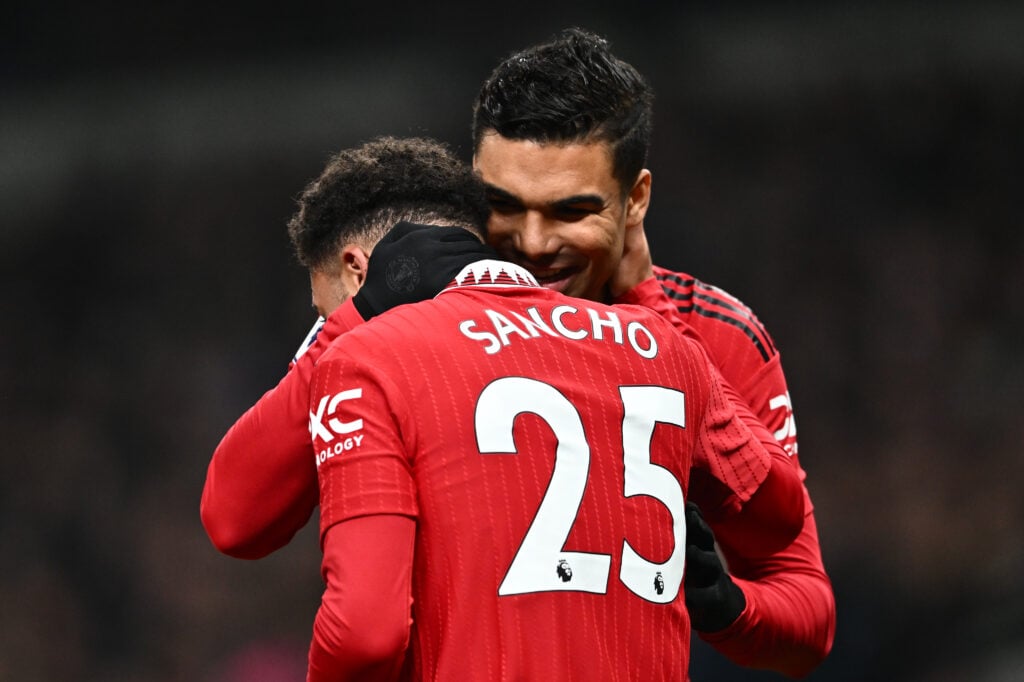
In reality, when taking into account image rights, National Insurance (15 per cent of United’s entire payroll) and other factors, the true figure is probably much closer to £300,000. If he had performed on the pitch, the figure would likely reach £400,000 with bonuses.
Casemiro, similarly, probably earned £400,000 per week last season. Even Malacia, whose wages in the media are reported as about £75,000 per week, will likely earn more in reality given that the average weekly wage across the Premier League is around £90,000.
Assuming £400,000 for Casemiro, £250,000 for Sancho and £90,000 for Malacia, United will go into 2026-27 knowing that their wage bill is about £38.5m lighter than it would have been if the trio were remaining in M16 next season.
From next season, the Premier League introduces new Squad Cost Ratio rules, a system similar to one implemented at UEFA level that limits teams to spending 85 per cent of turnover plus a three-year average of player sale profits on wages, transfers and agents’ fees.
That, however, is not the reason Ineos and Ratcliffe are keen to get on top of wages. United have lots of breathing space in that department.
No, United’s issue is more about cold, hard cash. Nearly every season, the club spends more than it earns, and the excess is funded by taking on more debt or relying on cash injections from Ratcliffe. Transfers meanwhile are heavily reliant on instalments. It’s a model which is betting on future success on the pitch.
Man Utd refinance $425m of debt with $500m deal – Are you worried? Or is this all just part of Sir Jim’s masterplan?
What is your message Glazers on this debt issue?
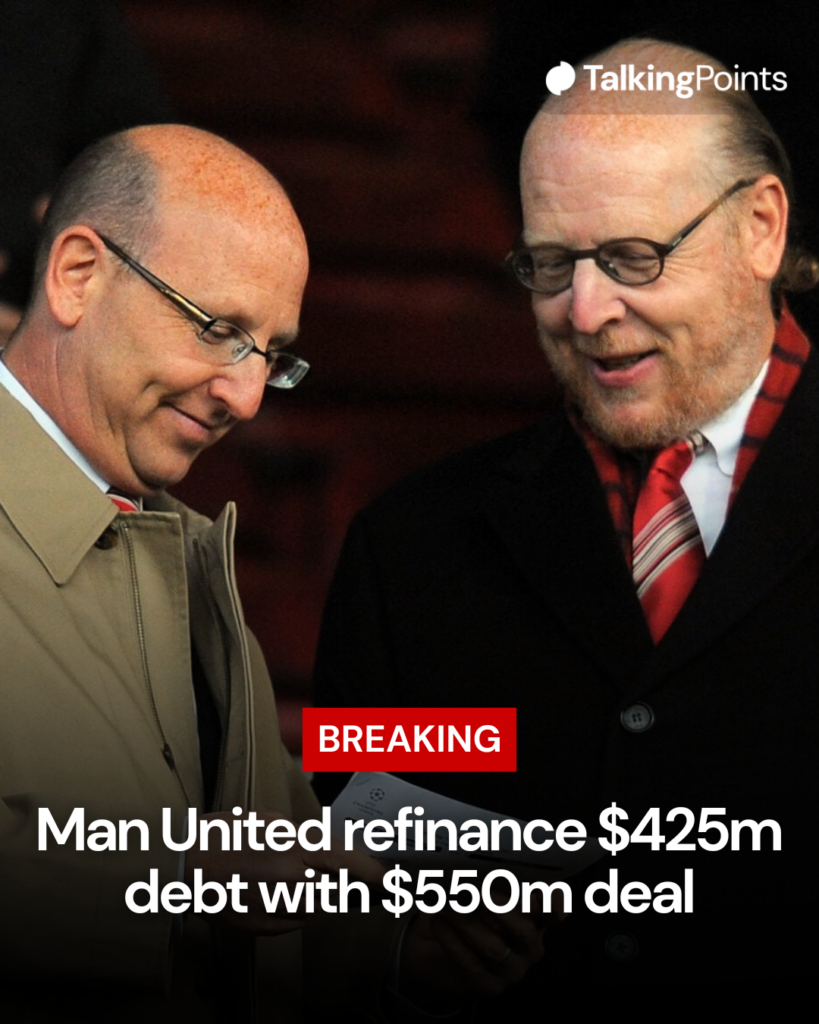
Interest payments are increasing now too, given the news this week that United have borrowed $550m to both pay off a previous $425m loan and provide more working capital.
In the industry, Ratcliffe is doing what it is referred to as ‘re-basing’ the squad. Basically, it’s a matter of getting more bang for your buck, moving on players who earn exorbitant wages (e.g., Sancho), whose resale value is limited (e.g., Casemiro), or for whom there is a more cost effective option out there (e.g., Malacia).
It’s a process which all the best clubs run perpetually, but years of a misfiring recruitment and retention strategy mean United’s case is more urgent than most.
Rasmus Hojlund’s £38m move to Napoli will help too, as would Barcelona’s activation of a £26m clause to sign Marcus Rashford.
The finances for 2026-27, when we get them, will therefore likely be the acid test for how successful Ratcliffe’s overhaul project has been.
Receive a digest of our best United content each week direct to your mailbox