

While they may be comfortably the biggest, Manchester United are far from the only sports team in Sir Jim Ratcliffe’s portfolio.
In recent times, Ineos have cut back their spending in sport, ending several sponsorship deals and reducing funding for the Ineos Grenadiers (cycling) and Britannia (sailing), while they are reportedly looking to sell Ligue 1’s OGC Nice altogether.
But as far as Manchester United – and Formula 1’s Mercedes-AMG Petronas, where Ratcliffe owns a one-third stake – are concerned, they are the jewels in the crown.
Ratcliffe has committed several hundred million pounds since his part-takeover at Old Trafford in February 2024 – and given that the club’s cash flow was negative £202m last season, that funding has been absolutely necessary.
Next season, Champions League football will ease the burden but, unless United go deep, deep into the competition, it won’t eliminate the cash shortfall.
Player sales, most experts agree, will be necessary this summer, as will the wider tightening of the club’s belt, especially given that United are reportedly targeting two central-midfielders, a left-back and an experienced striker to bolster Michael Carrick’s squad.
Ineos themselves are highly leveraged in their wider business, with debts of nearly £20bn across the group dwarfing United’s own borrowings of about £1.3bn, including unpaid transfer instalments.
Ratcliffe, therefore, wants the club to be successful without significantly more investment from his own wallet.
And the latest developments at the Ineos Grenadiers highlight one way that could happen.
Carrick says Top 5 isn’t enough. Honestly, based on his run, do you think we are a genuine Title Contender for next season?


Could Ineos Grenadiers’ new £85m partnership be model for Man United to follow?
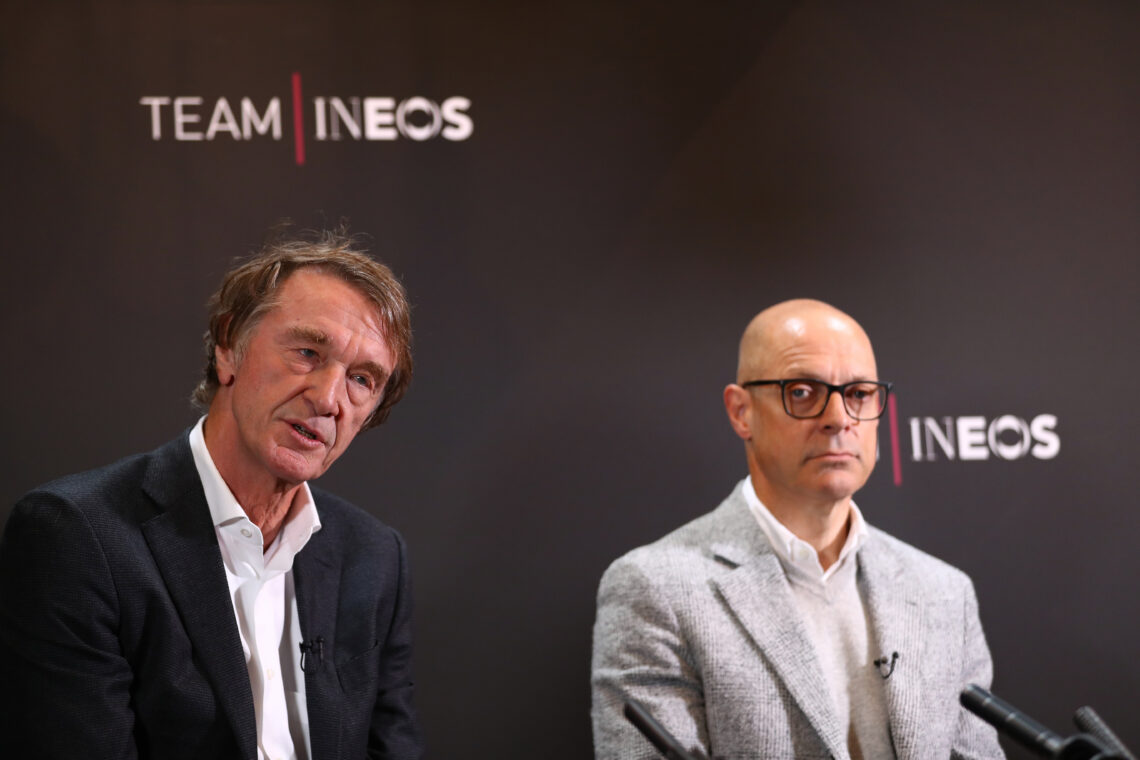
The Ineos Grenadiers have been one of cycling’s dominant forces in the modern era, backed by Ratcliffe’s money and real passion for the sport, as well as the expertise of David Brailsford, who recently left Man United’s board of directors.
In recent years, however, they have been unable to keep up with the biggest-spending teams.
As a solution, Ineos agreed in April to sell joint-naming rights for the team to Netcompany in a deal worth over £85m over five years.
And now, speaking to the Leaders Worth Knowing podcast, CEO of the newly renamed Ineos Netcompany Grenadiers Tom Hill has said: “We have Netcompany as our first name co-title partner, but we’re going back to market looking for a second co-title partner.”
Speaking about what that new deal might look like, Hill said, “so, Netcompany-X”, potentially implying that Ineos themselves could sell their own title sponsorship rights while staying on as a long-term backer.
“Ultimately,” said Hill, “if we can broaden the financial base by having other partners in to help put investment into the team, create that virtuous circle of more investment, better riders, win more races, more sponsors. That is the next step for us, as of now.”
This kind of solution, United fans will remember, has also been proposed for the club’s cash flow anxieties and the problem of how to pay for a new stadium.
A new investor alongside the Glazers and Ratcliffe could invest either directly in the club or in a new company dedicated to the stadium.
If Ratcliffe makes £150m selling OGC Nice, how should that cash be spent at United?
Ineos billionaire wants out of French football

So, is an arrangement similar to the one at Ineos-Netcompany possible in M16?
“Man United were paying dividends even in the seasons when they were making losses, so they are aware of market expectations under a multi-owner model,” says football finance academic and Price of Football podcast host Kieran Maguire, speaking exclusively to United in Focus.
“The challenge with United taking a similar approach to Ineos’ cycling team would be that they have a significant number of retail and institutional shareholders who own A shares.
“Those shareholders can’t influence decision making, really. But if they get disenfranchised if you bring in another owner in, that dilutes some of your existing shareholders. That could be a difficult balancing act.
“The challenge for United owners is that you have one set of owners in the Glazers who don’t want to put any more money in, another set in Ineos who do want to fund the club but are asset-rich but cash-poor, and then they also have cash demands from the football side of the business.
“They have managed to provide funding for both infrastructure and players to date, but I’m not sure how long that will continue going forward.
“Of course, Sir Jim Ratcliffe could also just sell a yacht…”
Essentially, Maguire is highlighting that while inviting another shareholder into the fold would be complex, United’s current ownership is unlikely to fund further losses to a significant extent in the future. And viewed through the lens of the club’s £202m negative cash flow last season, that could be a problem.
If United do need additional financial support, there are limited options available to them. Sweeping player sales, more operational cost cutting or increasing the club’s huge debt all come with their own drawbacks, so a bringing a new financial partner on board – like Ineos have with the Grenadiers- might become more attractive as time goes on.
Receive a digest of our best United content each week direct to your mailbox