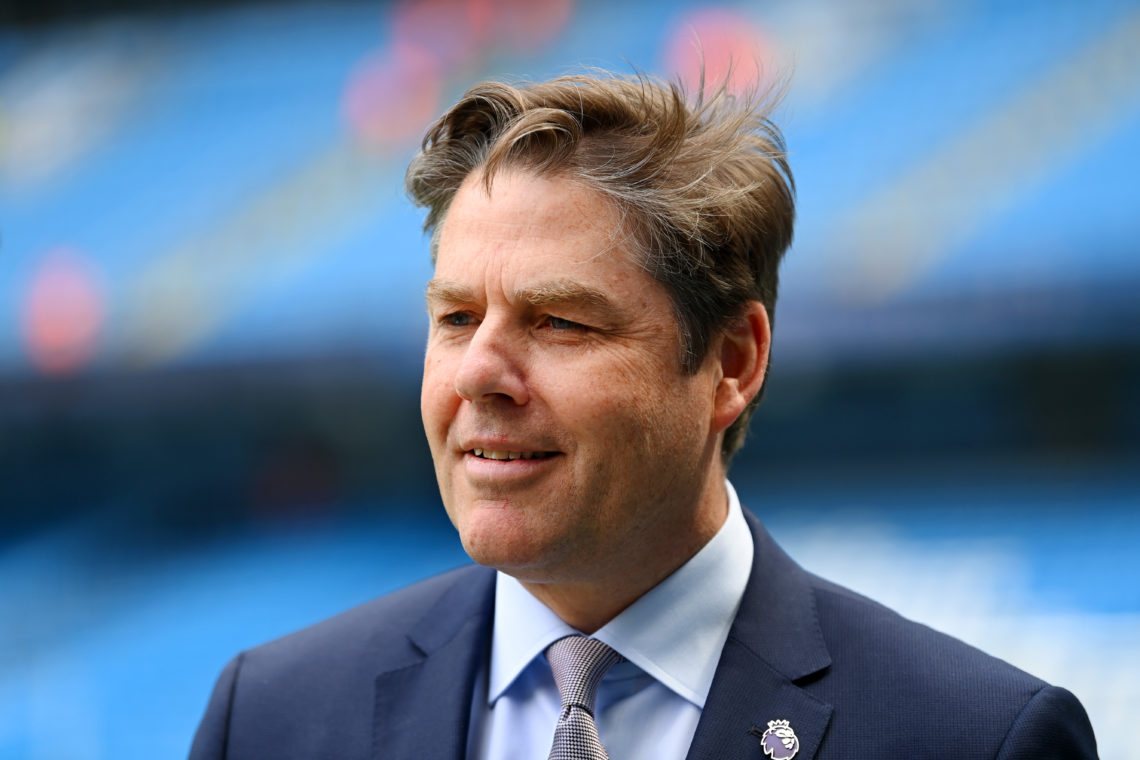


When the suits walk into 57 North Wharf Road, Paddington (AKA Premier League HQ) at present, it must feel like entering the lions’ den – and Man United are right at the centre of the chaos.
The Premier League is scrambling to rewrite its rules on associated party transactions (APT) following the outcome of Man City‘s challenge in the arbitration courts earlier this month.
City were quick to claim ‘victory’ in the case. So were the Premier League. The reality, experts agree, is more nuanced.
One thing is for sure, however. The Premier League does need to at least partially rewrite its APT rules, which were introduced in 2021 to block artificially inflated sponsorship deals with owner-linked companies.
Manchester United were one of a handful of clubs to give evidence in favour of the Premier League at the tribunal, which some City fans have taken as more evidence of a shadowy ‘red cartel’.
One fan group, The OSC, has gone so far as to erect an LED billboard outside the Premier League’s offices which reads ‘Richard’s Masters’ accompanied by United, Liverpool, Arsenal and Tottenham’s badges.
That stunt, a reference to Premier League CEO Richard Masters, is symptomatic of the conspiratorial fervour that has recently gripped English football.
Incidentally, Man United’s largest individual shareholder, Sir Jim Ratcliffe, says he has some sympathy with Man City in the APT case. He is a free market capitalist, after all.
But with Man City’s trial for 115 alleged offences of financial impropriety unlikely to yield a decisive outcome for over a year, don’t expect an end to this narrative any time soon.
And the latest noises from a Premier League hive riven by increasingly complex claim and counterclaim will only add fuel to the roaring fire of controversy.
Premier League want Man United in flagship tournament
There are many elements of the Glazer-led regime at Old Trafford that Sir Jim Ratcliffe will rightly jettison. The club’s commercial operation is not one of them.
Income from sponsorship, merchandise and events has stagnated somewhat in the last few seasons, but the new Snapdragon front-of-shirt deal should arrest that trend.
Another area United have enjoyed phenomenal success is with overseas pre-season tours.
Ahead of 2023-24, Erik Ten Hag‘s side toured the United States for the second successive year.
At the same time that United faced Arsenal, Liverpool and Real Betis in Los Angeles, Columbia and San Diego, the second edition of the Premier League Summer Series was due to take place elsewhere in the US.
The previous summer, Chelsea won the inaugural edition of the Premier League-organised tournament, which also included Brighton, Brentford, Fulham, Newcastle and Aston Villa.
But the Premier called off the Summer Series, which is believe to be the brainchild of Richard Masters, because of a litany of complications centred on fixture congestion and commercial conflicts of interest.
However, the Premier League is looking to go again in 2025 – an they want Man United to be a part of the tournament.
The Daily Mail report that the Premier League are willing to give Man United, as well as rivals Liverpool, £6.3m to participate, while other clubs will bank less based on their market share in the US.
But it is also said that the tournament is facing opposition.
Several clubs are unhappy that the Premier League would effectively be handing United a £6.3m PSR boost, especially given the current climate behind the scenes.
And as the Summer Series would need to be ratified by Premier League clubs, it could potentially be blocked if as few as seven clubs decide to reject it.
PSR, APT, 115: Are the Premier League giving Man United preferential treatment?
Man United came very close to breaching PSR in 2023-24.
In the end, they survived by the skin of their teeth thanks to £40m worth of lost income they attributed to the pandemic, which was exempt from their final PSR calculation.
The phraseology that United used in their accounts, which referred to the £40m as an ‘exceptional allowance’, spawned headlines like: ‘Premier League Make ‘Exception’ for Man United over PSR’
In truth, ‘exceptional allowance’ is just accounting speak.
The lost income that Man United reported is allowable under the Premier League’s Profit and Sustainability Rules (PSR) and any club was free to make the claim.
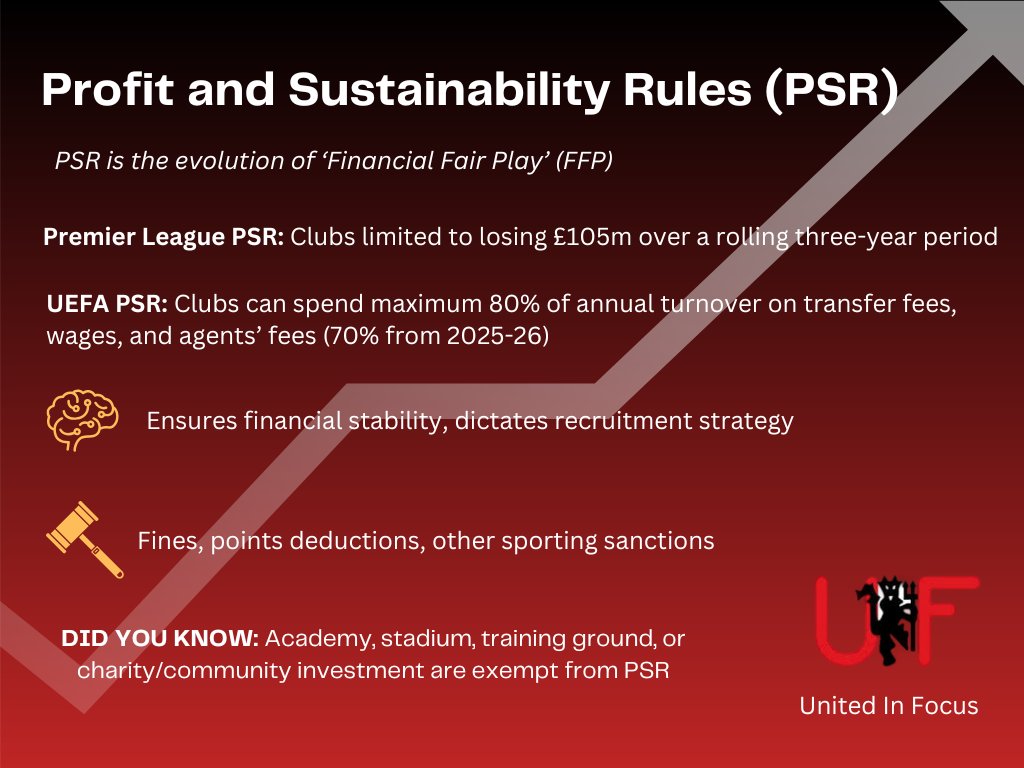
Indeed, many did. It was only because United’s claim was much higher – which in turn is because their brand is much bigger – that it became a story.
There is an argument – and one that almost every expert insists deserves consideration – that the PSR system is engineered to insulate the mega-rich from failure.
But Man City consistently generate more profit that Man United, while their revenue has been higher in four of the last five seasons.
So even if that was the original motive was to stop upstart clubs from shuffling out of the place in the breadline, that argument does not hold much water anymore.
In any case, the PSR system is not clumsily thrusted upon Premier League clubs. All 20 clubs vote on it and all have an equal say, with a two-thirds majority needed to implement any regulatory changes.
Receive a digest of our best United content each week direct to your mailbox