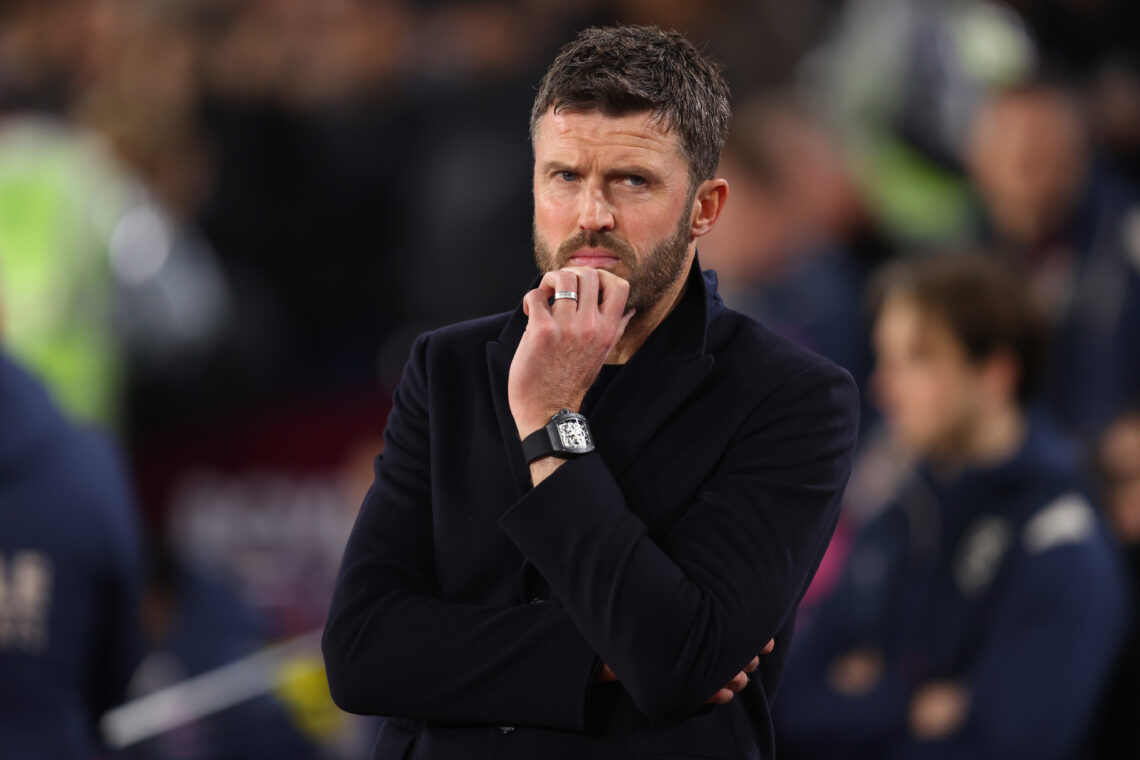


Michael Carrick is not getting enough tactical credit for Man Utd’s turnaround in form, so here is the ultimate breakdown of how he solved the club’s biggest issue under Ruben Amorim.
The lack of transfer activity in the January transfer window was the final nail in the coffin of Ruben Amorim’s frustrations at Old Trafford, because he effectively forced his own exit.
Since then, Michael Carrick has worked miracles with the exact same squad, which put Amorim’s pedigree under the microscope.
Ruben Amorim deserves ___ % credit for Michael Carrick’s BRILLIANT start at Man Utd
Fill in the blank. Did Amorim lay the foundation for success at Old Trafford?

Still, Carrick’s wins were attributed to the “new manager bounce”, when in reality, he’s solved United’s biggest issue under his predecessor without spending a penny.
Man Utd’s build-up problem under Ruben Amorim
Amorim, to his credit, inherited a broken team and left behind a much better one in terms of player personnel for Carrick.
However, that doesn’t mean he was getting the best out of the players at his disposal, evidenced most by the team’s teething issues in the build-up.
Amorim abandoned the idea of playing out from the back as quickly as he adopted it at Old Trafford, so bad was he at implementing it.
United regularly lost the ball in their own half as they struggled to form passing lanes, and a lack of movement off the ball allowed the opponents to suffocate them easily.
The result was a lot of unforced and forced errors near their own box, which is a recipe for disaster.
Amorim sought to fix that issue by taking a shortcut, as he instructed his players to go long and high, bypassing the midfield entirely.
He focused on fighting for and winning the second ball from that first aerial pass, and while it worked on occasion in big games, it limited the team’s ceiling.
Prove me wrong: Michael Carrick has already shown enough to become permanent Man United manager.
13 points from 15 would be title winning form over a full season…

Until the end, Amorim didn’t coach the team on how to play with the ball and hurt teams, something which Carrick fixed within the first five games with some genius tweaks.
Michael Carrick’s tactical masterstroke
The first thing Carrick did to solve the buildup issue was to abandon Amorim’s shortcut, which limited the team’s ceiling.
United still play better when they are allowed to counter-attack, but the way they transition has changed.
United’s “Direct Attacks”, which means an attack where a chance or shot happens at the end of a move that spans 15 seconds or less, have risen from 1.8/90 to 3.5/90.
Amorim’s United gave the impression that they played quickly, when they were just floating the ball in the opposition’s final third, hoping for a knock-on.
Perhaps the most damning stat is their passes into the final third, which have risen from 31.4/90 to 52.4/90 under Carrick.
It confirms the theory that before they played it long, United just circulated the ball from side-to-side, as their three centre-backs exposed the setup’s lack of verticality.

Carrick platformed Kobbie Mainoo just ahead of the two centre-backs, making it a press-resistant axis consisting of Lisandro Martinez, Mainoo, and an overlapping full-back to create passing triangles.
Instead of playing the ball over the press, United have the players and the setup to play through the press, which creates much more space in the final third once they succeed.
That is how big teams should play, and Carrick has shown that you don’t need an entirely new XI to get results. You just need to have players in their ideal roles, which maximise their strengths and suppress their weaknesses.
Breaking down a low-block is the next challenge, but feeling confident to play with the ball is the first step towards achieving that goal as well.
Receive a digest of our best United content each week direct to your mailbox