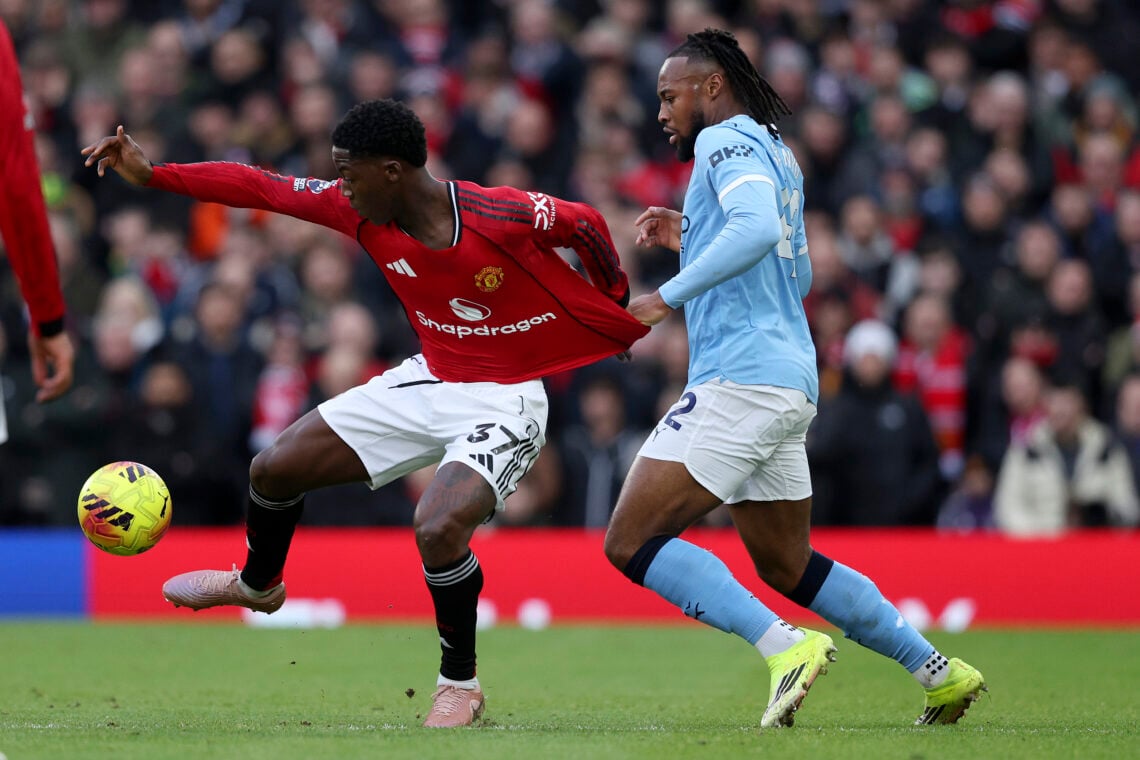


Ruben Amorim hasn’t received much vindication at Man Utd since Michael Carrick took over, but the latest message on Kobbie Mainoo, from Carrick directly, might be the most brutal of all.
No hindsight was needed for Man Utd fans to question Ruben Amorim for his stance on Kobbie Mainoo.
The player’s quality and potential were undeniable under Amorim as well, but his tactical rigidity meant he was never going to receive a fair chance.
Is Ruben Amorim not playing Kobbie Mainoo the worst decision you can remember from a recent Man Utd manager?

After unleashing Mainoo in his first two games, against Arsenal and Man City no less, Carrick sent a thinly veiled message to Amorim to expose him on his Mainoo stance.

Michael Carrick’s message to Amorim over Kobbie Mainoo
By the end of his time at Old Trafford, Amorim had almost created the spectre of Mainoo’s absence, which refused to leave him alone.
It might have been forgiven had his system been successful, but being rigid and unsuccessful is the worst possible combination to have.
Amorim’s stance on Mainoo was that he was competing with Bruno Fernandes for a deeper midfield position, but the general logic dictated that Fernandes shouldn’t have been a defensive midfielder in the first place.
Carrick, recently speaking to Sky Sports, used a “pigeonhole” analogy to perfectly expose his predecessor’s stance on Mainoo.
He praised Mainoo’s qualities before calling out people who tend to “pigeonhole” players into certain roles and refuse to see their qualities.
He said: “[Mainoo] can play a little bit deeper, a little higher at times, depending upon who he’s playing with. I think sometimes we can pigeonhole players and certain things quite quickly. It’s not always the case.”
Carrick’s message to Amorim
Carrick’s “pigeonholed” message isn’t coincidental. It directly addresses the main gripe Amorim had with Mainoo and why he wasn’t playing.
Should Kobbie Mainoo be in the England squad for the 2026 World Cup?
After recent form, will Thomas Tuchel be convinced?

Amorim wanted a specific style of player in every position, and anyone who didn’t fit that perfect archetype became expendable immediately.
There was no flexibility or openness to see each player’s quality for what it was, and Mainoo became a victim of that rigidity.
It was never about what Mainoo could do, since Amorim had in his mind what he couldn’t, and why that made him an awkward fit for his system.
He had, in effect, pigeonholed Mainoo as a slow, lumbering orchestrator who couldn’t function as a defensive midfielder in his high-octane team.
Carrick immediately saw what Mainoo could do instead of what he couldn’t, and used those skills for the benefit of the team.
In the process, he exposed Amorim’s unfair stance on Mainoo.
Receive a digest of our best United content each week direct to your mailbox