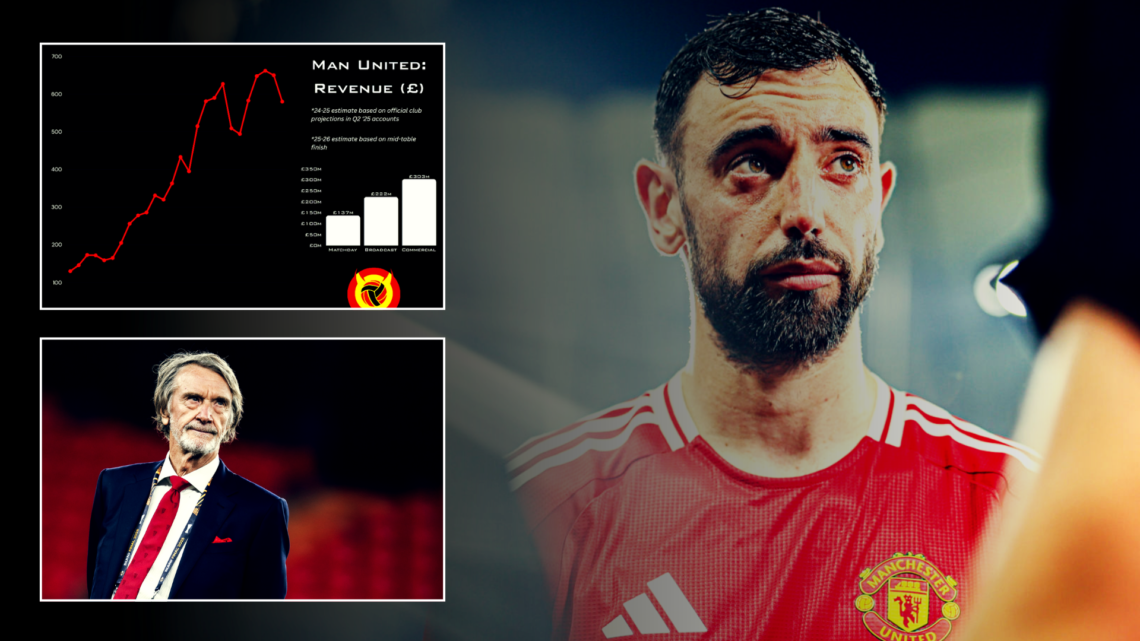


For richer or for poorer, in profit or PSR breach, on Champions League nights or Carabao Cup away days, Bruno Fernandes has resisted the call of Saudi Arabia and recommitted to Manchester United.
The skipper was the subject of a £100m bid from Saudi Pro League side Al-Hilal, with the player himself offered £700,000 per week, tax free, by the Kingdom.
For those keeping score, that would have been almost £110m in wages over the proposed three-year deal length.
Some reports have suggested Bruno Fernandes’ total compensation might have been closer to £200m, but the discrepancy doesn’t really matter. When you reach these head-spinning numbers, they begin to lose meaning.
For context, if the total package including transfer fee, basic wages, performance-related add-ons, image rights and so on did reach £300m, that would have been less than Al-Hilal’s owners, the Saudi Public Investment Fund, paid for their 85 per cent stake in Newcastle United back in October 2021.
They were prepared to spend that on one player. Indeed, one player who is 30 years old and whose side has just finished 15th in the Premier League.
Man United are struggling with Profit and Sustainability Rules (PSR) at the moment. The Fernandes saga, however, is a timely reminder that, despite how much PSR is set to dictate the club’s summer transfer business, the alternative to the Premier League and UEFA’s spending rules is far bleaker.
In a post-PSR Wild West, neither Sir Jim Ratcliffe nor the Glazer family could hope to match the spending coming from the Saudi enclave in the North East, not to mention its Abu Dhabi equivalent in the sky blue half of Manchester.
Private wealth, in football as in the wider global economy, is dwarfed by sovereign wealth.
| Name | Bloomberg top-500 # | Worth | Club(s) |
| Abu Dhabi sovereign wealth | – | $1,000bn | Manchester City |
| Saudi Public Investment Fund | – | $930bn | Newcastle United |
| Qatar sovereign wealth | – | $525bn | PSG, Braga |
| Bernard Arnault | 9 | $153bn | Paris FC |
| Mark Mateschitz | 64 | $30.0bn | Red Bull clubs |
| Philip Anschutz | 91 | $22.9bn | Los Angeles Galaxy |
| Stan Kroenke | 92 | $22.8bn | Arsenal, Colorado Rapids |
| David Tepper | 96 | $22.5bn | Charlotte FC |
| Dietmar Hopp | 107 | $20.7bn | 1899 Hoffenheim |
| Francois Pinault | 113 | $19.0bn | Stade Rennais |
| Jim Ratcliffe | 163 | $14.8bn | Man United, Nice, Lausanne |
| Hansjoerg Wyss | 191 | $13.3bn | Chelsea, Strasbourg |
| Mark Walter | 226 | $12.4bn | Chelsea, Strasbourg |
| Josh Harris | 242 | $11.7bn | Crystal Palace |
| Simon Reuben | 250 | $11.5bn | Newcastle United |
| David Reuben | 251 | $11.5bn | Newcastle United |
| Daniel Kretinsky | 284 | $10.9bn | West Ham, Sparta Prague |
| Dan Friedkin | 289 | $10.9bn | AS Roma, AS Cannes, Everton |
| Shahid Khan | 325 | $9.68bn | Fulham |
| Nassef Sawiris | 334 | $9.41bn | Aston Villa, Vitoria |
| Dmitry Rybolovlev | 341 | $9.23bn | AS Monaco |
| Todd Boehly | 365 | $8.76bn | Chelsea FC, Strasbourg |
| Joe Lewis | 404 | $8.10bn | Tottenham |
But that is of little comfort to United fans who want to see the good times back at Old Trafford now, not at an unspecified point in the future when they have emerged from the PSR badlands.
To gauge the Red Devils’ transfer market strength this summer, with no European revenue nor a £100m Fernandes fee in the ledger, United in Focus spoke exclusively to University of Liverpool football finance lecturer Kieran Maguire.
Man United could still post club-record revenue; Bruno Fernandes sale wasn’t imperative
Broadly speaking, the issues facing United in the transfer market this summer are two-fold:
- Profit and Sustainability Rules
- Cash
It’s no good having the headroom to spend under PSR if you don’t have the cash to back it up.
And with external debt, a huge outstanding transfer bill and massive payroll expenses, there was certainly an argument to lean on Fernandes to leave for Al-Hilal if it meant banking a nine-figure fee.
“From a cash flow point of view, my main concern is that the club owes about £330m unpaid transfer fees,” says Maguire, “and that is an issue and I would be looking very carefully at the budget for.”
However, as the Price of Football author highlights, Man United’s underlying financials are strong.
“They lost £131m in 2024 but when you start to pick it apart, there was £48m in total exceptional costs, which the club picked up, which included costs associated with the takeover and redundancy fees. That’s not going to be recurring.
“The interest rate on the debt was high mainly due to exchange rate movements, which is a non-cash cost. When you strip those out, the losses were probably in the region of a £50-60m loss.
“Amortisation is £190m, but again that’s a non-cash cost. So, I don’t think they’re in as bad a pickle as some people think. They are forecasting higher-end estimates for EBITDA and revenue too.”
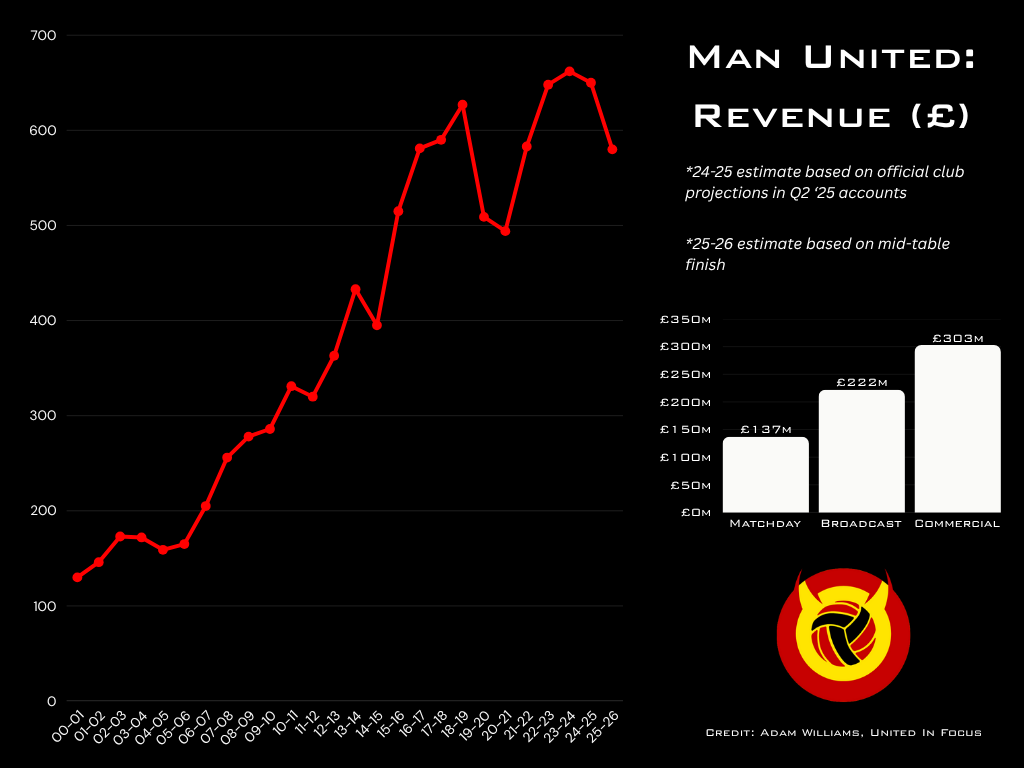
In their latest quarterly accounts, United issued revenue guidance of £650-670m.
If they hit the top end of that range, there is every chance they will break last season’s club-record revenue of £662m.
So, if Maguire’s assessment is accurate, there was little pressure on United to sell Fernandes for cash flow reasons, but what about PSR?
Alejandro Garnacho and Marcus Rashford options means PSR doomsday has been exaggerated
Fernandes joined United from Sporting for £47m in 2020.
Given that five years have since elapsed and he has since signed a contract extension until 2027 with the option of a further year, the Portuguese creator’s amortised book value is close to zero.
Amortisation is how clubs account for a player’s book value over a period of time. That would have made the sale of Fernandes near enough a ‘pure profit’ deal which, for PSR purposes, is a game-changer.

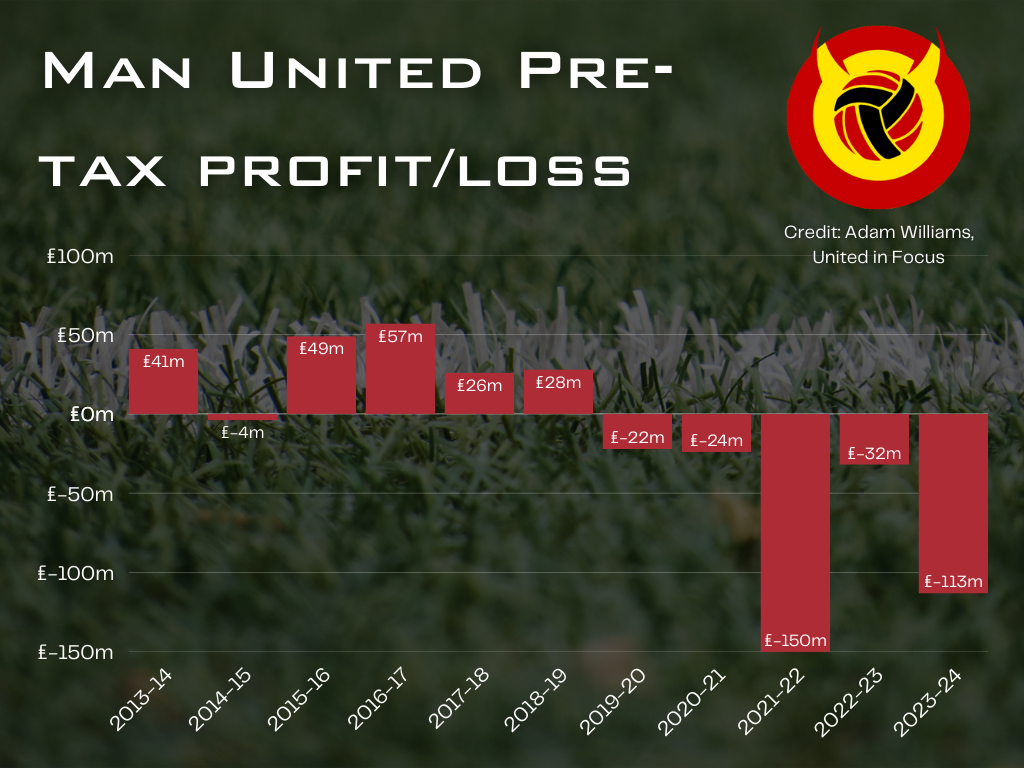
United lost £113m in the last financial year, 2023-24, but they should be able to comply with Premier League PSR for the current three-year period. However, after 30th June when the PSR assessment cycle rolls over, their task will become more difficult.
Why? Because the relatively modest £28m loss they made in 2022-23 – which in tandem with PSR-allowable expenditure like infrastructure investment – will then no longer be part of the three-year calculation.
Ostensibly, that’s an issue for United, who would start to flirt with the Premier League’s £105m allowable loss limit. Breach that threshold and, as Everton and Nottingham Forest can attest, there will be repercussions.
But Maguire believes that the sales of homegrown players like Alejandro Garnacho and Marcus Rashford, both of whom are odds-on to leave the club this summer, will be their salvation.
“Certainly, the sale of Garnacho and Rashford will more than cover the PSR challenges, so I think the wailing and gnashing of teeth is something that is being overplayed.
“All clubs sell players. The two clubs who have made the most from player sales are Chelsea and Manchester City, but you don’t see their fans kicking up a fuss because they get that it’s the reality.
“I think this is a cultural issue at Manchester United. They are a destination club, which can actually be a negative because it might also make it harder to move those players on.
“Secondly, from a fan point of view, you have to realise that it’s about managing your squad. You have to use the exit door smartly. You can’t just keep signing players. Sancho, Antony, Garnacho and Rashford’s heads aren’t at Man United. That much is clear.
“If they make single-million losses on some of the non-homegrown players, that’s something they can absorb relatively easily.”
- READ MORE: Former Manchester United talent now ‘up for sale’ after Erik ten Hag’s arrival at Bayer Leverkusen
Sir Jim Ratcliffe is already £189m down on United takeover as club value assessed
The £1.25bn Ratcliffe paid for around 28 per cent of Man United in February last year was a record for a minority investment deal in football.
The Ineos billionaire has since made two separate cash injections via share issue totalling £237m.
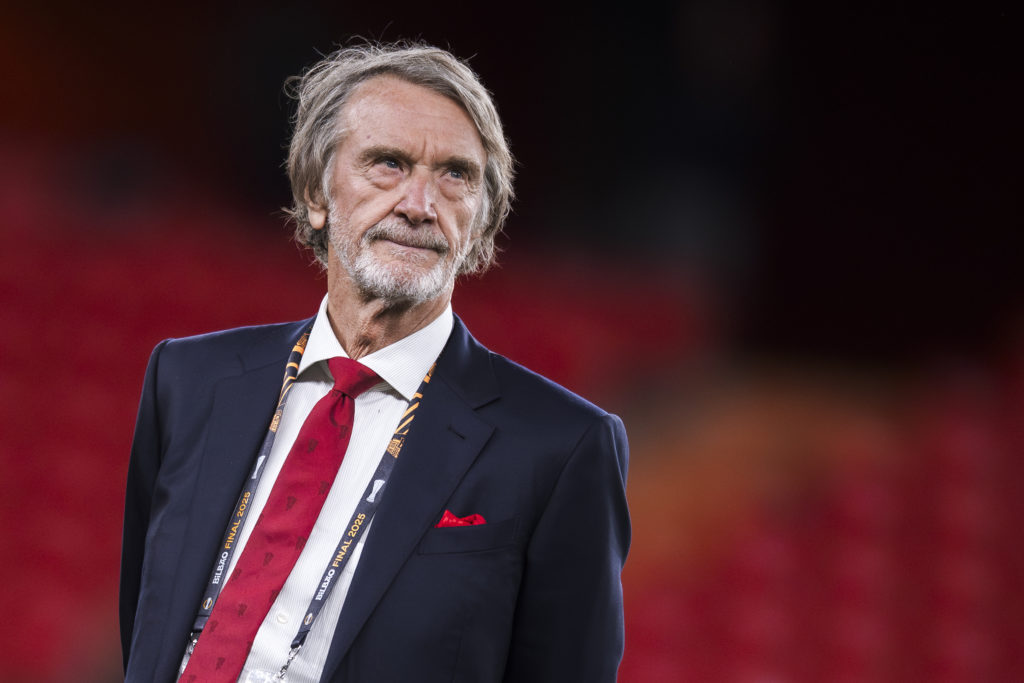
The latest data from Forbes shows that, if it is a capital appreciation game that the 72-year-old is playing, he is well down on the deal so far.
The financial media outlet published its annual list of the top-30 most valuable clubs in football late last week, with United retaining 2nd place. However, for the second year in a row, their value has grown by just one per cent. In sterling, that equates to just £48m worth of growth.
Subtract the £237m that Ratcliffe has personally fronted and he comes out with a loss of £187m.
| Rank | Club | Value | Owner(s) |
| 1 | Real Madrid | $6.75bn | Members |
| 2 | Manchester United | $6.6bn | Glazers, Ratcliffe |
| 3 | Barcelona | $5.65bn | Members |
| 4 | Liverpool | $5.4bn | FSG |
| 5 | Manchester City | $5.3bn | Abu Dhabi United Group |
| 6 | Bayern Munich | $5.1bn | Members |
| 7 | Paris Saint-Germain | $4.6bn | QSI |
| 8 | Arsenal | $3.4bn | Stan Kroenke |
| 9 | Tottenham Hotspur | $3.3bn | ENIC, Daniel Levy |
| 10 | Chelsea | $3.25bn | Todd Boehly, Clearlake Capital |
For context, Arsenal’s enterprise value grew by 31 per cent in the same period, while Newcastle United’s leapt up by 38 per cent.
Elephants don’t gallop, of course, and it is natural that United, as a titan of global football, would grow slower in value terms than smaller teams.
But the lack of major silverware on the pitch this past season certainly is harmful for the club’s brand, and they will want to bounce back, with Fernandes.
Receive a digest of our best United content each week direct to your mailbox