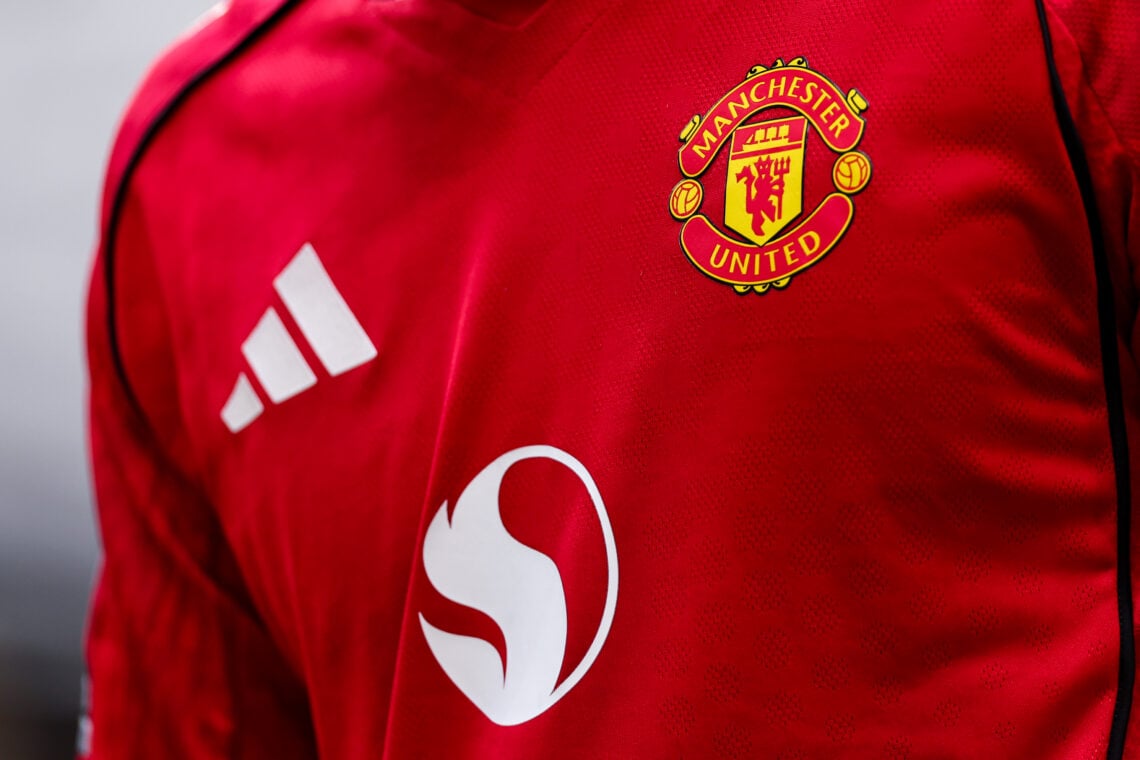


Despite encompassing one of the club’s historic nadirs, Manchester United’s kit deal with Adidas is among the most lucrative contracts in sports history.
That makes next Sunday, when the Red Devils launch their latest offering from the brand with the three stripes, an occasion on which tens, if not hundreds of millions of pounds are riding.
As is de rigueur these days, the shirt was leaked online months ahead of the release. But as first reported by the Daily Mail, United will play in the 2026-27 home kit in their final match at Old Trafford this season, where victory over Nottingham Forest would mathematically secure 3rd place if it hasn’t already by then.
Adidas pay £90m per season. When the going is good, at least. Failing to qualify for the Champions League, for example, comes with a £10m penalty, though Michael Carrick has ensured that won’t be an issue next season.
Carrick says Top 5 isn’t enough. Honestly, based on his run, do you think we are a genuine Title Contender for next season?

In reality, the deal is more complex than an annual flat fee and a single performance-based bonus. Adidas are paying for the privilege of using United’s extraordinarily valuable intellectual property to sell their products in a deal with umpteen variables.
Last year, United in Focus spoke to valuation consultancy Brand Finance, who told us that, if the license for United’s brand was for sale, it would fetch north of £1bn. In essence, that’s £1bn for the right to simply badge merchandise.
Adidas are reportedly forecasting £1.5bn of gross revenue from the deal over its lifetime. While we aren’t privy to the specifics of the commercially sensitive contract, United will likely earn modest, tiered royalties from shirt sales with rebates if certain sales targets are met.
Typically, it will be in the five to 10 per cent range, though industry experts consulted by United in Focus suggest that, because the circa £80m upfront fee is so large, the club has likely accepted a lower cut.
But while the numbers involved are mind-melting, Adidas are ultimately seeking something much harder to quantify: brand association. That is one element of the deal that, in recent years, has been suboptimal for them. Defeats to Grimsby Town, failed superstar signings and lurches from one manager to the next have hardly screamed ‘high performance’, to borrow a phrase from former CEO Richard Arnold in the statement accompanying the renewal of the deal in 2024.

The shine has come off the United badge somewhat in recent years. They are still quite comfortably the Premier League’s biggest brand, but their commercial income (that’s money from sponsors, retail, events and so on) has atrophied in recent years compared to their rivals.
The last full set of accounts, released in September, showed commercial income of £333m. That represented respectable year-on-year growth of 10 per cent, but zoom out on the graph and the picture is more troubling. Indexed to inflation, commercial income has shrunk by almost £40m in the last decade. For context, Liverpool’s has doubled over the same period.
The Adidas deal, as well as the club’s similarly lucrative front-of-shirt partnership with Qualcomm’s Snapdragon brand, has a significant insulative effect but it is not a guarantee of relative commercial success.
In that respect, a return to the Champions League in 2026-27 will be a genuine tonic for a United commercial department that has completely changed shape in recent years and is in need of a platform on which to build.
This is what Man United earn in real terms
Apart from the new stadium, what else should Ineos do to STOP this slide?

Yesterday, the team briefed the media that an £18m-a-year training kit deal with Betway was done and dusted. As exclusively revealed by United in Focus, the club’s partnership with DXC Technology ends at the close of the season too, meaning the new Adidas shirts will have a new sponsor on the sleeve next term. Expect that deal to be worth upwards of £20m. All that is to say, United’s commercial revival is in motion but requires sustained success on the pitch to fully materialise.
But while the wider commercial picture ebbs and flows, the decade-long Adidas deal provides stability and, when the kits drop every summer, moments to excite supporters. According to insiders, the vast majority of sales – as much as 85 per cent – take place shortly after release and later in the Christmas period, so a smooth, stylish kit launch is not a triviality for United or Adidas.
Receive a digest of our best United content each week direct to your mailbox